





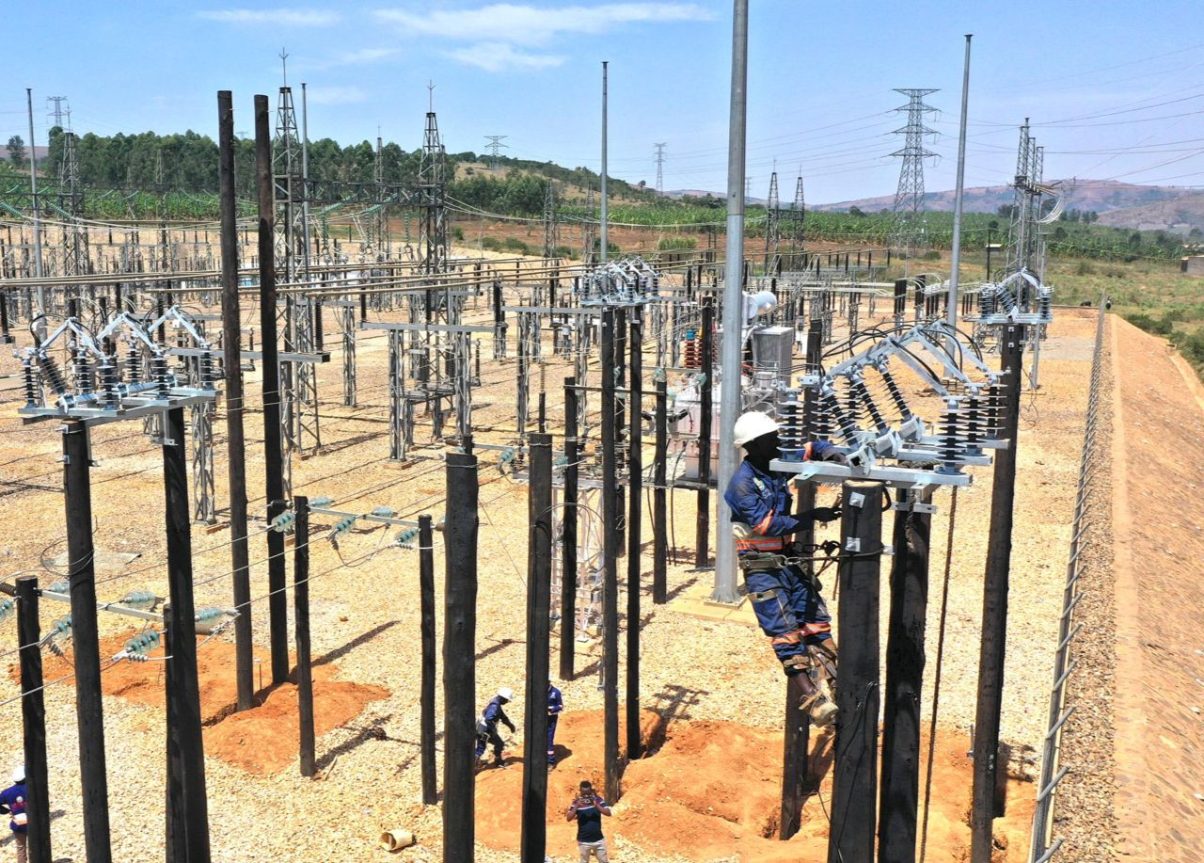
More than 30,000 domestic consumers and 700 commercial customers across western Uganda are on the verge of a meaningful shift in how reliably power reaches their homes and businesses. Works began in August 2026 to integrate the Mirama Hills Substation into Uganda’s wider electricity distribution network, a project that the Uganda Electricity Distribution Company Limited (UEDCL) says will address longstanding weaknesses in a feeder line that has quietly struggled for years.
A Feeder Line Pushed Beyond Its Design
At the heart of this upgrade is the Kikagati-Ntungamo feeder, the existing route used to move electricity generated by the Kikagati Hydropower Plant on the Kagera River in Isingiro District. The problem, as Eng. Alex Atukunda, UEDCL’s head of commercial services for the western region, explains it, is structural. The feeder’s current configuration was never optimal for the load it was expected to carry, and insufficient local demand along certain stretches of the line created technical losses that dragged down overall performance.
“The Kikagati-Ntungamo feeder is the current route for evacuating power from the Kikagati Hydropower Plant, but its existing configuration is not optimal. Insufficient local load and the resulting technical losses have affected its performance,” Atukunda said, as reported by Chimpreports.
In plain terms, the line was doing too much work inefficiently, and the communities at the end of it were paying the price through unreliable supply and voltage fluctuations.
What the Integration Actually Involves
The Uganda Electricity Transmission Company Limited (UETCL) has already installed a 15 megavolt-ampere transformer at the Mirama Hills Substation, which sets the physical foundation for everything that follows. The integration works now split the existing Kikagati-Ntungamo feeder into two distinct sections at the Mirama Hills point.
One section will carry power toward Ntungamo, Rukungiri, and parts of Rwampara. The other will serve Isingiro and its surrounding areas. By dividing the load this way, each section carries a more manageable burden, reducing the technical losses that had compromised the whole network and creating a more direct, efficient path for electricity to reach consumers.
The split also improves the route through which power from the Kikagati Hydropower Plant gets evacuated into the grid, solving a bottleneck that had limited how effectively that generation capacity could be used.
Who Benefits and by How Much
The numbers are significant. Over 30,000 domestic consumers across Isingiro, Ntungamo, Rukungiri, and parts of Rwampara stand to see better, more consistent power supply. Another 700 commercial customers, ranging from small enterprises to larger industrial operations, will benefit from the improved network reliability.
Among the most notable commercial beneficiaries is Terra Industrial Development Company, an iron-processing factory based in Ntungamo. The facility carries an estimated electricity demand of around 7 MVA, which is a substantial draw. For an operation of that scale, consistent and sufficient power is not a convenience but a basic requirement for production. Erratic supply translates directly into downtime, damaged equipment, and lost output. A stable, well-configured feeder line changes the economic calculus for businesses like this entirely.
The Broader Industrial Picture
Terra Industrial’s inclusion in this upgrade story points to something worth paying attention to. Western Uganda is home to significant agricultural, mineral, and processing activity. Industrial operations in this corridor need infrastructure that can match their demand, and for too long the electricity network has been the weak link. When a factory with a 7 MVA requirement sits on a feeder line that was already struggling with technical losses, the consequences go beyond discomfort. They affect employment, output, and the district’s wider economic potential.
UEDCL’s intervention here is as much an economic enabler as it is a technical fix.
Timeline and Expected Outcomes
The works began in August 2026 and are expected to wrap up by mid-September 2026, making this a relatively fast turnaround for infrastructure of this kind. UEDCL says consumers should experience immediate improvements in network performance once the integration is complete, rather than waiting through a prolonged commissioning period.
Atukunda confirmed that the project will deliver additional capacity and redistribute power more evenly across the affected areas, which means fewer outages, more stable voltage, and a network better equipped to handle growing demand as more consumers connect.
Reading the Bigger Picture for Uganda’s Grid
Uganda has invested steadily in generation over the past decade, adding hydropower capacity and expanding its installed base. But generation alone does not deliver reliable electricity to a household or a factory. The transmission and distribution layers matter just as much, and this project in western Uganda is a reminder of how targeted, well-designed interventions at the substation level can unlock the value of existing generation assets.
The Kikagati Hydropower Plant has been producing electricity that the existing feeder configuration could not evacuate or distribute efficiently. By fixing the distribution architecture at Mirama Hills, UEDCL is essentially squeezing more usable value out of infrastructure that was already in place. That is smart, cost-effective grid management.
For the communities in Isingiro, Ntungamo, Rukungiri, and Rwampara, the upgrade represents something more personal: the prospect of consistent power for running a small business, keeping the lights on, refrigerating food, or simply studying after dark without the uncertainty of when the next outage will hit.
As Uganda’s grid continues to expand westward, the question worth asking is this: how many other feeders across the country are quietly underperforming in the same way, and what would it take to identify and fix them before another generation of consumers is left waiting?