



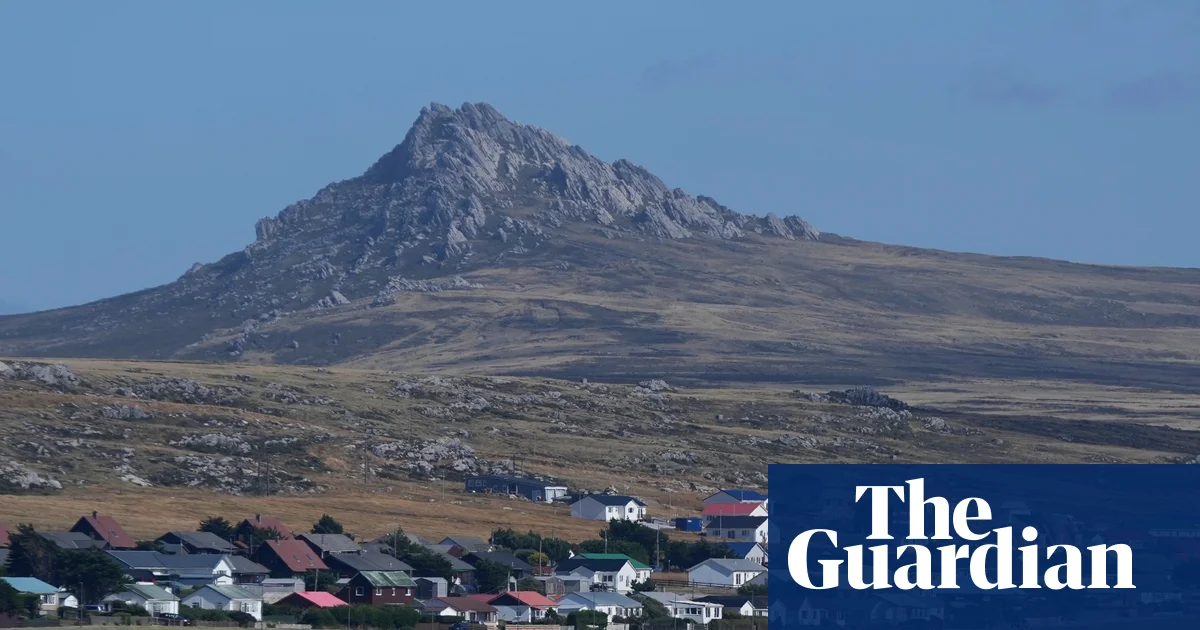
A long-dormant territorial dispute is flickering back to life, and the match that lit it was struck not in Buenos Aires or London, but somewhere inside the grievance-laden political mind of Donald Trump. The US president, whose friction with the United Kingdom has grown increasingly visible in recent months, has signalled that he may throw American support behind Argentina’s longstanding claim to sovereignty over the Falkland Islands, a remote South Atlantic archipelago currently administered by Britain.
If that sounds like a dramatic rupture with decades of US foreign policy, that is because it is. And yet, given the current political climate, it is entirely consistent with how Trump operates.
Retribution as Foreign Policy
Trump is, by his own proud admission, a man who repays slights. At the 2023 Conservative Political Action Conference, he told a roaring crowd, “I am your retribution,” framing his political comeback as a reckoning with those who had wronged him and his supporters. Few people in that room were thinking about the South Atlantic. But the logic Trump applied to domestic politics, the idea that loyalty is rewarded and opposition is punished, maps just as easily onto his approach to foreign affairs.
Britain has found itself on the wrong side of that calculus. The exact nature of Trump’s current irritation with London is not fully spelled out in a single grievance, but the pattern is recognisable: any government that does not sufficiently align with his worldview risks becoming a target for diplomatic pressure or, in this case, something far more consequential. A superpower openly backing your territorial rival is not a minor inconvenience. It is a geopolitical body blow.
Milei, the Acolyte
On the other side of this equation stands Javier Milei, Argentina’s iconoclastic leader and one of Trump’s most enthusiastic international admirers. Milei has made little secret of his ideological kinship with Trump, and that relationship appears to be paying diplomatic dividends. Reports suggest Trump may be considering backing Argentina’s drive to reclaim sovereignty over the disputed islands, a move that would represent an extraordinary tilt in America’s traditional position.
For Argentina, the Falklands, known there as the Malvinas, are not simply a foreign policy issue. They are a matter of national identity, woven into the country’s political fabric since the 1982 war with Britain, a conflict Argentina lost militarily but never abandoned emotionally. Every Argentine government since has maintained the sovereignty claim. What none of them had, until now, was a plausible path to US support.
What This Would Mean in Practice
American backing for Argentina’s position would not trigger an immediate transfer of territory. The islands remain firmly under British administration, and their roughly 3,000 residents have consistently and overwhelmingly voted to remain British. A 2013 referendum saw more than 99 percent of islanders choose to stay part of the United Kingdom. No US statement changes that overnight.
But diplomatic leverage is rarely about overnight change. It is about shifting the weight of international opinion, complicating Britain’s position in multilateral forums, and signalling to Buenos Aires that Washington is no longer a neutral party. In the mid-1980s, the United States firmly backed Britain during the Falklands conflict, providing intelligence and logistical support that proved critical. A reversal of that posture, even a partial or rhetorical one, would send shockwaves through the Special Relationship.
The Special Relationship Under Strain
The so-called Special Relationship between the US and UK has weathered turbulence before. It survived Suez, disagreements over the Iraq war, and various trade spats. But those strains were managed within a framework of shared assumptions, primarily that the two countries were fundamentally aligned on core strategic interests. Trump’s willingness to use the Falklands as a bargaining chip or a punishment tool suggests he does not feel bound by those assumptions.
For the British government, this creates a genuinely awkward situation. Pushing back too hard risks escalating Trump’s antagonism. Being too conciliatory risks appearing weak on a sovereignty issue that carries enormous domestic political weight. The Falklands are not just islands. They are, for many British people, a symbol of national resolve, the place that defined the Thatcher era and cost 255 British lives.
Argentina’s Long Game
Buenos Aires has always pursued its Malvinas claim through diplomacy, international law, and political pressure rather than renewed military confrontation. Getting the world’s most powerful nation to at least signal sympathy would be the most significant diplomatic win on this issue in decades. Milei, who has styled himself as a disruptor in the Trumpian mould, may be extracting a very tangible foreign policy reward for his ideological loyalty.
The timing is also notable. With global attention stretched thin across multiple conflict zones and geopolitical flashpoints, a quiet but consequential shift in US positioning on the Falklands could go relatively unnoticed in the short term, even as its long-term implications reverberate through British foreign policy planning.
A Dispute That Never Really Ended
It is worth remembering that the 1982 war ended the fighting but not the argument. Argentina never renounced its claim, and the dispute has periodically flared up over fishing rights, hydrocarbon exploration in surrounding waters, and diplomatic recognition. What Trump’s potential intervention would do is internationalise it again in a way that Britain cannot easily manage through its usual channels.
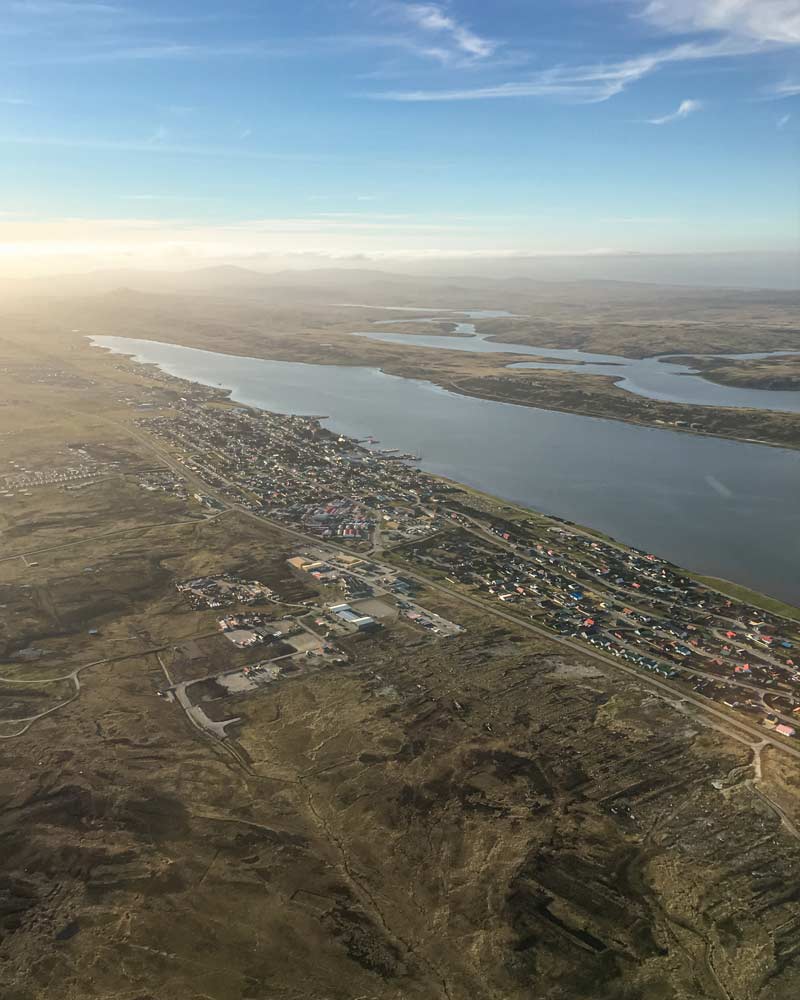
The islands themselves sit about 300 miles off the Argentine coast and roughly 8,000 miles from Britain. Their strategic significance has evolved over the decades, particularly as interest in Antarctic resources grows and the South Atlantic becomes a more contested maritime zone. Whoever controls the Falklands holds a significant position in that emerging competition.
Trump’s foreign policy instincts have always been transactional. Britain should be asking itself, with some urgency, what it has offered, or failed to offer, that has left it exposed to this kind of pressure. And the rest of the world should be watching closely, because when the rules of a decades-old geopolitical settlement start bending, the aftershocks rarely stay contained to one corner of the map.
So here is the question worth sitting with: if personal loyalty and political allegiance can override decades of established US foreign policy on an issue as charged as the Falklands, what other settled disputes might suddenly be back on the table?