






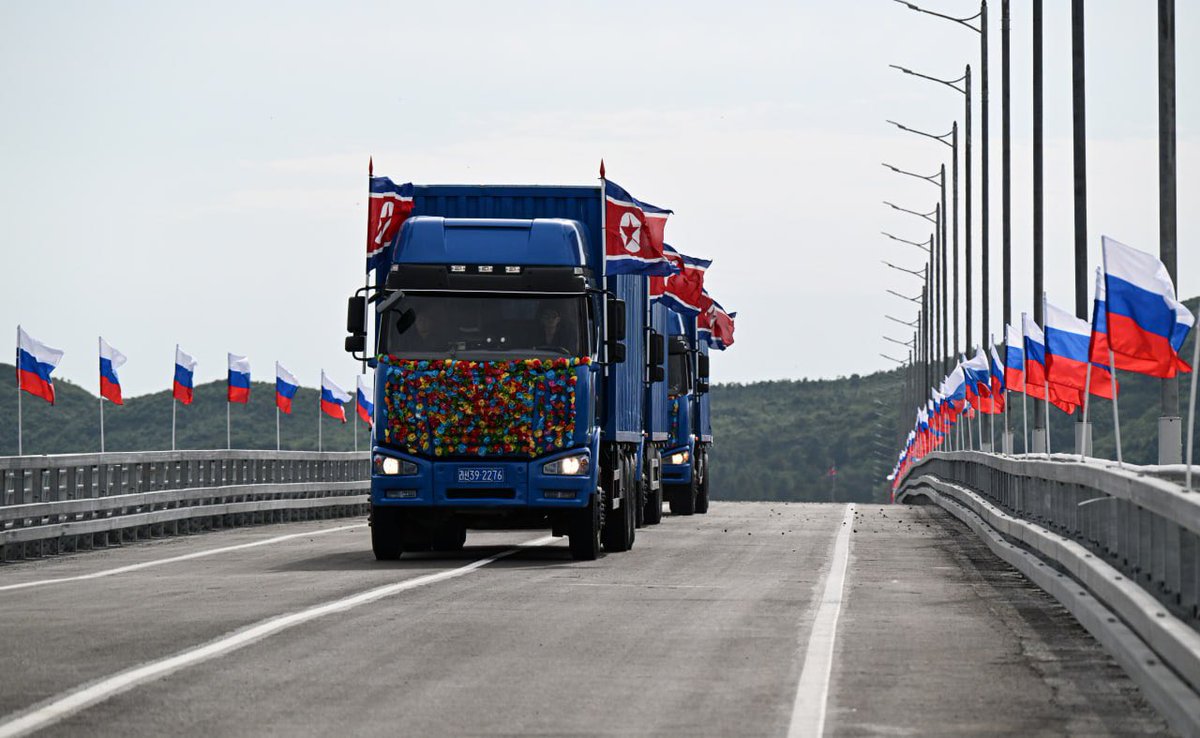
On September 7, 2026, a stretch of concrete and steel spanning the Tumannaya River became the physical symbol of one of the world’s most closely watched geopolitical alignments. Russia and North Korea officially opened their first-ever road bridge connecting the two countries, capping off a construction drive that had been in the works since the two nations signed an agreement in 2024. The ceremony, held at the border crossing, was attended by Russian Prime Minister Mikhail Mishustin, who described the moment as the fruit of a relationship that has reached what he called an “unprecedentedly high level of comprehensive strategic partnership.”
A Border Without a Road, Until Now
Geography can be deceptive. Russia and North Korea share a border, yet until last weekend, not a single road connected them. Travelers, freight haulers, and diplomats had only one physical option: the Friendship Bridge, an aging rail link that Moscow openly acknowledged could no longer handle the volume of goods moving between the two countries. That bottleneck, quiet for decades, has now been addressed in a very loud way.
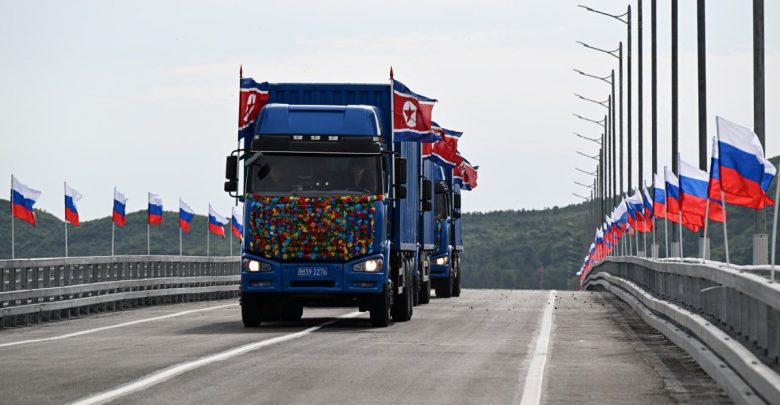
According to reports on the bridge’s completion, construction began on April 30, 2025, formally launched by Mishustin and North Korean Premier Pak Thae-song. The speed of the build, roughly sixteen months from groundbreaking to opening ceremony, says as much about the urgency both sides felt as it does about engineering capacity.
The new bridge is designed for year-round use, which matters enormously in a region where harsh winters and unpredictable river conditions have historically disrupted supply lines. Russia says the crossing will increase freight volumes, reduce transportation costs, and deliver more consistent goods supplies to both sides. That language is the language of logistics, but the politics sitting beneath it are impossible to ignore.
The Name Carved Into the Bridge
Details signal intent, and the decision to name the bridge after Yakov Novichenko is no accident. Novichenko was a Red Army officer whose wartime exploits earned him a place in North Korean national memory, a rare honor that speaks to the shared historical narrative both governments want to project. Naming infrastructure after him is a calculated nod to the idea that this relationship is not new opportunism but a bond forged in the fires of the twentieth century and now renewed for the twenty-first.
Mishustin leaned into that framing at the ceremony, telling attendees that Russia and North Korea are “actively cooperating in virtually all areas” and working together on regional security and stability. That phrase, “regional security and stability,” does a lot of diplomatic heavy lifting. It is the kind of language that sounds measured in a press release but reads very differently in Washington, Seoul, or Tokyo.
What the Bridge Actually Moves
Infrastructure projects between sanctioned states rarely stay purely commercial for long. The rail link that preceded this bridge has been scrutinized by Western governments and international observers for years, with repeated allegations that it facilitated arms transfers and other exchanges that violated United Nations sanctions on North Korea. Russia, which holds a veto on the UN Security Council, has blocked efforts to extend or strengthen those sanctions regimes.
With a road bridge now open, the volume and variety of goods that can cross the border increases substantially. Trucks carry different cargo than trains. They also operate on different schedules, with less centralized oversight, and can move smaller, more frequent consignments. For anyone tracking the flow of materials between the two countries, the new bridge represents a meaningful expansion of capacity in every sense of that word.
A Partnership Built in Public
What is striking about the Russia-North Korea relationship as it stands in 2026 is how little either side bothers to conceal it. The agreement to build the bridge was reached in 2024 with Putin and Kim Jong Un present, a high-profile moment that signaled both leaders were comfortable with the optics of close association. The construction launch was similarly public, with prime ministers presiding over a ceremony that was documented and broadcast.
This is a departure from the more discreet diplomatic choreography that characterized earlier phases of the relationship. Both Moscow and Pyongyang appear to have concluded that the reputational costs of the partnership are either manageable or simply irrelevant given their respective positions in the current global order. Russia is under sweeping Western sanctions following its invasion of Ukraine. North Korea has operated under international sanctions for years. In that context, the two countries have little incentive to hide what they are doing and considerable incentive to show it.
Reading the Map Forward
A single bridge does not remake the world, but it does change the neighborhood. The Tumannaya River crossing gives Russia a more reliable southern supply corridor into North Korea and gives Pyongyang a land route to a massive economy. For North Korea, access to Russian goods, technology, and energy resources through a road link rather than a constrained rail corridor is a meaningful material upgrade.
For South Korea and Japan, the bridge is another data point in an already concerning picture. For the United States, it complicates an already difficult strategic calculus in the region. And for international bodies attempting to enforce sanctions and monitor the movement of sensitive materials, it creates a new logistical reality to account for.
The Friendship Bridge was once the only physical thread connecting two of the world’s most isolated governments. Now there are two threads, and the weave is getting tighter. The question worth sitting with is this: as the infrastructure between Russia and North Korea grows, what exactly are the rest of us prepared to do about it, and is there a moment when doing nothing becomes its own kind of answer?