


President Yoweri Museveni stood before a room of heads of state, defence ministers, and military chiefs on August 2, 2026, and said what many had long believed but few had articulated with such directness: Africa does not help Somalia out of geography. It helps Somalia out of conviction.
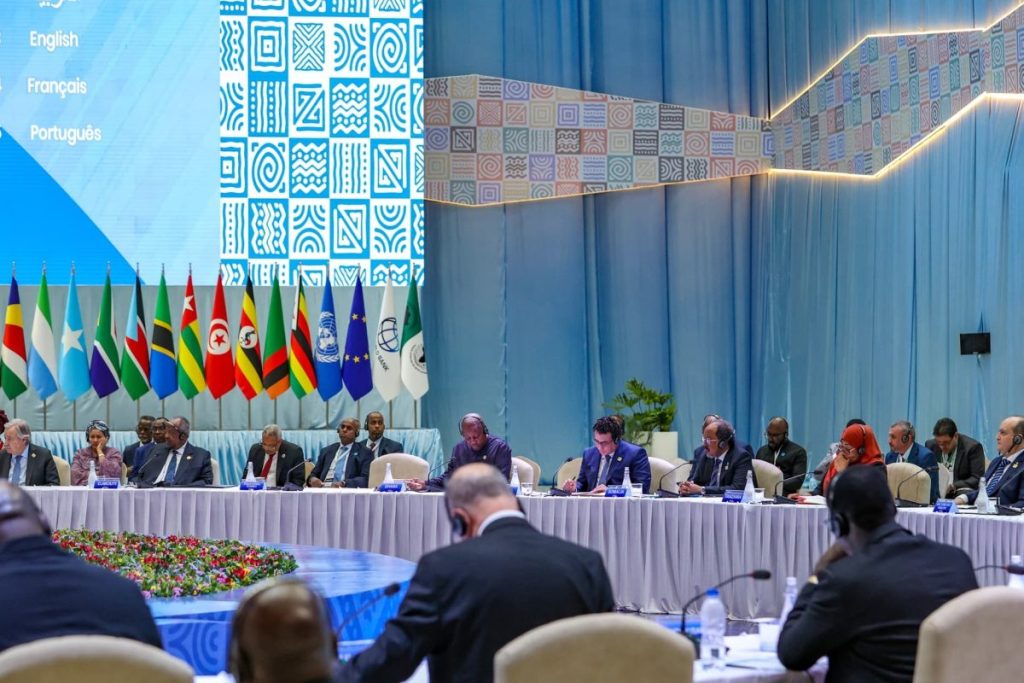
The setting was the closing ceremony of a three-day summit gathering leaders from the six troop-contributing countries to the African Union Support and Stabilization Mission in Somalia (AUSSOM), namely Uganda, Ethiopia, Kenya, Djibouti, Egypt, and Burundi. The occasion carried real urgency. The United Nations Support Office in Somalia (UNSOS) is scheduled to shut down operations by December 31, 2026, leaving a logistical and strategic gap that African nations must now fill on their own terms.
No Border Required: The Logic Behind Uganda’s Presence
Critics have long questioned why Uganda, a landlocked country with no shared border with Somalia, commits troops, resources, and lives to a conflict thousands of kilometres away. Museveni addressed that question head-on. Uganda’s involvement, he explained, rests on two clear foundations: a firm rejection of religious extremism that corrodes social harmony, and a concrete expression of solidarity with neighbouring countries that face threats from hostile ideological movements operating across porous borders.
He pointed to a familiar pattern. Before extremism took root in Somalia, similar ideological pressures had radiated out of Khartoum in Sudan. The spread was not accidental. It was strategic. Museveni argued that failing to intervene decisively in Somalia would have left Ethiopia, Uganda’s direct neighbour and regional partner, dangerously exposed to groups that do not recognise national borders as limitations.
This is the argument that often gets lost in debates about African peacekeeping missions. Security in the Horn of Africa is not a collection of separate national problems. It is one interconnected challenge, and a fire left burning in one corner will eventually consume the wider house.
A Cultural Argument Against Extremism
Museveni did not limit himself to military strategy. He went further, drawing on African cultural heritage to push back against ideological intolerance. African societies, he said, have historically been defined by diversity, mutual respect, and coexistence rather than enforced conformity. Different communities hold their own traditions and prohibitions close, but the African way of life has never demanded that those values be imposed on others.
He referenced past conversations with former Sudanese President Omar al-Bashir on traditional African and Islamic concepts of prohibition to illustrate that even within religious frameworks, there is room for tolerance and respect of difference. His message to extremist movements was blunt: respect the sovereignty and social fabric of African nations, or face a united continental response.
It is a point worth sitting with. The strongest counter to ideological extremism is rarely a purely military one. Cultural confidence, the belief that your way of life has value and does not need to be protected by destroying everyone else’s, matters enormously. Museveni seemed to understand that argument viscerally.
From the War Room to the Summit Table
Before the heads of state took the floor, the summit’s groundwork was laid by Chiefs of Defence Forces (CDFs) and ministers of defence from the participating nations. Uganda’s CDF, General Muhoozi Kainerugaba, chaired the military chiefs’ session and set the tone immediately. With UNSOS preparing to exit, there is no room for slow deliberation.
“These are difficult circumstances, but they also call for our unity, creativity, and resolve,” Gen. Kainerugaba said, urging troop-contributing countries to accelerate African-led alternatives to fill the vacuum left by the UN office’s departure. The recommendations that emerged from the CDFs’ deliberations were then adopted by the defence ministers and carried forward to the heads of state for final consideration. Gen. Kainerugaba was also seen sharing a lighter moment with Foreign Affairs Minister Haruna Kasolo on the sidelines, a small but telling sign of the collegial atmosphere underpinning what were, in substance, very serious discussions.
Nearly Two Decades on the Ground
The Chairperson of the African Union Commission, H.E. Mahmoud Ali Youssouf, offered perhaps the most sobering context of the entire summit. Uganda, he noted, has been one of the pillars of Africa’s engagement in Somalia for close to 20 years. That is not a short deployment or a token gesture. That is generational commitment measured in lives, resources, and national resolve.
“Its leadership and the sacrifices borne by its forces, and by those of all troop- and police-contributing countries, command our deepest appreciation,” he said. He paid tribute to every African soldier and police officer who has served under the African Union flag in Somalia, many of whom did not return home. Their service, he argued, has allowed Somalia to move measurably closer to stability, and the gains of the earlier African Union Mission in Somalia (AMISOM) must be preserved through a careful, grounded transition.
The Clock Is Ticking
With UNSOS winding down by the end of 2026, the summit was not a ceremonial gathering. It was, in every practical sense, a planning session with continental stakes. The six nations represented in AUSSOM must now design and fund an African-led security architecture that can sustain Somalia’s fragile progress without the logistical backbone the UN has provided.
That is an enormous ask. But Museveni’s message was that the asking is not new, and neither is Africa’s willingness to meet the challenge. What the continent built over 20 years in Somalia was not built on convenience. Walking away now, he suggested, would betray both the living and the dead.
As African leaders left the summit with a clearer mandate and a tighter deadline, one question lingers over the entire region: when the UN support structure disappears in December, will the political unity displayed in that summit room translate into the operational reality Somalia so urgently needs?