

Criminals have found a surprisingly simple way to shake down Instagram creators: use the platform’s own copyright reporting system as a weapon. In 2026, a growing number of content creators have come forward to reveal they have been losing money, and sometimes their entire accounts, after fraudsters filed fabricated copyright complaints against them and then demanded payment to withdraw those claims.
The scheme is methodical and, frankly, clever in a deeply cynical way. Because Meta does not verify the authenticity of copyright complaints at the point of submission, anyone can fire off a bogus claim against any account. Stack enough of those claims on a single creator and Meta’s automated systems will temporarily suspend or remove the account entirely. That’s exactly the leverage the scammers need.
How the Racket Actually Works
The playbook is straightforward. A fraudster identifies a creator with a significant following, knowing that losing account access even for a few days can translate into very real financial pain. They file multiple fake copyright strikes. The creator’s account goes down. Then comes the message: pay up, and we’ll withdraw the complaints.
One creator, who runs the Instagram account Lost in Time History and has built a following of more than 1.5 million people, says he has received dozens of what he describes as obviously fake copyright complaints in 2026 alone. The creator, who goes by Olly, posts historical photographs that are either in the public domain or covered by explicit permission from the rights holder. None of that matters to the scammers, because Meta never checks whether a complaint is legitimate before acting on it.
Olly told the BBC he ended up paying a scammer $50, roughly £37, to get his account restored. His reasoning was grim but logical: Meta’s official appeal process, he said, could take weeks to resolve, and a prolonged suspension had already cost him thousands of pounds in lost income during previous incidents. Paying the scammer was simply the faster, cheaper option. That calculation, that desperation, is precisely what the criminals are banking on.
Meta’s Response: Reassuring Words, Slow Action
When pressed, a Meta spokesperson offered a measured statement, acknowledging the frustration of those affected and noting that the company’s systems are designed to prevent this kind of abuse from occurring. The spokesperson added that Meta had restored affected content and applied additional protections to targeted accounts after reviewing cases.
But creators who have lived through the process tell a very different story. According to multiple accounts shared with journalists, Meta is slow to identify claims that are obviously fabricated. More pointedly, several creators have noted that the appeals process moves considerably faster if you subscribe to a paid monthly service. For creators who cannot or will not pay that fee, the wait can stretch on long enough to cause serious commercial damage.
That dynamic creates a troubling incentive structure. Creators face a choice between paying Meta for faster support, paying the scammer to end the harassment, or waiting weeks while their account sits offline and their audience drifts away. None of those options should be on the table.
Why This Is a Harder Problem Than It Looks
Copyright law on social media platforms is notoriously complex. The legal frameworks that govern takedown requests, particularly those modelled on notice-and-takedown systems, were designed to protect legitimate rights holders from having their work shared without consent. The problem is that those same systems were never really built to handle weaponised abuse at scale.
Verifying every copyright claim before acting on it would be an enormous operational undertaking for a platform the size of Instagram. Meta processes billions of pieces of content. Adding a verification layer to every incoming complaint would slow the system and, in some cases, delay legitimate takedowns. That’s a real tension. But it’s also one that, right now, the scammers are exploiting freely.
The fact that repeated complaints from a single source, or against a single account, don’t automatically trigger additional scrutiny is a gap that bad actors have clearly mapped. A creator receiving dozens of complaints in a matter of weeks from parties with no plausible connection to their content should, logically, set off some kind of internal alarm. Apparently, it often doesn’t.
What Creators Can Do Right Now
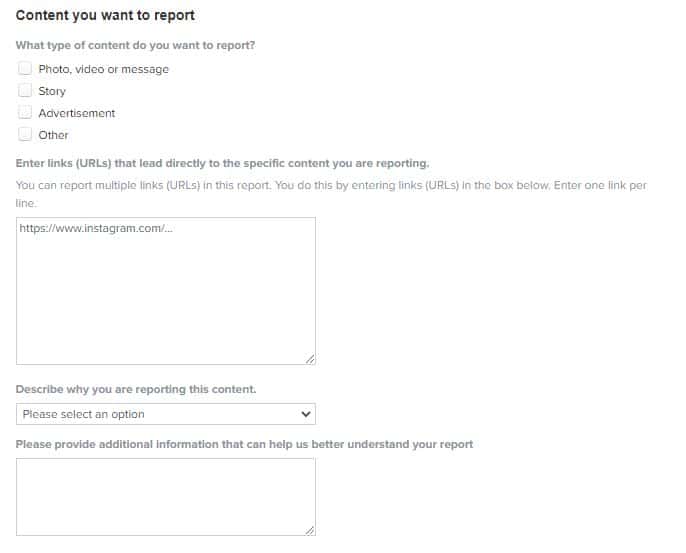
If you run an Instagram account and you’re worried about becoming a target, a few practical steps are worth considering. Document everything: keep records of all content you post, including proof of licensing or public domain status. If a complaint comes in, respond immediately through official Meta channels rather than engaging with anyone who contacts you privately demanding money. Report extortion attempts to local law enforcement, even if the sums involved feel too small to bother with. Small payments across thousands of victims add up to a significant criminal enterprise.
It’s also worth familiarising yourself with Meta’s formal intellectual property dispute process, as frustrating as that process currently is. And if you have the resources, consider whether Meta’s paid creator support options are worth the investment given the risk landscape you’re operating in.
None of this should be necessary. The burden of protecting creators from a scam that exploits a platform’s own architecture should not fall entirely on the creators themselves.
The Bigger Picture for Social Media Accountability
This isn’t just an Instagram problem. It’s a symptom of a broader issue: social media platforms have built vast, monetised ecosystems on top of content created by independent people, and the support infrastructure for those creators has not kept pace with the size and sophistication of the risks they face.
When the system designed to protect intellectual property becomes a tool for extortion, and when the platform’s response mechanism effectively rewards those who pay a premium, something has gone seriously wrong. Regulators in multiple jurisdictions are already scrutinising the responsibilities of large platforms toward their users. Cases like these will only add to that pressure.
Meta has the technical resources to do better. The question is whether a wave of creator complaints, public reporting, and eventual regulatory attention will be enough to make that happen before more accounts, and more livelihoods, fall victim to this scheme.
If you’re a creator who has experienced this kind of targeted abuse, have you found a way to fight back effectively, or has the system left you with no real options?