







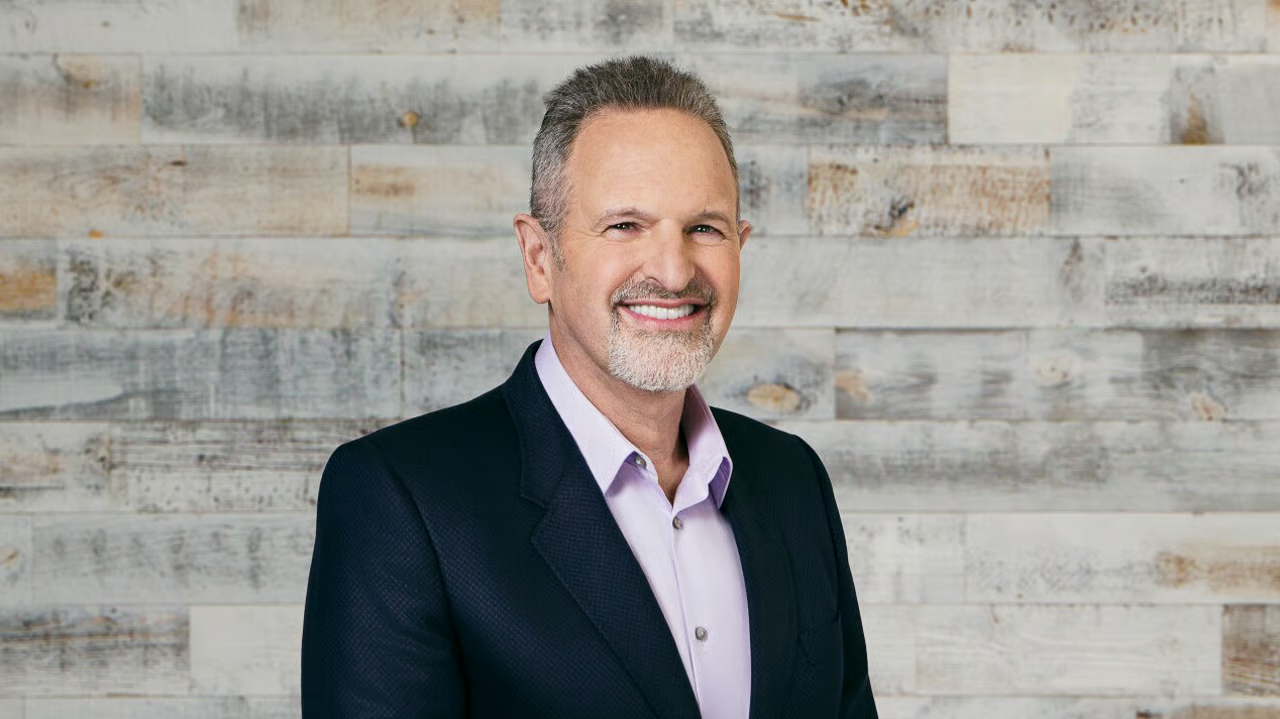

The boss of Arm Holdings, the Cambridge-based chip design company that quietly powers hundreds of billions of devices worldwide, has made a striking prediction: artificial intelligence will cure cancer before any human scientist does. But in the same breath, Rene Haas acknowledged that the very hardware needed to make that future real is in dangerously short supply right now.
Haas, speaking to the BBC’s Big Boss Interview podcast, laid out a vision of AI so ambitious it borders on science fiction, except that the man making the claim runs a company whose processor designs sit inside virtually every smartphone on the planet. When someone in that position says AI will solve cancer, it carries a different kind of weight.
A Problem Too Complex for Human Minds Alone
Haas was direct about what stands between medicine and a breakthrough. Modelling how a single DNA marker responds to cancer cells, he explained, is currently beyond the reach of both human researchers and the computers running today’s AI systems. The sheer biological complexity involved, mapping cells, simulating the human body, tracing the chain reactions triggered by a tumour, remains stubbornly out of reach.
But he doesn’t see that as a permanent wall. As AI models grow more sophisticated and the data centres feeding them become more powerful, Haas believes computers will eventually close that gap. “They’re going to solve it,” he said, speaking with the kind of measured confidence that comes from spending years at the intersection of technology and healthcare. He stepped down from the board of British pharmaceutical giant AstraZeneca in April, bringing a rare dual-sector perspective to the conversation.
His position is not fringe thinking. Across the scientific community, researchers are already using machine learning to identify tumour patterns, predict drug responses, and accelerate clinical trials that would otherwise take decades. The difference between what exists today and what Haas is describing is essentially a question of scale and computing power.
Humanoid Robots Within Five Years
Cancer cures weren’t the only bold forecast on the table. Haas also told the BBC that humanoid robots would become widespread within the next five years, driven by the same surge in AI capability that is reshaping industries from logistics to healthcare. It’s a timeline that would have sounded absurd a decade ago but feels increasingly credible given the pace at which robotics firms have progressed in recent years.
Arm’s chip architecture already underpins a vast range of devices, from cars to smartwatches to the gadgets sitting in most people’s pockets. The company’s designs are, in a very real sense, the nervous system of the modern digital world. That makes Haas’s perspective on what AI hardware can and can’t do particularly credible, he’s not theorising from the outside.
The Chip Shortage Bottleneck
Here’s where the optimism runs into a hard wall. Haas was candid that AI’s rapid growth is being constrained right now by a shortage of the advanced chips required to build and run data centres. These facilities are the physical backbone of every large language model, every AI diagnostic tool, every robot control system. Without enough chips, the entire edifice of AI progress slows down.
It’s a supply chain problem with civilisational stakes. The demand for high-performance semiconductors has surged far faster than the industry’s capacity to produce them. Chip fabrication plants take years and billions of dollars to construct, and the geopolitical scramble to secure domestic production has added further complications. Governments in the United States, Europe, and Asia are all racing to reduce dependency on a handful of manufacturers concentrated in Taiwan and South Korea.
Don’t Expect British-Made Chips Anytime Soon
On the question of whether the UK could become a meaningful player in chip manufacturing, Haas offered a dose of cold realism. He expressed scepticism that chips could realistically be produced domestically in the UK in the foreseeable future. It’s a pointed observation given the political enthusiasm in Westminster for positioning Britain as a tech superpower post-Brexit. Designing chips brilliantly, as Arm does from its Cambridge base, is one thing. The brutal economics and infrastructure demands of actually fabricating them at scale is quite another.
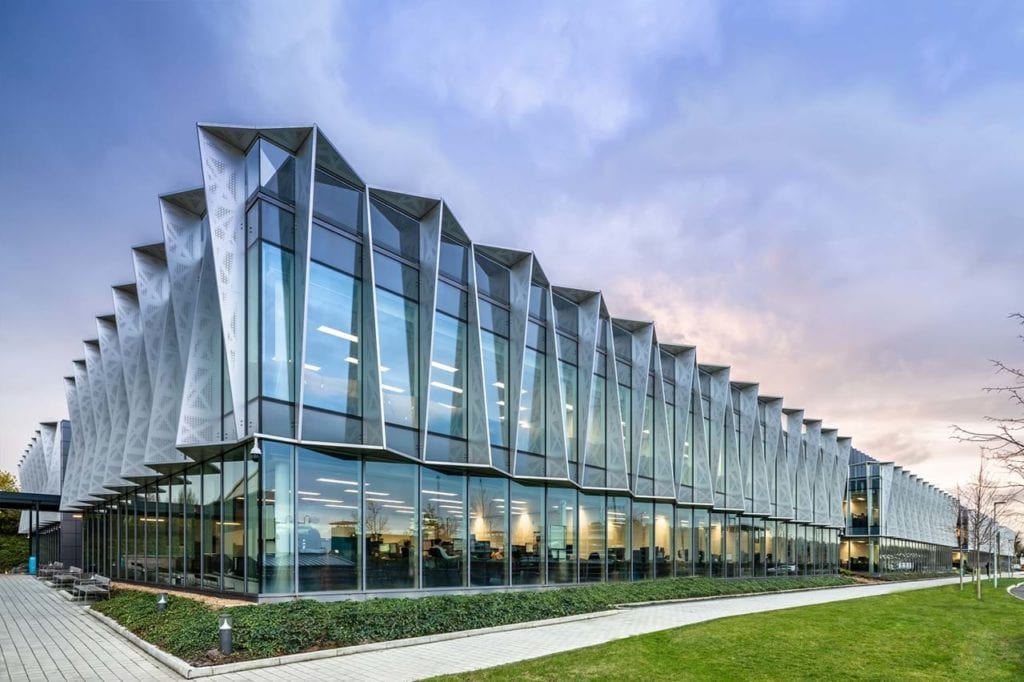
Arm itself doesn’t manufacture anything. It licenses its chip architectures to companies like Apple, Qualcomm, and Samsung, who then contract with foundries like TSMC to physically produce the silicon. This fabless model has made Arm extraordinarily profitable and influential, but it also means Britain’s biggest tech company has no production facilities of its own.
The Most Valuable UK Company in History
Earlier this summer, Arm’s share price hit a peak that made it, in cash terms, the most valuable UK-based company ever recorded. The AI boom has been extraordinarily kind to companies positioned at the infrastructure layer of the technology stack, and few are more foundational than Arm. Its processor designs power an estimated hundreds of billions of devices globally, a market position built over decades that now looks prescient in the age of AI.
Haas also holds a senior role at SoftBank, the Japan-based conglomerate that is Arm’s primary owner. SoftBank has stakes across the technology landscape, including a position in OpenAI, the company behind ChatGPT. That web of connections places Haas at the centre of conversations about AI’s direction that most industry observers can only read about secondhand.
What This Means for the Rest of Us
The practical implications of Haas’s predictions are worth sitting with for a moment. If AI does eventually crack the biological complexity of cancer, the question won’t just be scientific, it will be about who gets access, who funds the research, and whether the chip infrastructure needed to run these systems is distributed fairly across the globe or concentrated in the hands of a few powerful nations and corporations.
The chip shortage Haas describes isn’t just a business problem for tech companies. It’s a constraint on the speed at which AI can improve medicine, climate modelling, energy systems, and a dozen other fields where humanity desperately needs answers fast. Every month of delay in scaling that infrastructure is a month of slower progress on problems that are killing people right now.
Arm’s CEO has given us an unusually honest picture: extraordinary potential, real obstacles, and no easy shortcuts. The technology to change everything may be within reach, but only if the world can figure out how to build enough of the hardware to run it.
So here’s the question worth asking: if chip shortages are genuinely slowing down the AI breakthroughs that could save millions of lives, should governments be treating semiconductor production with the same urgency they once gave to building railways or electricity grids? Leave your thoughts below.