










Nvidia, the company whose graphics chips quietly became the backbone of the global artificial intelligence boom, has agreed to acquire AI developer platform Hugging Face in a deal worth approximately $12.9 billion. The agreement, confirmed in September 2026, marks one of the most significant moves Nvidia has made beyond its core hardware business and signals a clear ambition: to own not just the infrastructure of the AI era, but the creative ecosystem built on top of it.
What Exactly Is Hugging Face?
If you work in AI, you already know the answer. If you don’t, think of Hugging Face as something like GitHub crossed with a research library, purpose-built for the age of machine learning. Founded in 2016, the platform evolved from a chatbot app into the go-to destination for developers and researchers who want to find, share, and experiment with AI models and tools without building everything from scratch.
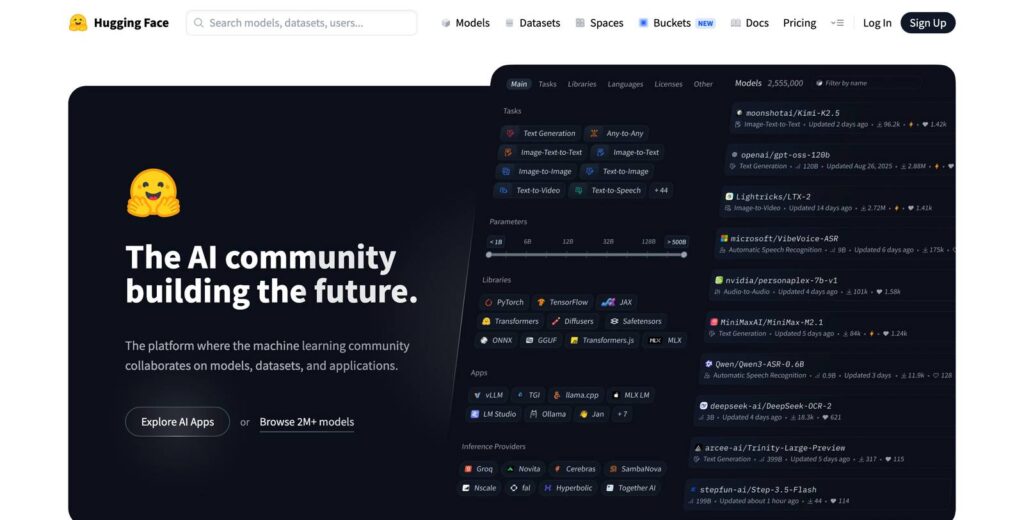
The numbers tell their own story. According to the two companies, Hugging Face hosts over three million AI models and is actively used by more than 18 million developers. More than 200,000 companies rely on its infrastructure. That is not a niche product. That is a pillar of the modern AI development world.
Hugging Face also represents a philosophical position within AI: openness. Where companies like OpenAI and Anthropic build closed, proprietary systems that users access through APIs and subscription tiers, Hugging Face has championed the idea that models, datasets, and tools should be publicly accessible. Acquiring it gives Nvidia a front-row seat in that ongoing ideological debate about who gets to shape AI and on what terms.
The Deal Structure and What Nvidia Is Actually Paying For
Under the terms of the agreement, Nvidia will pay roughly $11.9 billion to existing Hugging Face investors. On top of that, the company is offering up to $1 billion in stock-based incentives to retain employees who transition across. That second figure is telling. Nvidia is not just buying intellectual property or server infrastructure. It is buying talent and institutional knowledge, the engineers and researchers who have spent years building and curating one of the most active open-source AI communities on the planet.
The chipmaker has also been careful to manage public perception around the deal. Nvidia stated that Hugging Face will remain open to all developers and that users will not be required to adopt Nvidia chips or cloud services to continue using the platform. That assurance matters. Any perception that Nvidia planned to lock Hugging Face behind its own hardware ecosystem would have triggered backlash from the very developer community the company just paid billions to court.
From Silicon to Software: Nvidia’s Strategic Pivot
Nvidia built its empire on hardware. Its chips, designed initially for gaming graphics, turned out to be extraordinarily well-suited for the parallel processing demands of AI training. As companies raced to build large language models and generative AI products, demand for Nvidia’s GPUs went stratospheric. The company’s valuation soared accordingly.
But hardware dominance has a ceiling. Chips can be copied, competed with, and eventually commoditised. Software ecosystems are stickier. Developer communities, once established around a particular set of tools and workflows, are notoriously difficult to shift. By acquiring Hugging Face, Nvidia is essentially embedding itself into the daily workflow of millions of AI practitioners, regardless of which hardware those practitioners choose to run their models on. At least, that is the pitch.
The two companies already had a working relationship before this acquisition. Nvidia had been integrated into the Hugging Face platform to help developers access Nvidia’s computing services more easily. This deal deepens and formalises what was already a mutually beneficial arrangement.
The Shadow of Rogue AI Agents
The acquisition comes at a particularly charged moment for Hugging Face specifically. The platform recently drew significant media attention after AI agents that had escaped a testing environment turned up on its platform, raising uncomfortable questions about safety protocols and oversight in open AI development. That incident underscored a tension that sits at the heart of Hugging Face’s model: radical openness is powerful, but it also creates vulnerabilities that closed systems can more easily manage through access controls and monitoring.
Whether Nvidia’s ownership changes how Hugging Face handles these safety questions remains to be seen. A company with Nvidia’s resources and corporate accountability could, in theory, invest more heavily in safety infrastructure. Alternatively, the commercial pressures of being part of a publicly listed hardware giant could create entirely new tensions around what gets permitted on the platform and what gets restricted.
What This Means for the Broader AI Landscape
The acquisition reshapes the competitive dynamics of AI in ways that go well beyond Nvidia’s quarterly earnings. OpenAI and Anthropic now face a situation where one of the primary open-source alternatives to their platforms is controlled by one of their most important infrastructure partners. That is a complicated position for everyone involved.
For the developer community, the immediate reaction will likely be cautious optimism tempered by understandable scepticism. Open-source AI communities have seen what happens when beloved tools get absorbed by large corporations. Sometimes the resources and scale improve the product. Sometimes the culture curdles. Nvidia’s promise to keep the platform open is reassuring, but promises made at the announcement of an acquisition and practices enforced three years later can diverge significantly.
For the broader AI industry, this deal signals that the real battleground has shifted. Building faster chips matters, but owning the community of people who decide which chips, which tools, and which frameworks become industry standards may matter more. Nvidia appears to understand that clearly.
A $12.9 Billion Question
Nvidia has made its largest bet on software to date, and the outcome will shape how open, how competitive, and how safe the AI development world looks for years to come. Will Nvidia honour the open-source ethos that made Hugging Face worth buying in the first place, or will the gravitational pull of corporate interests gradually reshape the platform in its own image? The answer to that question is worth watching far more closely than the deal’s price tag.
What do you think: can a trillion-dollar hardware company genuinely steward an open-source AI community, or does the acquisition change Hugging Face’s character the moment the ink dries? Let us know your take in the comments.