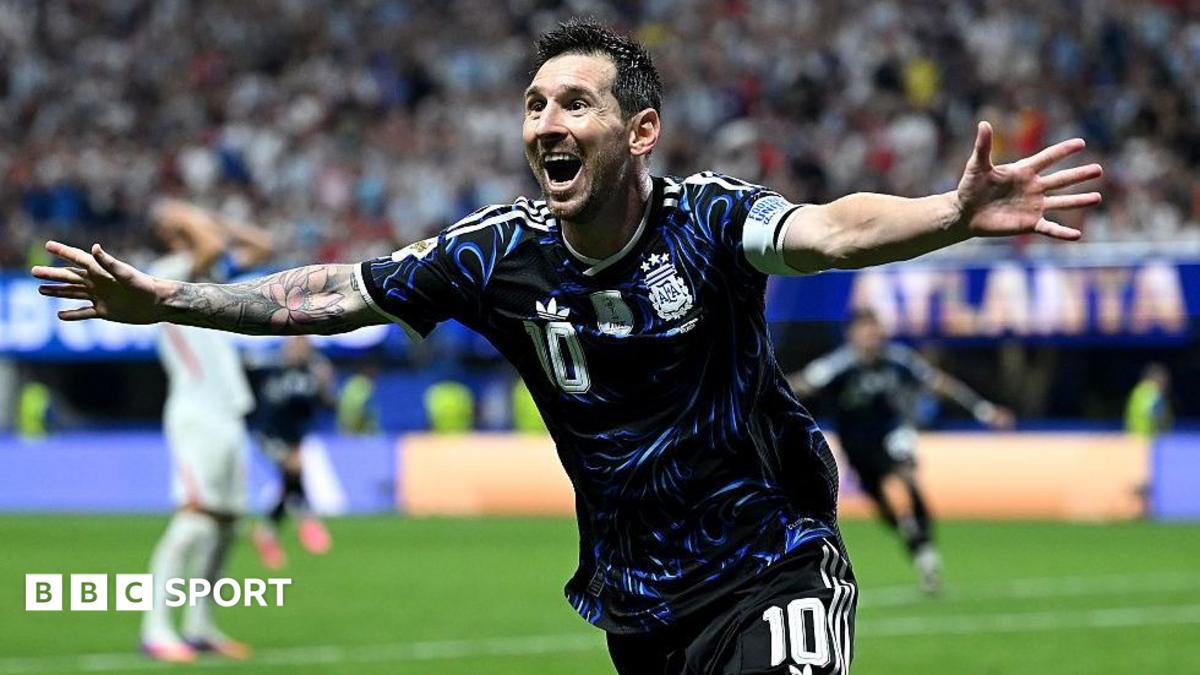
This weekend, Argentine football will do something it has never quite done before. Every domestic league match across the country will stop at the 10th minute, players and fans alike pausing in unison to honour a man whose name has become inseparable from the sport itself: Lionel Messi. The Argentine football league confirmed the tribute, calling for a moment of recognition during all scheduled fixtures as a farewell salute to Messi’s international career.
Why the Tenth Minute?
Numbers carry weight in football. The number ten shirt is practically sacred in Argentina, a garment worn by the gods of the game before Messi and transformed into something else entirely once he pulled it on. By choosing the tenth minute, the league is making a statement that needs no translation. You do not need to speak Spanish, understand the offside rule, or know the history of the Copa América to grasp what that number means in this context.
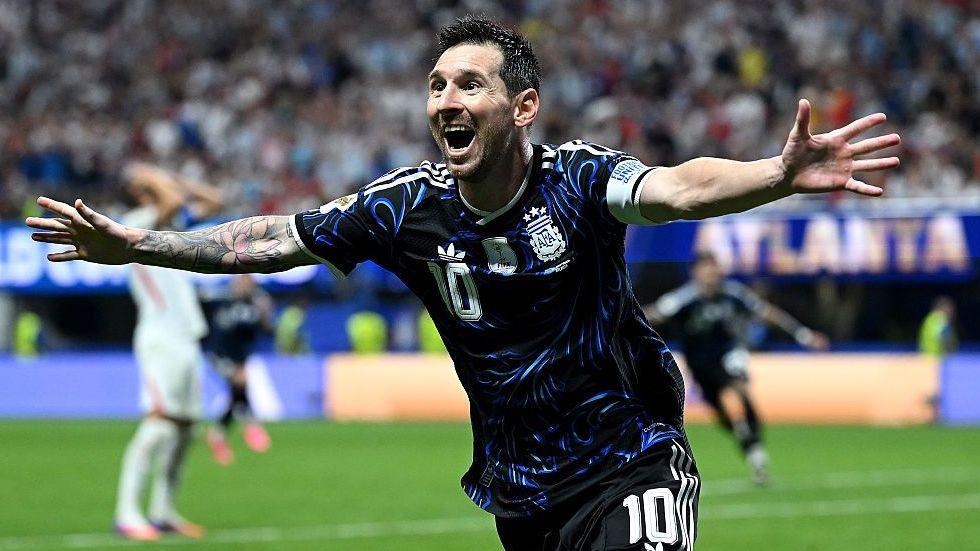
There is a poetry to it, too. Football is a sport of moments: the gasp before a free kick, the silence before a penalty, the eruption after a goal. Freezing the game at that exact minute turns every stadium across the country into a single, shared pause. Tens of thousands of people breathing at the same time, thinking about the same player.
What Messi’s International Career Meant to Argentina
For years, a particular criticism followed Messi around like an unwelcome shadow. He was brilliant at Barcelona, the argument went, but somehow not quite the same player for Argentina. Goals came, performances impressed, but the trophies did not arrive. The narrative was cruel and, ultimately, wrong.
When Argentina lifted the Copa América in 2021, it was more than a football result. It was a release. A country that had waited 28 years to win that tournament finally exhaled, and Messi, by then a man in his mid-thirties who had endured more near-misses in international football than almost any other great player, was at the centre of it. Then came the 2022 FIFA World Cup in Qatar. What unfolded over those weeks in the desert is the kind of sporting story that people will still be telling fifty years from now. Messi performed at a level that felt almost unfair, almost fictional, carrying Argentina through tense knockout games and ultimately guiding them to the title in one of the most dramatic finals the competition has ever produced.
By the time that tournament ended, the debate about his international legacy was over. Completely, irreversibly over.
A League Paying Its Respects
The decision by the Argentine football league to pause its matches is significant precisely because it is organised. This is not one club, one set of fans, or one corner of the country. It is the entire domestic structure of Argentine football choosing, collectively, to stop and acknowledge what one of its own has meant to the game.
Tributes to active or recently retired players are not uncommon in football. Stadium dedications, farewell matches, guard-of-honour ceremonies, they all follow a recognisable script. But a league-wide pause, timed to a specific minute across every match on a given weekend, carries a different kind of weight. It says: we all agree. There is no debate here. Whatever your club allegiance, whoever you wanted to win today, this is a moment we share.
Argentina’s relationship with football is famously intense. The sport is not entertainment there in the way it might be in other countries. It is identity, politics, neighbourhood, family. Which makes the scale of this tribute feel proportionate rather than excessive. When a country that feels football that deeply chooses to honour a player this way, it tells you something real about the size of what he achieved.
A Farewell Written in Real Time
Messi is not fading quietly. Even at this stage of his career, playing club football in the United States with Inter Miami, he remains a figure who draws stadiums full of people who simply want to watch him move with a ball. But international football has a different rhythm to club football, and his chapter with the national team has now come to a close.
Argentina will be Argentina after Messi. A passionate, football-obsessed nation with talented players and a tradition that runs deeper than any single individual. But the gap left by a player of his specific quality, his vision, his timing, his ability to produce something extraordinary when the stakes are highest, that gap does not fill easily. It may not fill at all, at least not in the same way.
The tenth minute pause is not just a goodbye to a player. It is also a moment for an entire country to reckon with what it witnessed over the past two decades: a genuinely once-in-a-generation talent who, despite all the pressure and all the early heartbreak, delivered the ultimate prize on the biggest stage.
Football rarely wraps itself up so neatly. But this time, it did.
What does a tribute like this tell us about the line between sport and national identity, and do you think any other player alive today could command the same response from their country?