


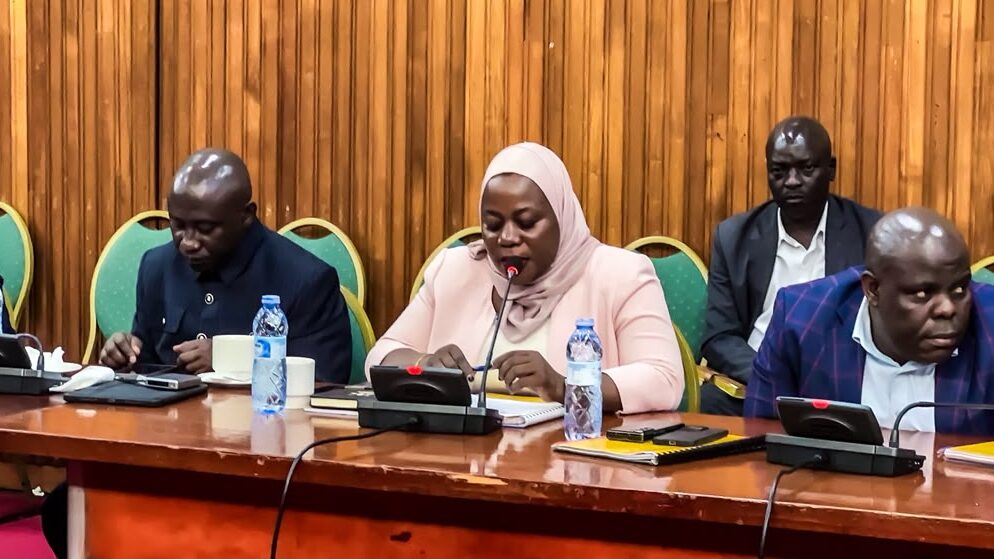
Uganda Airlines is headed for a reckoning. The Parliamentary Committee on Commissions, Statutory Authorities and State Enterprises, widely known as COSASE, has served formal summonses through the police to the national airline’s top management, ordering them to appear before the committee and answer for a string of concerns raised in the Auditor General’s 2024/25 audit report. The move is significant, not only because of what those findings likely contain, but because of the charged political context surrounding why it has taken this long to get the airline’s leadership into a hearing room.
When Parliament Has to Call the Police
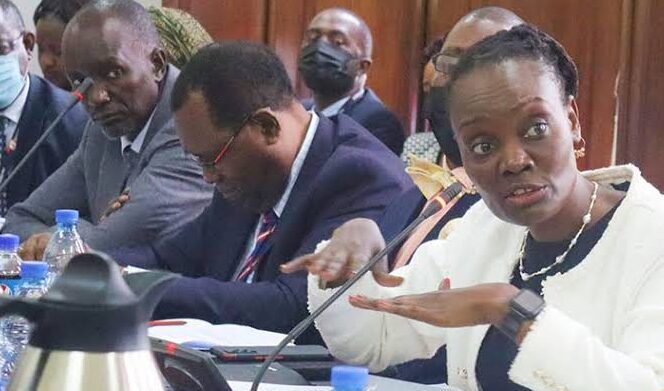
The decision to route the summonses through law enforcement rather than standard parliamentary correspondence is not a routine administrative choice. It signals that the committee means business, and that previous attempts or expectations for voluntary engagement have not produced results. For a state enterprise that is funded, at least in part, by public money, declining or delaying a parliamentary call to account is a serious matter.
COSASE is one of Uganda’s most consequential parliamentary watchdog committees. Its mandate covers the oversight of government commissions, statutory bodies, and state enterprises, which means Uganda Airlines falls squarely within its purview. When the Auditor General raises flags about the operations or finances of any such entity, COSASE is the body constitutionally positioned to interrogate those findings and demand explanations.
The 2024/25 audit report from the Auditor General’s office, which triggered the current summonses, has not been fully detailed in public statements, but the fact that the committee felt compelled to go through police channels suggests the findings are not trivial. Audit queries on state enterprises typically cover areas like financial management, procurement irregularities, governance structures, and performance against set targets.
Allegations of Political Shielding
Perhaps the most explosive element of this story is not the audit itself, but what some members of parliament have alleged alongside it. According to reporting on the COSASE committee sitting, a number of MPs have claimed that Uganda Airlines was among the agencies deliberately shielded from appearing before parliamentary committees during the tenure of the 11th Parliament’s leadership.
That is a serious charge. If accurate, it would mean that a publicly owned airline was given a form of political protection that effectively placed it above the scrutiny that every other state enterprise is subject to. Parliamentary oversight is not optional for government-linked institutions. It is a constitutional mechanism. Allegations that it was selectively suspended for certain agencies raise uncomfortable questions about who benefited from that arrangement and why.
It is worth noting that these are allegations raised by MPs during a committee sitting. They have not been independently verified or adjudicated. But the very fact that they were raised, and that they were raised in the specific context of Uganda Airlines, adds significant weight to the urgency of the current summonses.
Uganda Airlines: A Carrier Under Pressure
Uganda Airlines was relaunched in 2019 after a roughly two-decade absence, with the government positioning it as a driver of regional connectivity and a source of national pride. The airline operates routes across Africa and beyond, flying under the Ugandan flag at considerable cost to the public purse. Like many young national carriers on the continent, it has faced the dual challenge of building a competitive route network while managing the financial demands that come with running a modern aviation operation.
State-owned airlines are notoriously difficult to run without political interference, and the line between strategic government support and problematic political meddling can be thin. When an airline operates on public funds, every procurement decision, every executive salary, every route choice, and every partnership becomes a matter of public interest. The Auditor General’s role is precisely to examine those decisions with an independent eye.
The reluctance, or apparent reluctance, of the airline’s management to engage with COSASE without police-enforced summonses does not inspire confidence. Transparency is not a favour that a state enterprise grants to parliament. It is an obligation.
What the Hearing Could Reveal
When Uganda Airlines management finally sits before COSASE, the committee will likely press on several fronts. Financial performance is an obvious area, including revenue generation, debt levels, and any losses that may have been recorded in the audit period. Procurement practices will almost certainly feature, given that aircraft acquisition, maintenance contracts, and catering agreements are all areas where state enterprises have historically faced audit queries in Uganda and across the region.
Governance questions are equally likely. Who makes decisions at Uganda Airlines, how are board members appointed, and is there adequate separation between the airline’s commercial operations and political considerations? These are the kinds of structural questions that an Auditor General’s report can surface and that a parliamentary committee can pursue.
The allegations about political shielding during the 11th Parliament also mean that committee members are likely to bring a sharper-than-usual edge to the proceedings. There is something at stake beyond the audit findings themselves, and that is the credibility of parliamentary oversight as a functioning institution.
The Broader Stakes for Accountability in Uganda
This moment matters beyond Uganda Airlines. How this hearing unfolds will send a signal about the health of parliamentary accountability in Uganda. If the airline’s management appears, engages honestly, and the committee produces a report with real recommendations, it will show that oversight mechanisms can still function even after periods of apparent political interference.
If the process drags on, if management stonewalls, or if political pressure again finds a way to muffle the proceedings, it will confirm a troubling pattern where public institutions operate with impunity precisely because they are connected to powerful interests.
Uganda’s citizens who fly on Uganda Airlines, who pay taxes that subsidise its operations, and who have a stake in whether the country has a functioning, well-managed national carrier, deserve straight answers. The audit process and parliamentary oversight exist for exactly this reason.
The summonses have been issued. The hearing is coming. The question now is whether Uganda Airlines management will walk into that committee room ready to be accountable, or whether this will become yet another chapter in a longer story about the limits of transparency in Uganda’s public sector. Which side of history do you think they will choose?