











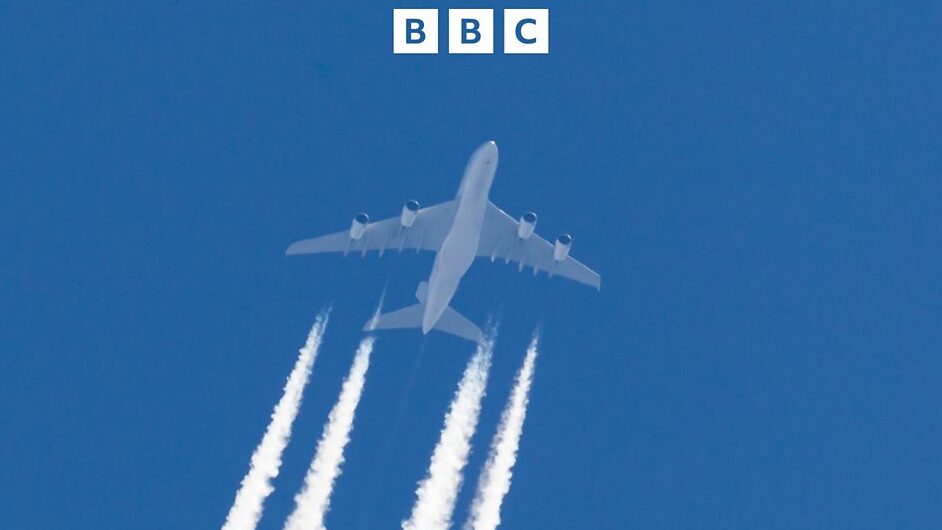
Look up on a clear day almost anywhere in the world and you will spot them: long, white streaks drawn across the blue sky like chalk lines on a blackboard. They appear innocent enough, even beautiful in a certain light. But those trails left behind by commercial aircraft are, according to growing scientific understanding, contributing to the warming of the atmosphere in ways that deserve far more public attention than they currently get.
What Are Vapour Trails, Exactly?
When a jet engine burns fuel at high altitude, it releases hot, humid exhaust into an environment where the air is extremely cold. The moisture in that exhaust instantly freezes around tiny particles of soot and other matter, forming ice crystals. The result is what we call a contrail, short for condensation trail, or more simply, a vapour trail. Under the right atmospheric conditions, those trails persist for hours, spreading out into thin, wispy clouds that cover large swathes of the sky.
Most people have grown so accustomed to seeing them that they barely register anymore. But atmospheric scientists have been paying very close attention, and what they have found raises real questions about the full climate cost of aviation.
Trapping Heat From Above
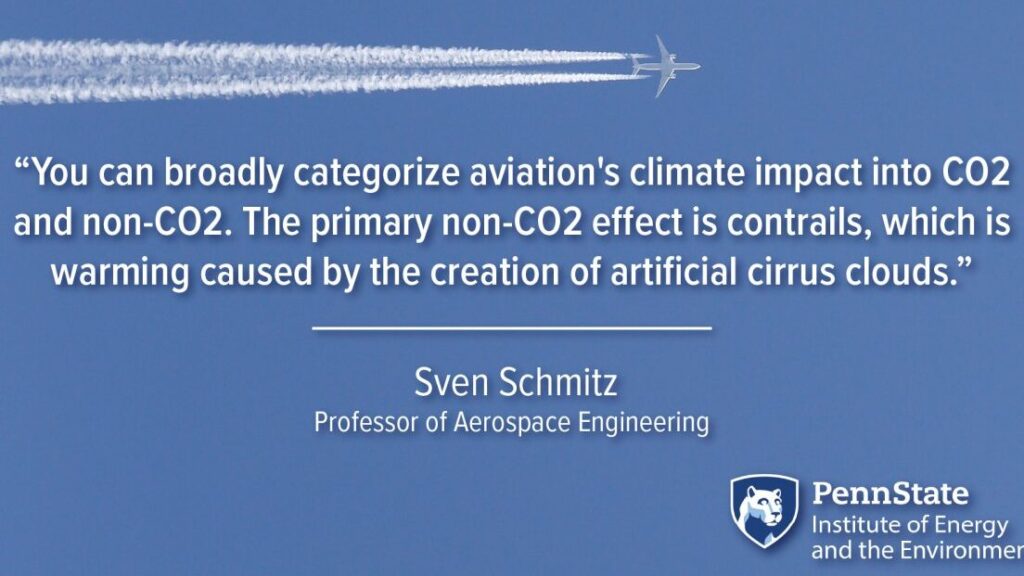
Here is where things get genuinely interesting and a little alarming. Cirrus clouds, which is essentially what long-lasting contrails become, have a complex relationship with the Earth’s energy balance. During the day, they reflect some incoming sunlight back into space, which has a slight cooling effect. But at night, and even during the day, they also trap outgoing heat radiation that would otherwise escape into space. On balance, the scientific consensus points toward a net warming effect from contrail cirrus clouds.
This means that even when an aircraft is not burning fuel inefficiently, the simple act of flying through certain patches of atmosphere generates a warming influence that lingers long after the plane has landed. Discussions around aircraft vapour trails and their atmospheric impact have been gaining traction in scientific and tech communities alike, as researchers push to better understand and ultimately reduce this effect.
The Scale of the Problem
Aviation accounts for roughly 2.5 percent of global carbon dioxide emissions, which is already a significant figure given the relatively small percentage of the world population that flies regularly. But when you fold in the warming from contrail cirrus clouds and other non-CO2 effects, some researchers estimate that aviation’s total climate impact could be two to four times greater than its CO2 footprint alone suggests. That is a staggering gap between public perception and scientific reality.
The challenge is that contrail formation is highly sensitive to where exactly a plane flies. Certain altitude bands and atmospheric humidity levels are far more likely to produce long-lasting trails. Change the route or the cruising altitude by just a small margin, and the contrail impact can drop dramatically. This insight is what has aviation engineers and climate scientists cautiously optimistic that meaningful change is within reach.
Tech Solutions Taking Shape
The good news is that the aviation industry, under increasing pressure from regulators and environmentally conscious travelers, is beginning to take the contrail problem seriously as a technological and operational challenge rather than just an abstract scientific curiosity.
One avenue gaining real momentum involves using weather forecast data and atmospheric modelling to identify which flight paths are most likely to generate persistent warming contrails. Airlines could theoretically reroute flights to avoid these zones, accepting a small increase in fuel burn in exchange for a much larger reduction in warming impact. Early modelling suggests this trade-off could be extremely favourable, with modest fuel cost increases delivering outsized climate benefits.
Sustainable aviation fuels, or SAFs, are also part of the picture. These fuels burn cleaner and produce less soot, which means fewer particles around which ice crystals form. Fewer ice crystals means shorter-lived contrails. The fuel itself is not yet widely available at scale, and costs remain high, but the dual benefit of lower CO2 and reduced contrail formation makes SAFs one of the more promising tools in aviation’s climate toolkit.
Hydrogen-Powered Flight and the Contrail Question
Hydrogen propulsion, which several aircraft manufacturers are actively developing for commercial use in the coming decades, adds an interesting wrinkle to the contrail debate. Hydrogen combustion produces water vapour as its primary byproduct, which means hydrogen-powered planes could actually produce more visible trails than conventional jets. Whether those contrails would be more or less warming than today’s depends heavily on their composition and the altitudes at which hydrogen aircraft operate. It is one of the more intriguing unsolved questions in next-generation aviation research.
What This Means for Travelers
If you fly regularly, either for business or leisure, the contrail issue adds a new layer of complexity to the already fraught question of your personal carbon footprint. Carbon offsetting schemes have been widely criticised for overstating their benefits. But the contrail problem suggests that even carbon-focused accounting of flights misses a large chunk of the actual climate impact.
Some consumer-facing flight booking platforms are beginning to display estimated climate impact scores that go beyond simple CO2 calculations. The hope is that informed travelers, given better data, will push airlines and policymakers toward faster action. Whether airline loyalty programs and cheap fares will trump climate consciousness remains, to put it generously, an open question.
The Bigger Picture
Aviation is one of the hardest sectors to decarbonise. Unlike road transport, where battery technology has made rapid and visible progress, long-haul flying presents physics challenges that no battery chemistry currently addresses. The contrail problem adds urgency to an already pressing timeline. The atmosphere does not wait for the industry to find a convenient moment to act.
Governments, meanwhile, have been slow to regulate non-CO2 aviation impacts. The European Union has taken some steps toward including aviation’s full climate footprint in its regulatory frameworks, but global coordination remains elusive. Without binding rules, airlines have little financial incentive to reroute flights or invest in costlier cleaner fuels when competitive pressure rewards whoever keeps ticket prices lowest.
The sky above us is not empty space we pass through without consequence. Every trail left behind is a physical mark of an energy transaction with the climate system. Understanding that fully, and acting on it, might be one of the more important tech and policy challenges of the decade ahead.
So the next time you look up and see those white lines fading slowly into a haze across an otherwise clear sky, it is worth asking: what exactly would it take, technologically, politically, and personally, to clean up the skies we share?