


Ashley Schmidt used to love her garden. The 44-year-old administrative assistant, who lives in North Garland, a suburb just outside Dallas, would spend long stretches outdoors, cycling to nearby parks and crouching low to photograph the small, unhurried world of bugs, lizards, and toads. That life, quiet and grounded, has largely disappeared. Not because of anything dramatic. Because of a buzz.
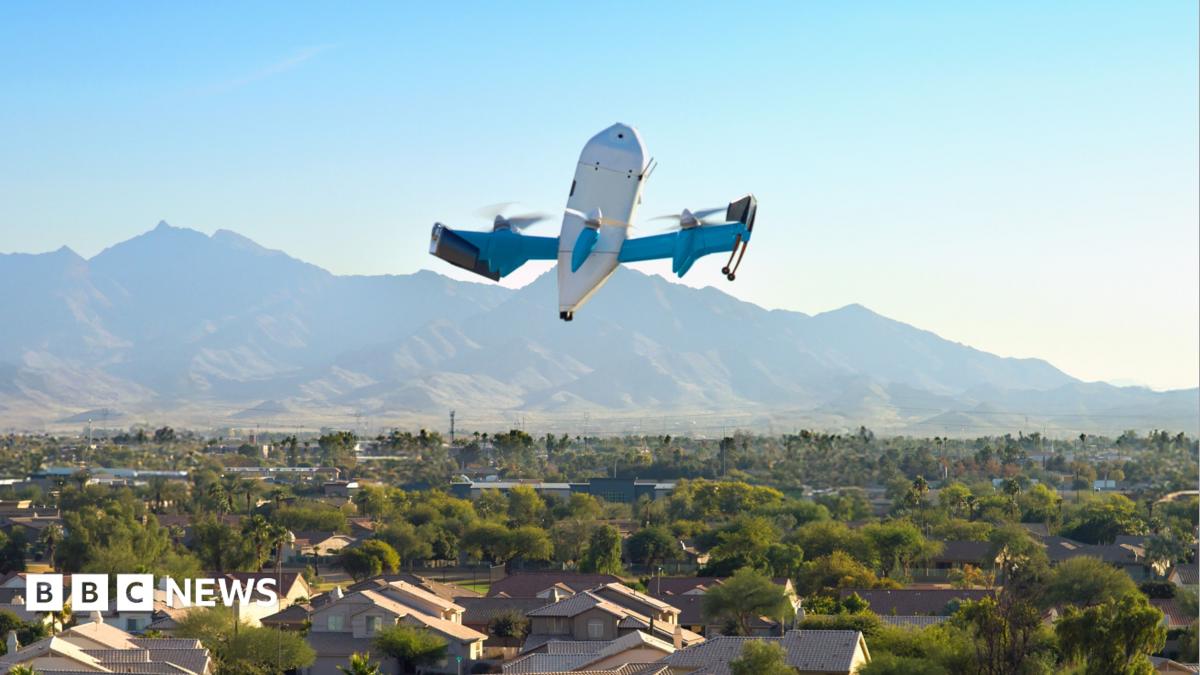
“They emit this very annoying buzz. It triggers my fight or flight response,” Schmidt says, describing the delivery drones that now pass regularly over her neighbourhood, dropping off parcels for her neighbours. She can hear them approaching, she can hear them while indoors, and she hears them again as they retreat. The garden visits have stopped. So have the cycling trips.
Schmidt is not alone. Across the United States, a wave of residents is waking up to the realities of living beneath an expanding network of commercial drone routes, operated by companies including Amazon and Walmart, both locked in fierce competition to make same-day and next-day delivery faster, cheaper, and more automated than ever before.
The Scale of What’s Coming
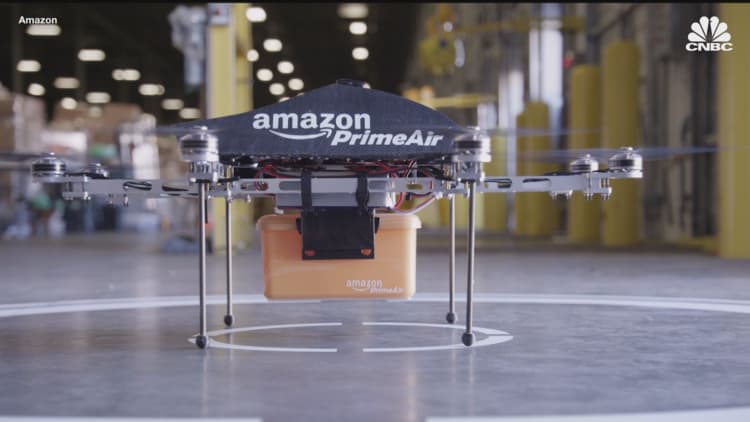
This is not a distant, speculative scenario. Amazon Prime Air is currently in the process of expanding its drone delivery service to nearly 500 cities and towns across the United States, handling orders for items small enough to fit inside a shoebox. The company has also begun rolling out its service to customers in and around Darlington in northern England, signalling that the ambition is not confined to American skies.
What was, not long ago, a novelty or a tech industry talking point has become, for a growing number of people, a routine feature of daily life. The trajectory is clear: drone deliveries are moving from pilot programmes to permanent infrastructure, and the communities underneath those flight paths are still figuring out what that actually means for them.
The Noise Problem Nobody Warned You About
The frustrations voiced by people like Schmidt point to a tension that the drone industry has been slow to fully reckon with. Speed and convenience sell. Noise does not. Yet the acoustic footprint of a drone fleet operating at scale is not a minor inconvenience, for some residents, it has become a persistent intrusion into private life.
Unlike a passing car or a plane at cruising altitude, delivery drones operate at lower elevations and fly repeated, predictable routes. That means the sound is not a one-off event. It is a rhythm, and for people sensitive to noise, that rhythm can feel relentless.
Amazon has publicly acknowledged this tension, with the company stating it is actively working to reduce the noise levels produced by its drone fleet. The question is whether engineering fixes can keep pace with rapid expansion, and whether communities have any meaningful say in how quickly this technology arrives above their homes.
A Technology That Moves Faster Than the Conversation
The drone delivery industry has, in many respects, outrun the public debate around it. Regulatory bodies have been updating frameworks, but most of the focus has been on airspace safety, collision avoidance, and privacy, all legitimate concerns, but ones that leave noise largely in the background. For people like Schmidt, the absence of a clear channel to raise acoustic grievances is part of what makes the situation feel so disorienting.
There is also a class dimension worth considering. The suburbs most likely to see early, dense drone coverage are often the same communities where online shopping volume is highest. That is not inherently a problem, but it does mean that the benefits of faster delivery and the costs of the noise that comes with it are not evenly distributed across neighbourhoods or income levels.
What the Industry Owes Its Neighbours
To be fair to Amazon and its competitors, the engineering challenge is genuinely hard. Drones require spinning rotors to stay airborne, and rotors generate noise, that is physics, not negligence. Companies are investing in quieter motor designs, altered flight paths, and altitude adjustments to reduce what reaches ground level. These are real efforts, not just public relations exercises.
But the pace of deployment raises a legitimate question: should communities be able to opt in, rather than having to opt out after the fact? In most markets, drone delivery infrastructure is being built from the top down, with residents finding out about expanded service areas through press releases rather than consultations. That dynamic has left people like Schmidt with no obvious recourse, just a changed relationship with their own outdoor space.
The launch of Amazon Prime Air in parts of northern England adds a cross-Atlantic dimension to the conversation. British communities, with their denser housing and smaller gardens, may find the acoustic experience even more pronounced than their American counterparts. How regulators and local councils respond will be closely watched by advocates on both sides of the debate.
Living Below the Flight Path
For Schmidt, the philosophical debate about the future of logistics is secondary to a simpler reality: she misses her garden. She misses the quiet concentration of crouching beside a flower bed with a camera, waiting for a toad to blink. The drones did not take that from her maliciously, they simply arrived, loud and frequent, and the pleasure of being outdoors quietly evaporated.
That small, personal loss is easy to dismiss in the context of billion-dollar supply chains and the undeniable convenience of next-hour delivery. But it is worth pausing on, because it captures something important about how we often absorb the costs of technological progress. The benefits are aggregated and celebrated. The costs are atomised and borne quietly, one frustrated nature lover at a time.
As drone delivery moves from novelty to normal, the industry, regulators, and the public all have a role in deciding what kind of trade-offs are acceptable. The skies above American suburbs are filling up fast. The question worth sitting with is this: who gets to decide how loud the future is allowed to be?