




Uganda’s government is preparing to cut official travel, workshops, and administrative spending after the country’s currency lost nearly a fifth of its value against the US dollar in under eight months, raising the cost of fuel, medicines, and imported goods for millions of ordinary Ugandans.
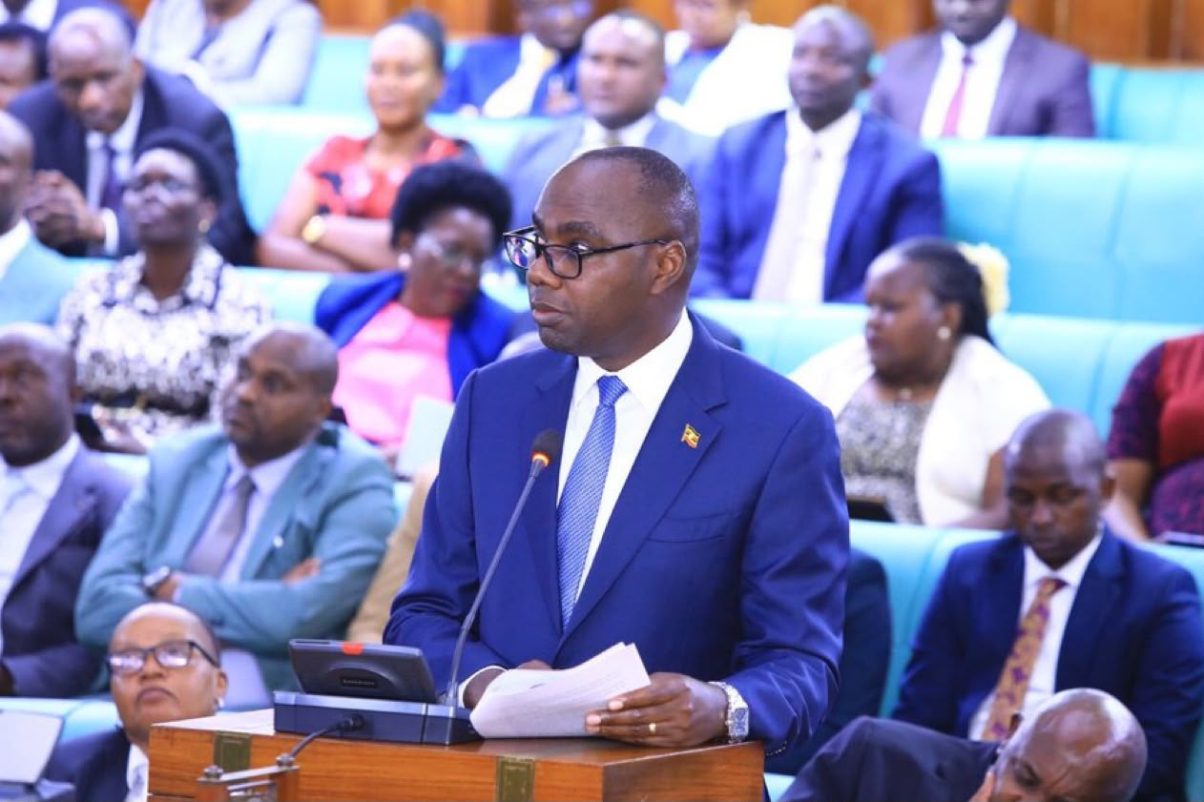
Finance Minister Henry Musasizi delivered the uncomfortable update to Parliament on Tuesday, confirming that the Ugandan shilling had slid from roughly Shs 3,604 to the dollar in March 2026 to approximately Shs 4,500 by late October. That single figure tells a punishing story: importers now need close to Shs 900 more for every dollar they need to buy compared to where things stood just seven months ago.
A Currency Under Pressure From Multiple Directions
The depreciation has not happened in a vacuum. According to reporting on Musasizi’s parliamentary address, the minister pointed to a combination of forces squeezing Uganda’s foreign-exchange position simultaneously. Rising international petroleum prices, driven in part by geopolitical tensions in the Middle East, have pushed up both fuel costs and the associated shipping and insurance charges that Uganda pays to get goods into the landlocked country.
At the same time, the global prices for two of Uganda’s most important export earners, coffee and cocoa, have fallen. That means Uganda is earning fewer dollars from what it sells abroad, even as it needs more dollars to pay for what it buys. Reduced tourism receipts have added to that squeeze on the supply side of the foreign-exchange equation.
Musasizi laid out the basic mechanics clearly for lawmakers. When a country’s demand for dollars, to finance imports and service external obligations, outpaces what flows in through exports, investment, and other channels, the dollar’s price simply rises. Uganda is currently on the wrong side of that equation, and the gap has widened quickly.
The minister also flagged tighter international financial conditions and speculative behaviour in currency markets as aggravating factors, the kind of self-fulfilling dynamics where expectations of further depreciation can accelerate the slide.
Government Turns the Lens on Its Own Spending
The response from Musasizi’s ministry focuses, at least in part, on reducing the government’s own appetite for foreign exchange. By cutting non-essential expenditure such as overseas official travel, workshop budgets, and administrative costs, the state would directly reduce the volume of dollars it needs to source from the market.
It is a measure that carries both practical and symbolic weight. Practically, it conserves foreign-exchange reserves at a moment when every dollar counts. Symbolically, it signals to markets, creditors, and the Ugandan public that the government is not simply watching the shilling fall while continuing business as usual. Whether the cuts will be deep enough, or implemented consistently enough, to move the needle on the exchange rate is a separate and much harder question.
Currency crises rarely yield to a single lever. Governments that have successfully defended their currencies during sharp depreciations have typically combined fiscal restraint with coordinated monetary policy, targeted interventions in foreign-exchange markets, and, critically, measures to boost export earnings over the medium term. Uganda will likely need all of these working together.
What Inflation Could Look Like Over the Next Year
The Bank of Uganda’s October monetary policy assessment paints a sobering picture of where prices could head. The central bank projected headline inflation could climb to between 7 and 7.5 percent over the next 12 months, driven by imported inflation and the currency’s weakness.
For consumers, that projection translates into higher transport costs as fuel prices feed through to the cost of moving people and goods, more expensive food as production and logistics costs rise, and increased prices on anything that crosses a border. Medicines, machinery, and everyday manufactured goods that Uganda imports rather than produces domestically are all exposed to the exchange rate shift.
It is worth noting that inflation at 7 to 7.5 percent, while uncomfortable, is not catastrophic by historical standards for the region. But the speed of the shilling’s decline, roughly 20 percent in seven months, suggests the risk of inflation overshooting those projections if the currency continues to weaken or if global petroleum prices spike further.
The Export Side of the Problem
Uganda’s longer-term vulnerability here is structural. The country’s dollar earnings depend heavily on agricultural commodities whose prices are set on global markets where Uganda has no influence. Coffee is the single biggest export earner, and when international coffee prices soften, the impact on Uganda’s foreign-exchange inflows is direct and significant. Diversifying the export base, moving up value chains, and building tourism receipts back toward pre-pandemic levels are all strategies that make economic sense but take years to deliver results.
In the short term, the government’s ability to manage the shilling’s trajectory will depend on how quickly the Bank of Uganda chooses to act on monetary policy, the pace and discipline of the spending cuts Musasizi announced, and whether global commodity prices and petroleum costs move in Uganda’s favour or against it.
The Bigger Picture
Uganda is not alone in navigating a difficult external environment in 2026. Across sub-Saharan Africa, currencies have come under pressure as the dollar remains strong, global interest rates stay elevated, and commodity prices move unpredictably. But each country’s exposure differs, and Uganda’s particular combination of high import dependence, agricultural export concentration, and a landlocked geography that adds freight costs to nearly everything makes the shilling especially sensitive to the kind of external shocks that have collided this year.
The spending cuts announced this week are a necessary first step, not a complete solution. They demonstrate fiscal awareness and a willingness to act. What they cannot do on their own is reverse a depreciation driven primarily by global forces. For that, Uganda needs exports to perform better, tourism to recover, and international conditions to stabilise.
As Ugandans absorb the reality of a weaker shilling and potentially higher prices in the months ahead, the pressure on policymakers will only grow. The decisions made now, on monetary policy, on fiscal discipline, and on long-term export strategy, will shape how deep the pain runs and how quickly the recovery comes.
With inflation projections already pointing upward and the shilling sitting nearly 20 percent weaker than it was at the start of the year, here is the question worth sitting with: can spending cuts alone stabilise Uganda’s currency, or is a more ambitious economic overhaul the only thing that will truly protect Ugandan households from the cost-of-living squeeze that appears to be coming?