




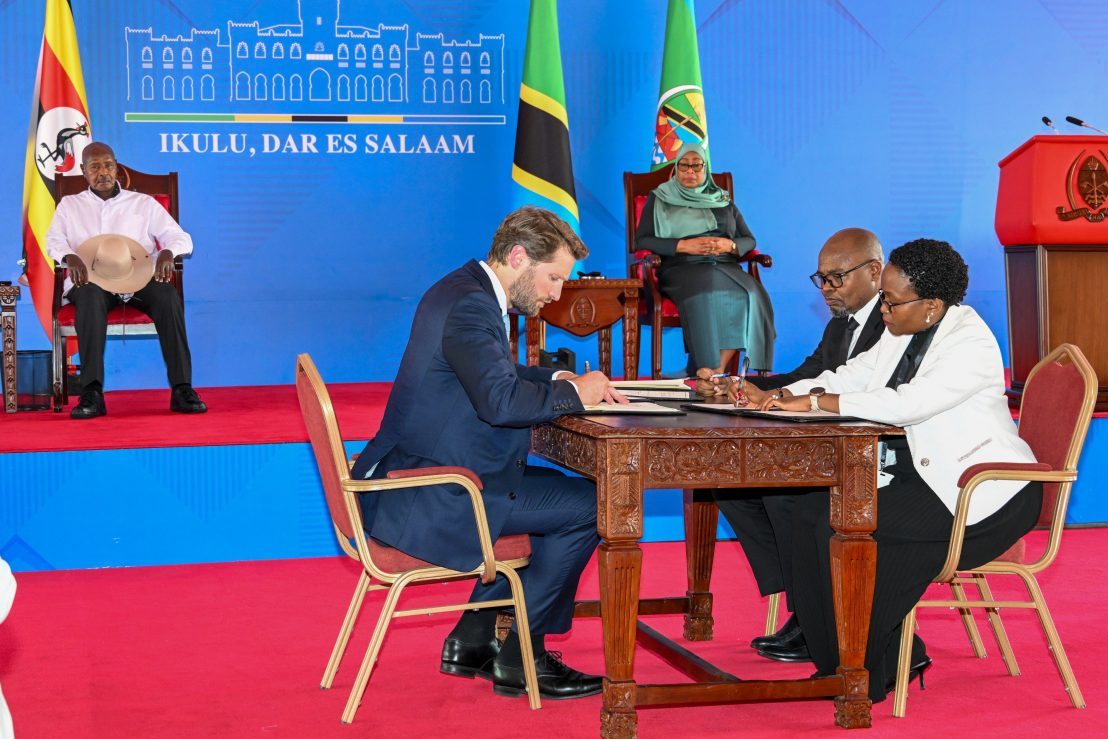
Dar es Salaam, August 6, 2026. Two heads of state, a global energy heavyweight, and one port city quietly positioned on Tanzania’s northern coast. On Thursday, Uganda’s President Yoweri Museveni and Tanzania’s President Samia Suluhu Hassan oversaw the signing of a memorandum of understanding to develop what could become East Africa’s most consequential petroleum nerve centre: the Tanga Regional Energy Hub.
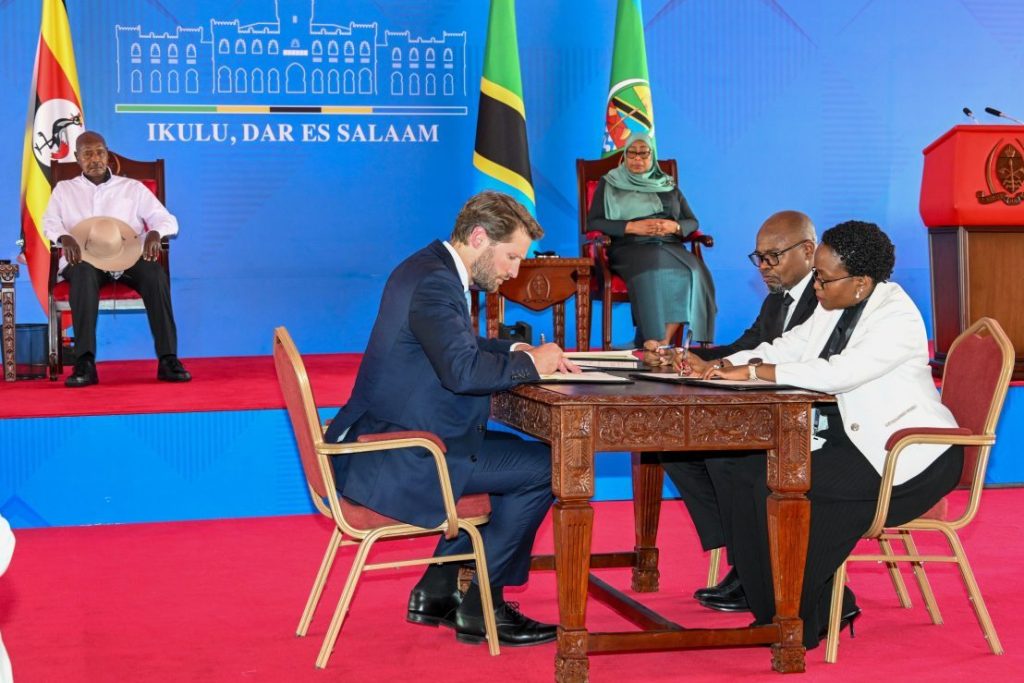
The agreement, signed between the Uganda National Oil Company, the Tanzania Petroleum Development Corporation, and Vitol Bahrain E.C., stretches the two nations’ existing energy relationship well beyond the framework of the East African Crude Oil Pipeline. This is bigger than a pipeline. This is infrastructure designed to store, refine, trade, and distribute petroleum across an entire sub-region.
What the Tanga Hub Actually Involves
The planned hub is not a single facility. It is a web of integrated infrastructure to be built in the port city of Tanga, covering petroleum storage, refining capacity, logistics networks, trading operations, and distribution channels. Think of it as a regional fuel ecosystem, one designed to absorb Uganda’s incoming oil production and transform it into usable, tradeable, exportable energy for East and Central Africa.
The timing is deliberate. Uganda is on course to begin oil production before the end of 2026, making it urgent to have downstream infrastructure ready to handle those barrels. The Tanga hub is designed to work in tandem with Uganda’s planned 60,000-barrel-per-day Hoima refinery, giving the country not just extraction capacity but actual market reach. Producing oil is one thing. Getting it to buyers efficiently is another matter entirely.
Vitol’s Expanding Footprint in the Region
For anyone watching the energy sector closely, Vitol’s name in this deal comes as no surprise. The global commodity trading firm is already deeply embedded in Uganda’s petroleum supply chain, operating under a seven-year partnership with the Uganda National Oil Company that covers fuel supply and infrastructure development. That arrangement comes with financing of up to $2 billion, directed at petroleum storage terminals, pipelines, and associated logistics across Uganda.
The Tanga agreement effectively widens that existing collaboration into a transnational platform. Vitol is no longer just a supplier to Uganda; it is now a co-architect of a regional energy and trading network that could serve multiple landlocked countries dependent on coastal import and export routes.
This is how major energy traders expand influence: not through brash announcements but through layered agreements that, deal by deal, build an infrastructure position that becomes very difficult for any competitor to dislodge.
The Industrial Vision Behind the Deal
Uganda’s Energy Minister Monica Musenero framed the agreement in terms that go beyond barrels and balance sheets. Her position is that petroleum resources must serve industrialisation, not simply generate raw commodity exports. That distinction matters. Too many African oil producers have watched wealth flow out of the continent in crude form, with value addition happening elsewhere. This deal, at least in its stated ambition, pushes against that pattern.
“Action speaks louder than words, and today we are privileged to witness a giant step towards joint development with our sister nation,” Musenero said at the signing ceremony. It is the kind of language that can sound ceremonial, but in this case, the infrastructure commitments behind it give those words some weight.
A Strategic Complement to the EACOP
The East African Crude Oil Pipeline has attracted enormous international attention, and considerable controversy, as Uganda’s primary route for moving crude to the coast. The Tanga hub does not replace that project; it layers on top of it. Where the pipeline moves crude, the hub processes and distributes refined products, creating a fuller value chain.
Together, these projects sketch out a picture of Uganda positioning itself not merely as an oil producer but as a logistics hub for landlocked neighbours who depend on reliable fuel supply. Countries across Central Africa, with limited coastal access of their own, stand to benefit from a well-functioning distribution network anchored at Tanga.
What This Means for East Africa’s Energy Map
Port cities have always defined trade routes, and Tanga has long been underutilised relative to Dar es Salaam and Mombasa. A major energy hub would fundamentally change the city’s commercial profile, attracting investment, employment, and ancillary industries that cluster around energy infrastructure.
For Tanzania, the upside is substantial. Hosting the hub positions the country as an indispensable partner in Uganda’s oil ambitions, and in the broader East African energy corridor, without bearing the full cost of upstream oil development. For Uganda, it provides the downstream infrastructure that turns a resource into an industry.
The partnership also sends a signal to international investors that two of East Africa’s largest economies are willing to build jointly, share infrastructure, and present a more bankable regional proposition than either could manage alone.
The Road Ahead
Memoranda of understanding are, of course, the beginning of a process, not the end of one. The real test will come in the months ahead, as technical plans, financing arrangements, environmental assessments, and procurement decisions move from intent to implementation. East Africa has seen promising energy announcements stall at exactly this stage before.
But the presence of Vitol, a company with the financial muscle and operational experience to move projects from paper to ground, gives this agreement more credibility than a purely governmental pledge would carry. Combined with Uganda’s imminent oil production timeline, the commercial pressure to deliver is real.
East Africa is watching Tanga closely. If the hub develops as planned, it will not just change how two countries manage their oil sector. It will redefine where the region’s energy centre of gravity sits.
The question worth asking now: as Uganda and Tanzania build the infrastructure to industrialise their petroleum wealth, which other East African nations will seek a seat at the Tanga table before it fills up?