While most of Britain was busy slapping on sunscreen and arguing over who forgot the windbreak, a quieter, more stressful scene was unfolding in a magistrates court tucked just behind the arcades and amusement stalls of Margate’s beachfront. Nine parents, seven mothers and two fathers, filed into a stuffy hearing room this August, summoned to answer for something that might sound minor on paper: not getting their children to school regularly enough during the last academic year.
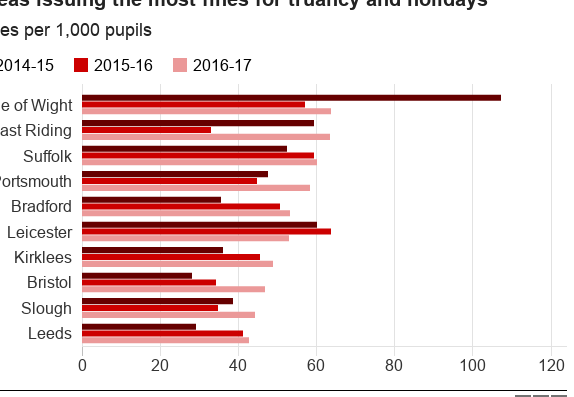
They were not alone. Across England this month, hundreds of parents have been called before courts on similar grounds, making this summer something of a reckoning for families who kept kids at home, or took them away, once too often.
A Day at the Seaside, With Legal Paperwork on the Side
Margate is a fitting backdrop for this particular story. The Kent coastal town has become a magnet for day-trippers and budget holidaymakers, and it sits at the centre of a pattern that magistrates in the area know well. According to reporting from The Guardian, most of the school absence cases heard in this Kent court relate specifically to term-time holidays rather than persistent unexplained non-attendance.
That distinction matters. It shifts the conversation away from neglect or chaotic home lives and toward something far more relatable: the family that quietly calculated that flying to Tenerife in October was both cheaper and more practical than fighting for a week in July. Price comparison. Basic arithmetic. A decision millions of households make every year. The problem is that English law, as it currently stands, does not accept affordability as a valid excuse.
“Cheap Travel Is Not a Defence”, But Is the Law Keeping Up With Reality?
Courts have been consistent on one point. The fact that a holiday costs significantly less outside of school holidays does not, legally speaking, justify pulling a child out of class to take it. Magistrates have made this clear repeatedly, and the government’s position reinforces it. Authorised absence for holidays is at the discretion of the headteacher, and in practice, most schools grant it rarely, if at all.
Yet the families turning up in court are not, by and large, people who ignored every rule and dared the system to catch them. Many are working parents squeezed between expensive peak-season travel prices, limited annual leave, and the simple desire to actually spend time with their children somewhere other than a grey British garden. The economics of school holidays in England are punishing. Flight prices can double or triple the moment the summer break begins, and hotel rates follow suit. For a family of four, that difference can easily run into hundreds, sometimes thousands, of pounds.
The law, however, operates on principle rather than household budgets.
Attendance Rates: A Problem That Predates the Holiday Debate
It would be too simple to frame this purely as a holiday story, because school attendance in England has been a serious and persistent concern since the pandemic years. Rates dropped sharply during COVID-19 disruption, and they have not fully recovered. Schools, local authorities, and the government have all been grappling with what is now described as a chronic attendance problem, one that goes well beyond parents booking cheap half-term flights a week early.
Children miss school for a long list of reasons: illness, anxiety, family instability, caring responsibilities, and disengagement, among others. The courtroom cases making headlines this August are largely the holiday ones, because they are the most clear-cut and easiest to prosecute. A child who was in Lanzarote during a school week generates a straightforward paper trail. A child navigating school refusal or a difficult home situation is a far more complex case for any authority to handle.
Critics of the current enforcement approach argue that prosecuting parents for affordable holidays does little to address the deeper structural issues behind England’s attendance problem, and may even erode goodwill between schools and families at a moment when that relationship needs strengthening, not legal pressure.
What Happens in Court?
Parents who end up before magistrates for school absence cases typically face fixed penalty notices first. If those go unpaid or if the absences are serious enough, prosecution follows. Convictions can result in fines and, in the most extreme cases, other penalties. The process is rarely pleasant and almost always stressful, even for cases that are ultimately resolved with a financial penalty rather than anything more serious.
For the nine parents sitting in that Kent courtroom this August, the beach just a short walk away must have felt like a different world entirely. Summer in theory. Accountability in practice.
The Bigger Question Nobody Wants to Answer Directly
England’s school term structure has remained stubbornly similar for decades, even as the cost of living has risen sharply and the travel industry has become expert at pricing families out of the holidays they actually want to take. Other countries arrange their school years differently. Some spread breaks more evenly across the calendar. Some allow more flexible attendance for demonstrably responsible families.
There is a reasonable conversation to be had about whether the current system serves children, parents, or schools particularly well. Punishing families in court for choosing the only holiday they can afford is not obviously the answer. But nor is accepting mass term-time absence as an unavoidable fact of life, given the well-documented impact of missed school days on long-term educational outcomes.
The parents on Margate’s sun-drenched seafront this month had no such philosophical debates to resolve. They had a court date, a magistrate, and a question that England’s education system has not yet convincingly answered: when the rules and the reality are this far apart, who exactly is responsible for closing the gap?
Where do you stand on this? Should English schools and the law adapt to the economic realities families face, or does protecting every child’s right to uninterrupted education have to come before the family holiday budget? Drop your thoughts below.