








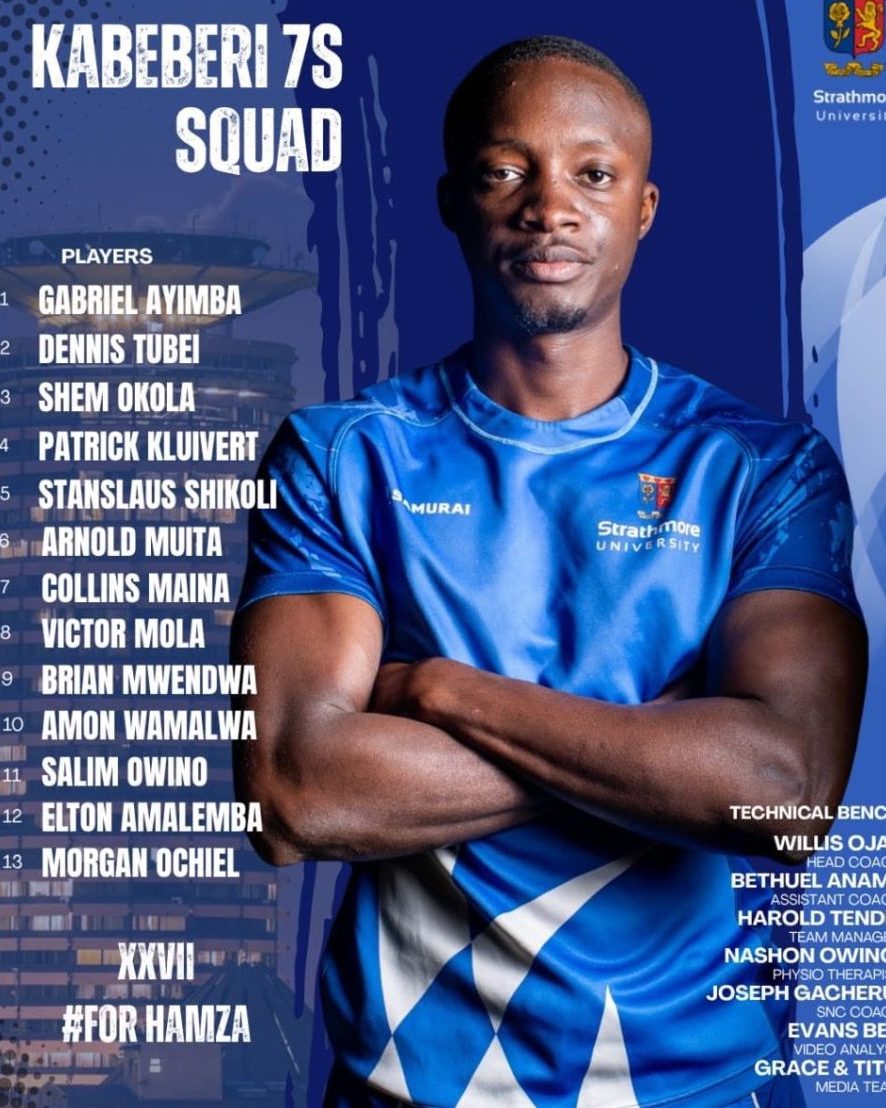
On the morning of August 13, 2026, at approximately 2:30 a.m., a 26-year-old Ugandan student named Hamza Muhaise took his last breath in Nairobi, Kenya. He had been a final-year student at Strathmore University. According to a formal announcement released by his family, Muhaise suffered a cardiac arrest following an injury sustained during a rugby match, a detail that has since gripped two rugby-loving nations with grief and unanswered questions.
The Young Man Behind the Jersey
Muhaise was not just any player on a pitch. He was the firstborn son of CPA Haruna Musinguzi, who serves as the Director of Finance at the Uganda Communications Commission (UCC). That background speaks to a family of structure, discipline, and ambition, traits Muhaise himself appeared to embody as he pursued his university degree in Kenya. Friends, teammates, and supporters who flooded social media with tributes painted a picture of a young man who carried himself with quiet confidence, both on and off the field.
He had traveled across the border to build something for himself at Strathmore, one of Kenya’s more respected private universities. By all accounts, he was close to the finish line. Final year. The end in sight. Which makes the abruptness of his passing all the more devastating.
What Happened on That Rugby Pitch
The exact sequence of events that led to Muhaise’s death has not been fully detailed in public statements. The family’s announcement confirmed that he suffered cardiac arrest following a rugby-related injury, but the precise nature of that injury, the timeline between the incident and his collapse, and the medical interventions that followed remain unclear as of the time of writing.
That lack of detail is not unusual in the immediate aftermath of a tragedy. Families are processing shock. Medical reports take time. But for the rugby community, the uncertainty only deepens the anxiety. Cardiac events in young athletes, while rare, are not unheard of. Blunt trauma to the chest, a condition known as commotio cordis, can trigger life-threatening arrhythmias in otherwise healthy individuals. Whether that played any role here is not yet known, and it would be irresponsible to speculate. What is known is that a young man who walked onto a rugby pitch did not walk off it alive.
According to reporting on Muhaise’s death, his passing has prompted an outpouring of condolences from rugby circles across both Uganda and Kenya.
Two Nations Stop to Mourn
Sport has a remarkable ability to unite people across borders, and in this instance, grief became the shared language of an entire community. The Kenya Rugby Union observed a minute of silence before its Round One matches, a gesture that speaks volumes about how Muhaise was regarded, even in a country where he was a student rather than a citizen.
Back in Uganda, the rugby fraternity was preparing its own tribute. Uganda Rugby planned to hold a similar moment of silence ahead of the Under-20 Test match between Uganda and Zimbabwe, scheduled for Saturday at Muteesa II Stadium in Wankulukuku. The stadium, a familiar ground for Ugandan sport, would carry the weight of mourning before the first whistle.
The Hippos Fans Club, a prominent supporters’ group, issued a message directly to Muhaise’s family. “The rugby community is standing with you,” the group said, in words that were simple but unmistakably sincere. In a sport that demands physical toughness from its players, those words represent a softer truth: that the bonds forged on a rugby pitch run deeper than the game itself.
A Final Journey Home
Hamza Muhaise was due to be laid to rest on Saturday, August 15, 2026, the same day Uganda’s rugby community planned its tribute at Wankulukuku. His burial was to take place at his family’s ancestral home in Kakooge, Buhima, in Kikuube District, at the homestead of the late Mpeeka Sulaiman.
There is something quietly poignant about that timing. As young rugby players took to the field in his honor, a family in Kikuube would be saying goodbye. Two parallel acts of remembrance, separated by hundreds of kilometers, joined by the same name.
The Bigger Question Nobody Wants to Ask
Muhaise’s death will, and should, prompt serious reflection about player welfare in rugby across East Africa. The sport has grown significantly on the continent over the past decade, attracting young talent, building fan bases, and producing players of genuine quality. But growth without robust safety infrastructure is a gamble no sport should be willing to take.
Are there adequate medical professionals at amateur and student-level rugby matches? Are players screened for cardiac conditions before they step onto a pitch? Are referees and coaches trained to recognize and respond to medical emergencies quickly enough to make a difference? These are not comfortable questions. But they are necessary ones.
Rugby’s physical demands are not a secret. The sport does not pretend to be gentle. But every player who pulls on a jersey deserves to know that if something goes wrong, there are systems in place to catch them before the worst happens. For Hamza Muhaise, those systems, whatever they were, were not enough.
A Community Grieves, a Family Breaks
Twenty-six is not an age at which anyone should write an obituary. Muhaise had a degree to finish, a career to build, a life to live. His father, a senior finance professional at a national institution, must now carry the particular weight that no title or position can prepare a person for: the loss of a child.
The condolences from the rugby world are genuine and they matter. Tributes circulating online reflect the affection in which Muhaise was held by those who knew him through the game. But condolences, however heartfelt, are where the conversation must begin, not end.
If his death sparks a real, sustained conversation about medical readiness at rugby matches in Uganda, Kenya, and beyond, then perhaps some small fragment of meaning can be found in an otherwise senseless loss. His teammates, his fans, his country owe him at least that much.
What will it take for rugby administrators across East Africa to put non-negotiable medical safety standards at every level of the game, and who should be held accountable when those standards are absent?