







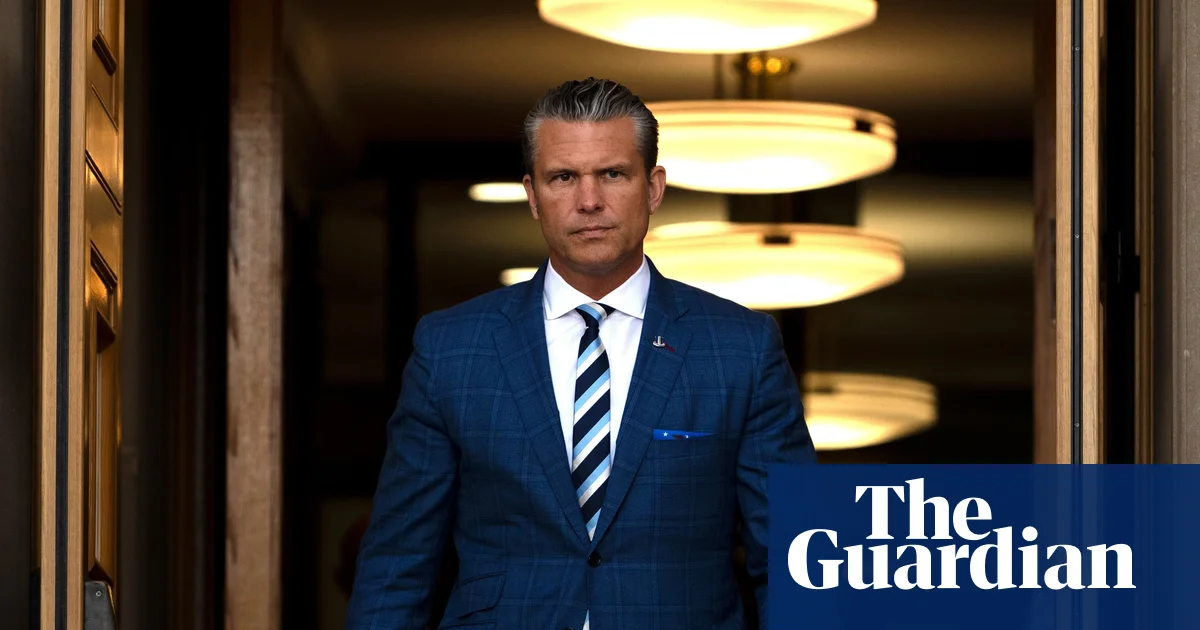
Washington, D.C., September 5, 2026. As the United States continues to navigate the grinding pressures of an active military engagement with Iran, the man charged with overseeing the world’s most powerful armed forces is facing a crisis closer to home. Pete Hegseth, the US Secretary of Defense, is under serious fire from within his own institution, with current and former officials describing an atmosphere of internal dissent at the Pentagon that shows no sign of easing.
A Secretary Fighting on the Wrong Front
The backdrop should be sobering enough to command anyone’s full attention. An ongoing war with Iran, a sanctions strategy being recalibrated in real time, and a defense establishment that requires steady, focused leadership. Yet the loudest complaints about Hegseth aren’t coming from adversaries abroad. They’re coming from inside the building on the banks of the Potomac.
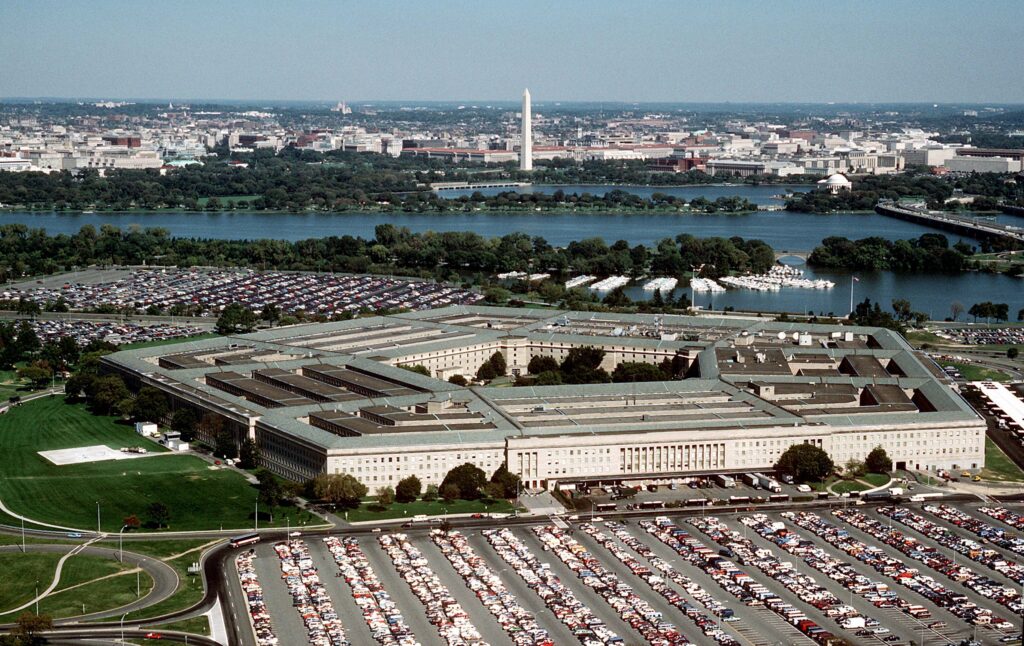
According to reporting from The Guardian, Hegseth stands accused of directing his energy toward culture war battles and cultivating his own political profile rather than steering the military through one of its most complex operational periods in recent memory. The word being used by critics, including those within the defense apparatus, is blunt: “inept.”
That is not a word anyone uses lightly about the person holding one of the most consequential offices in the US government. But its emergence in this conversation says a great deal about the temperature inside the Pentagon right now.
Culture Wars at the Cost of Command
Hegseth has never been a conventional figure. His background, his appointment, and his conduct in office have all broken with the template of the buttoned-up, strategically cautious defense secretary that Washington tends to produce. Where predecessors kept a lower profile during diplomatically sensitive periods, Hegseth has consistently sought the spotlight.
The frustration among career military and civilian officials appears rooted in a sense that the institution’s real priorities, operational effectiveness, troop welfare, strategic coherence, are being subordinated to an ideological agenda. Culture war controversies, which play well on certain media channels, do not translate smoothly into military readiness or battlefield outcomes.
For a defense secretary to be seen as more interested in scoring political points than in the hard, unglamorous work of running a military at war, that’s not just an image problem. It erodes trust, and trust is the currency that makes a chain of command function.
The Iran War as a Stress Test
The conflict with Iran has placed extraordinary demands on the Pentagon. War, even one conducted with precision assets and a heavy emphasis on stand-off capabilities, requires relentless coordination, clear communication with allies, and a secretary of defense who can walk into any room on earth and project credibility. Adversaries and partners alike read the signals coming out of Washington, and right now, some of those signals are generating concern.
A secretary publicly at odds with his own institution, managing internal dissent while simultaneously waging domestic culture battles, is not projecting strength. It’s projecting distraction. And distraction at this level has consequences that extend well beyond the Beltway.
What Internal Discord Actually Looks Like
Bureaucratic dissent in the Pentagon rarely looks like open rebellion. It’s subtler. It’s delayed compliance, information shared on a need-to-know basis that’s slightly narrower than it should be, senior officials choosing to brief around rather than through a secretary they’ve lost confidence in. Over time, that erosion of institutional trust creates gaps, and gaps in wartime are dangerous.
The picture emerging from Washington suggests that Hegseth’s leadership style has accelerated that kind of fragmentation. Whether that assessment is fair or shaped by political opponents is a legitimate debate. But the volume and the sourcing of the criticism suggest it’s not a fringe view.
Political Ambition and the Pentagon: A Familiar Tension
It would be historically naive to suggest that cabinet secretaries never have one eye on their own political futures. Washington has always produced officials who balance institutional duty with personal ambition. The difference is usually one of proportion and timing.
When the institution you’re running is at war, the expectation, from the public, from the military, from allies watching closely, is that personal ambition takes a back seat. The concern being raised about Hegseth is that the ratio is inverted. That the political brand-building is primary and the defense leadership is secondary. If that perception takes hold broadly, it becomes nearly impossible to dislodge, regardless of the actual facts on the ground.
A Moment That Demands More
The United States has, throughout its history, cycled through defense secretaries who ranged from transformative to troubled. Some reshaped the institution for the better. Others left it weaker than they found it. Where Hegseth lands in that history will depend, in large part, on what happens next.
The Iran situation is not resolved. The internal divisions at the Pentagon are not healed. And the political environment in Washington continues to reward confrontation over competence in ways that complicate the job of anyone trying to actually govern. Hegseth exists at the intersection of all those forces.
The military he leads deserves a secretary whose focus is undivided. The men and women in uniform, the career officials navigating enormously complex strategic terrain, the allies expecting American steadiness, all of them need a Defense Department that is pointed outward, toward real challenges, rather than inward, toward factional battles.
Whether Hegseth can recalibrate, or whether the drift toward culture war politics has already done lasting damage to his authority inside the Pentagon, is the defining question of his tenure right now. And frankly, the clock is ticking.
So here’s the question worth sitting with: when a nation is at war, what responsibility does a defense secretary carry to put the institution above the personal brand, and what happens to everyone else when that responsibility goes unmet?