
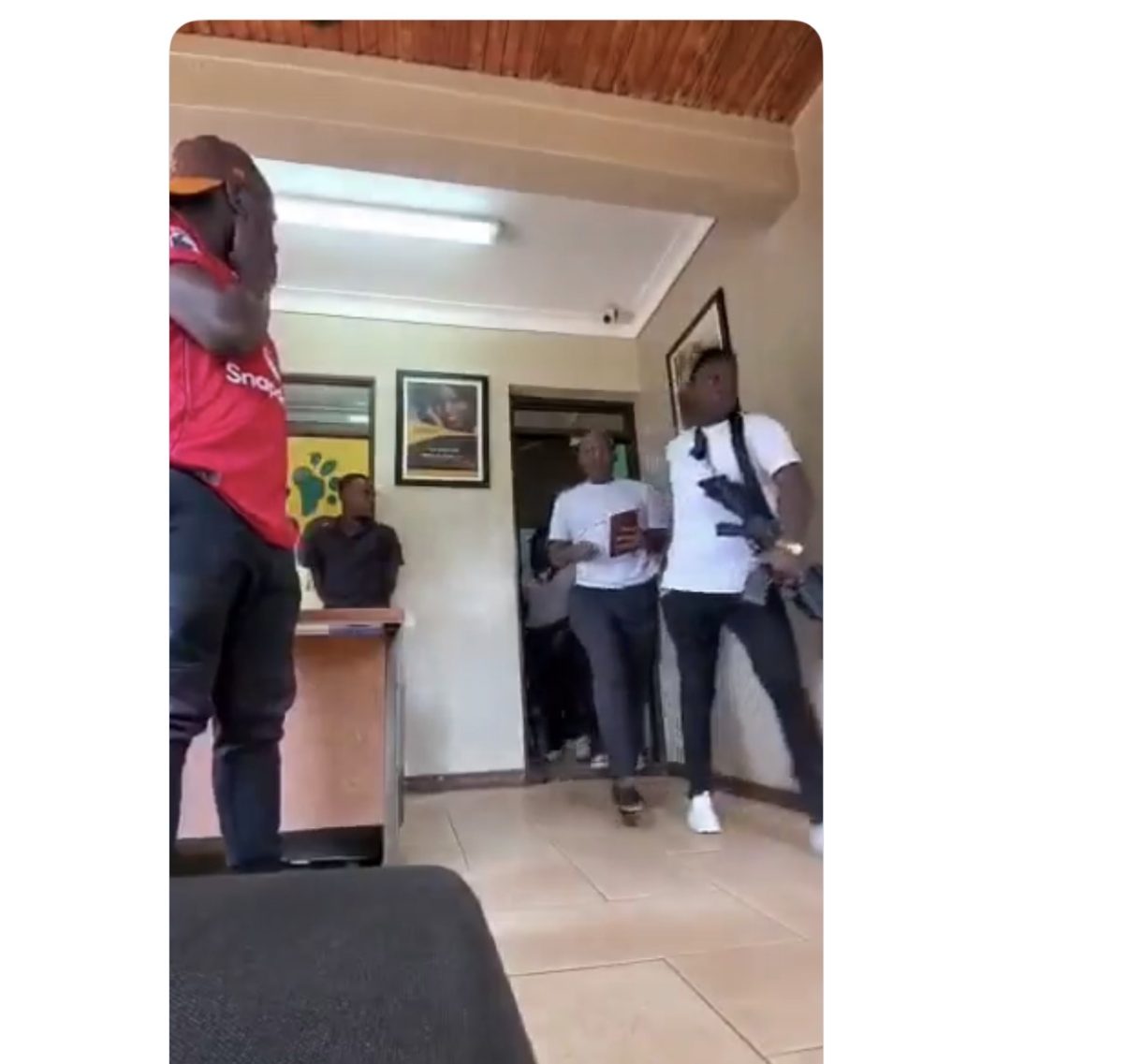
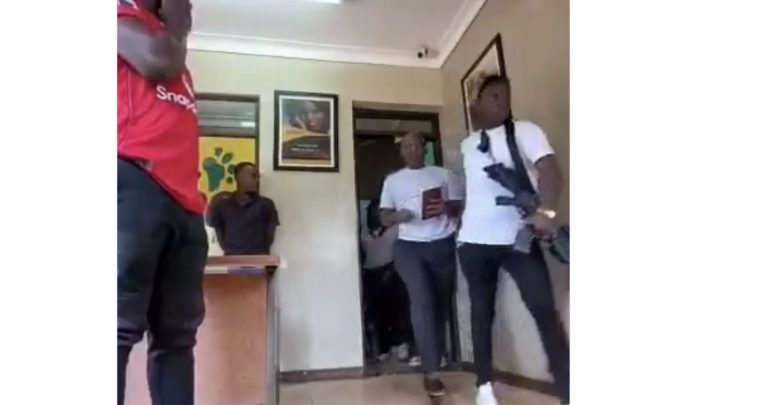
It was supposed to be a routine Saturday morning broadcast. Charles Rwomushana, one of Uganda’s most recognisable political and security commentators, had just wrapped up or was winding down an appearance on Radio Simba in Kampala when armed men arrived at the studio and walked him out. The footage, which spread rapidly across social media, shows Rwomushana in a red shirt being escorted from the premises by individuals widely described as security operatives. By the time the clips had circulated widely, Ugandan police had still not issued any public statement confirming an arrest, a detention, or even his whereabouts.
What the Footage Shows and What It Doesn’t
Video evidence is rarely the whole story, and this case is no exception. What the circulating clips confirm is that Rwomushana was physically removed from the Radio Simba premises by men who appeared to be security personnel. What those clips cannot tell us is whether he was formally arrested, taken in for voluntary or compelled questioning, or removed as part of a broader security operation that had nothing publicly disclosed about it.
The programme in question, known as “Gasimbagane N’ebanamawukiire,” is a current affairs show that Rwomushana has appeared on regularly. It is precisely the kind of platform where Uganda’s sharpest political minds trade opinions on governance, security, and the state of the nation. That an analyst was removed from such a setting by armed men, with no accompanying official explanation, makes the optics particularly striking.
According to reports from Chimpreports, the incident generated immediate concern online, with critics and observers demanding answers about what authority, if any, sanctioned the removal.
A Pattern That Raises Questions
For those who follow Ugandan politics closely, Saturday’s incident carries a familiar weight. Rwomushana is not a stranger to run-ins with security authorities. Back in 2016, police formally confirmed his arrest and detention at the Special Investigations Division in Kireka, a facility often associated with high-profile security inquiries. That detention was linked to material he had shared online. He was subsequently released on police bond, and he continued his work as an analyst and commentator.
A decade on, the echo is hard to ignore. A commentator who speaks openly about political and security matters, removed from public view by armed men, with no immediate official explanation. Whether this is a formal arrest, a summons dressed in muscle, or something else entirely remains unclear. Uganda’s security architecture has always operated with a degree of opacity that makes drawing firm conclusions from early footage genuinely difficult.
What is clear is that Rwomushana has built a profile as someone willing to weigh in on sensitive subjects. As a former intelligence operative turned public commentator, he occupies an unusual space. He understands the machinery of the state from the inside, which makes his analysis more pointed and, perhaps, more threatening to those who prefer certain conversations to stay behind closed doors.
Public Reaction and the Voice of Concern
Former Kampala Deputy Lord Mayor Doreen Nyanjura was among the prominent voices to react publicly. She questioned the legality and appropriateness of what she saw in the footage, framing it as part of a broader pattern of what she called lawlessness. Her reaction was not isolated. Online discussion quickly turned to questions about due process, freedom of expression, and the safety of individuals who occupy public intellectual space in Uganda.
There is something particularly unsettling about an incident that unfolds not in a back alley or a private home, but in a professional broadcast studio, in the middle of a live current affairs programme, in broad daylight. The brazenness of it, whether sanctioned by legitimate authority or not, sends a message that is hard to misread.
Why This Moment Matters Beyond One Man
Uganda has a complex and often tense relationship with media freedom and political commentary. Journalists, analysts, and opposition figures have faced periodic crackdowns, and the space for robust political debate has narrowed and widened at different points over the years. Each incident like this one becomes a data point in a larger conversation about where that space currently sits.
Rwomushana’s removal from Radio Simba is not simply a story about one man’s Saturday morning. It touches on questions that matter deeply to any functioning democracy: Can analysts speak freely on air without fearing physical removal? Can audiences trust that the voices they hear on their radios are not being silenced the moment the microphone cuts? And does the absence of any police statement, hours after a widely circulated incident, reflect institutional indifference or something more deliberate?
As of the time this article was written, Charles Rwomushana’s location had not been officially confirmed, no charges had been publicly announced, and Ugandan authorities had offered no formal comment on what transpired at Radio Simba that morning. The silence, in many ways, is the loudest part of the story.
What does it say about the health of political discourse in any country when a commentator can be walked out of a radio studio by armed men, on camera, and official silence is the only immediate response? Share your thoughts below, and keep watching this space as the story develops.