











One Nation leader Pauline Hanson stepped back into the centre of Australia’s economic conversation on Sunday, August 16, 2026, calling for the country’s rigid superannuation rules to be loosened so that Australians buckled under financial pressure, or those trying to buy their first home, can access their own retirement savings now rather than waiting decades for the privilege.
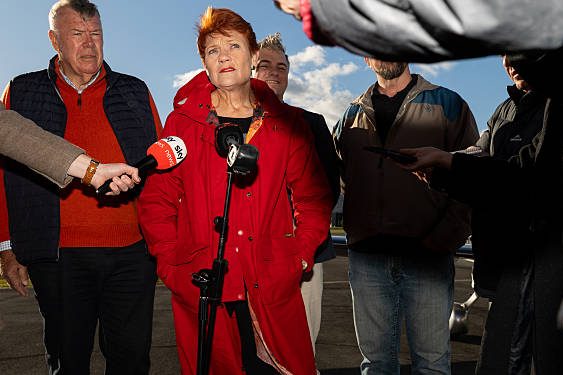
Speaking to News24, Hanson put her argument plainly: a lot of Australians are struggling to pay off their mortgages, and a system that locks their money away while they sink financially is not working for them. “It is their money; they’ve sacrificed it in lieu of pay,” she said, framing early super access not as a radical idea but as a basic matter of financial ownership.
The Argument That Will Not Go Away
This is not the first time the idea of early superannuation access has surfaced in Australian political debate, and it almost certainly will not be the last. The COVID-19 pandemic in 2020 saw the federal government allow early withdrawals under financial hardship provisions, with millions of Australians taking up the offer. Critics at the time warned it was a long-term wound dressed up as short-term relief. Supporters said it kept roofs over people’s heads.
Hanson’s latest push, covered in detail by The Guardian’s live politics blog, revives that exact tension. The difference now is that cost-of-living pressures have been grinding on Australian households for an extended period, and the political appetite for unconventional solutions is noticeably higher than it was even two years ago.
The superannuation system, at its core, is a compulsory savings mechanism designed to reduce future reliance on the age pension. Employers contribute a percentage of workers’ wages directly into individual super funds, and the money compounds over decades. Touch it early, and the mathematics of compounding work against you in a way that is hard to fully appreciate until retirement age arrives.
Who Benefits and Who Pays the Price?
On paper, Hanson’s position sounds straightforward: give people their own money. In practice, the calculus is considerably more complicated. A 35-year-old withdrawing $20,000 from their super today does not just lose $20,000 from their retirement balance. Depending on their fund’s performance, they could be forfeiting anywhere between $60,000 and $100,000 by the time they retire, thanks to the lost compounding growth on that sum over 30-plus years.
For lower-income earners, who already tend to have smaller super balances and are statistically more likely to be feeling acute cost-of-living stress, the long-term consequences are starker still. Women, who on average retire with significantly less super than men due to career interruptions and the gender pay gap, would disproportionately bear the cost of any broad early-access scheme.
That said, there is a real and legitimate argument on the other side. A person who cannot service their mortgage, who loses their home, or who is forced into high-interest debt to cover basic expenses is not exactly protecting their retirement wealth by keeping their super locked away. Sometimes, the financial crisis in front of you is more threatening than the one decades down the road.
The First Home Buyer Dimension
Hanson also flagged first home buyers as a group who should be able to access super. This is a position that has found support across the political spectrum at various points in time. The argument is that home ownership itself functions as a form of retirement security, so using super to get onto the property ladder is not necessarily a betrayal of the system’s intent.
Housing affordability in Australia remains one of the more stubborn economic problems the country faces. Property prices in major cities have stretched well beyond what median incomes can service without significant family wealth or a very long savings runway. For younger workers watching prices move faster than their savings can grow, the logic of tapping super to bridge the gap has intuitive appeal.
Critics, however, point out that injecting more buyer demand into an already supply-constrained housing market could simply push prices higher, negating the benefit for the very people the policy is meant to help. It is the kind of policy that feels like a solution until you trace its downstream effects.
Where the Political Lines Are Drawn
Labor governments have historically opposed early super access on the grounds that it undermines the system’s integrity and disproportionately harms lower-income workers in retirement. The superannuation industry, which manages trillions of dollars in Australian retirement savings, has consistently lobbied against anything that encourages drawdowns before retirement age.
Hanson and One Nation occupy a different corner of the debate, one that prioritises individual financial autonomy over systemic design. Her framing of super as deferred wages, money workers sacrificed instead of taking as pay, is rhetorically effective because it is not entirely wrong. The compulsory nature of superannuation does mean workers receive less take-home pay in exchange for contributions they cannot access for decades.
The question is whether that trade-off, frustrating as it is during tough economic times, ultimately delivers better outcomes than the alternative. Australia’s retirement savings pool is one of the largest per capita in the world. That wealth did not accumulate by accident; it accumulated because the rules kept people from spending it early.
A Debate Worth Having Seriously
Whatever your position on Hanson’s proposal, she is tapping into something real. Financial stress in Australia right now is not a fringe experience. It is a mainstream one, and the people feeling it most acutely are watching a large sum of their own money sit in an account they legally cannot touch. That frustration is entirely understandable.
The harder question is whether unlocking that money provides genuine relief or simply trades one financial problem for another, bigger one further down the line. Retirement poverty is not an abstract concern. It is a lived reality for too many older Australians already, and any policy that increases the risk of it deserves careful scrutiny, not just a campaign slogan.
Good policy on superannuation has to hold two ideas at once: respecting that workers are struggling now, and protecting them from struggling even more when they no longer have the capacity to earn their way out of it. Finding that balance is the real challenge, and it is one that no single press conference answer can fully resolve.
So here is the question worth sitting with: if you could access your superannuation today to ease genuine financial hardship, would you, knowing what it might cost your future self?