









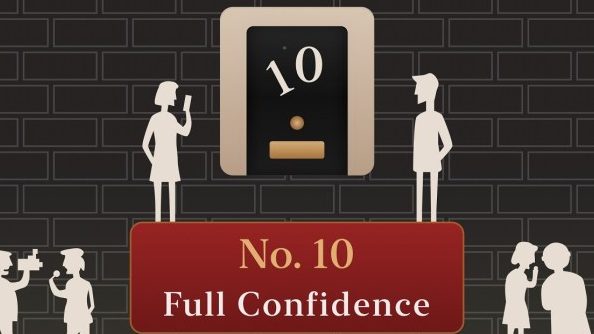
A mobile game about surviving the grind of British politics, built by a single developer in Manchester, has climbed to the very top of Apple’s paid games chart in 2026, overtaking one of the best-selling video games of all time. The game is called No 10: Full Confidence, and if you have not heard of it yet, you almost certainly will soon.
From Manchester to the Top of the App Store
Benjamin Brewis, the developer behind the game, has managed something that the giants of the gaming industry would kill for. His political simulator, built with a clear understanding of just how theatrical and absurd Westminster politics can get, has beaten Minecraft to the number one spot on Apple’s paid games chart. That is not a small feat. Minecraft has been a cultural juggernaut for well over a decade, and dislodging it from any chart position is the kind of story that gets told at game developer conferences for years.
What makes Brewis’s achievement feel even sharper is that No 10: Full Confidence is not a shooting game, a fantasy RPG, or a flashy open-world title. It is, at its core, a game about UK politics, a subject many outside Britain might consider niche, and even within Britain, not exactly the stuff of light entertainment. Yet here we are.
How the Game Actually Works
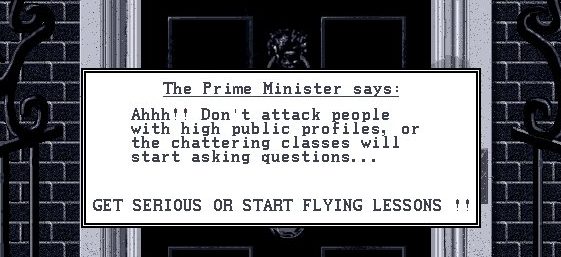
The premise is deceptively simple. You are the Prime Minister. Your job is to stay that way. To manage that, you must keep four key groups broadly on your side: your cabinet, your backbench MPs, the media, and the general public. Let any one of them tip too far into discontent, and your tenure ends. Sound familiar?
Decisions play out across more than 300 fictional political scenarios, each one written by Brewis himself. The range is deliberately wide. Some storylines are grounded in recognisable policy headaches, like managing GP appointment waiting times, while others veer into the genuinely ridiculous. Brewis described one of his favourite multi-part storylines to the BBC as involving a dog let loose into the House of Lords by a lobbyist during a debate on a vet bill, a situation that then spirals dramatically out of control. Which, frankly, sounds more plausible than it should.
The tone is clearly satirical, but the underlying mechanics are shrewder than they first appear. Keeping four factions simultaneously appeased while navigating a constant stream of crises is genuinely hard. The game does not let you forget that every decision you make to satisfy one group is likely to irritate another.
Why UK Politics Makes for Surprisingly Gripping Gameplay
There is something poetic about the timing of this game’s rise. British politics over recent years has delivered more plot twists, shock resignations, and confidence votes than most political dramas could credibly script. The sheer velocity of change at the top of government, multiple prime ministers in quick succession, no-confidence motions, cabinet walkouts, has left many people both exhausted and oddly fascinated.
Brewis, it seems, has channelled that national preoccupation into something interactive. Rather than watching the chaos unfold on the news, players now get to sit in the middle of it, making the calls, absorbing the consequences, and inevitably discovering just how quickly things fall apart.
The success of No 10: Full Confidence also points to something broader about the appetite for political simulation games. Brewis’s app is part of a growing sub-genre that appears to be feeding directly off the volatility of Westminster. If the last few years of British politics have felt like a game with no clear rules, it makes a certain kind of sense that game developers are turning those very same dynamics into structured, playable experiences.
The Solo Developer Who Read the Room
There is a romantic quality to the story of one developer, working out of Manchester, writing every single political scenario by hand and producing something that competes with the biggest names in the industry. Brewis has not just made a clever product; he has made a culturally specific one, rooted in the specific texture and language of British parliamentary life, and trusted that enough people would find it both funny and compelling.
That bet has clearly paid off. Topping the Apple paid games chart is not luck. It requires word-of-mouth momentum, strong reviews, and a product that keeps players coming back. The game’s mechanics seem well-suited to short bursts of play, perfect for the mobile format, and the randomised nature of each scenario means no two runs feel identical.
What Comes Next for Political Gaming
Games have always reflected the culture that produces them. The rise of political simulators in Britain right now is less of a surprise than it might seem. When the news cycle itself resembles a political drama with a rotating cast, audiences look for ways to process and engage with that reality beyond simply watching it.
Whether No 10: Full Confidence retains its chart position or eventually cedes ground to newer titles, it has already made its mark. It proved that a hyper-specific, politically literate mobile game built by one person in Manchester can outperform a global giant, at least for a moment. And in a year that has already delivered more than its share of surprises, that feels entirely appropriate.
So, with all that in mind, here is a question worth sitting with: if a game this sharp and this knowing can beat Minecraft simply by holding a mirror up to British political life, what does that say about how we have all come to feel about the real thing?