











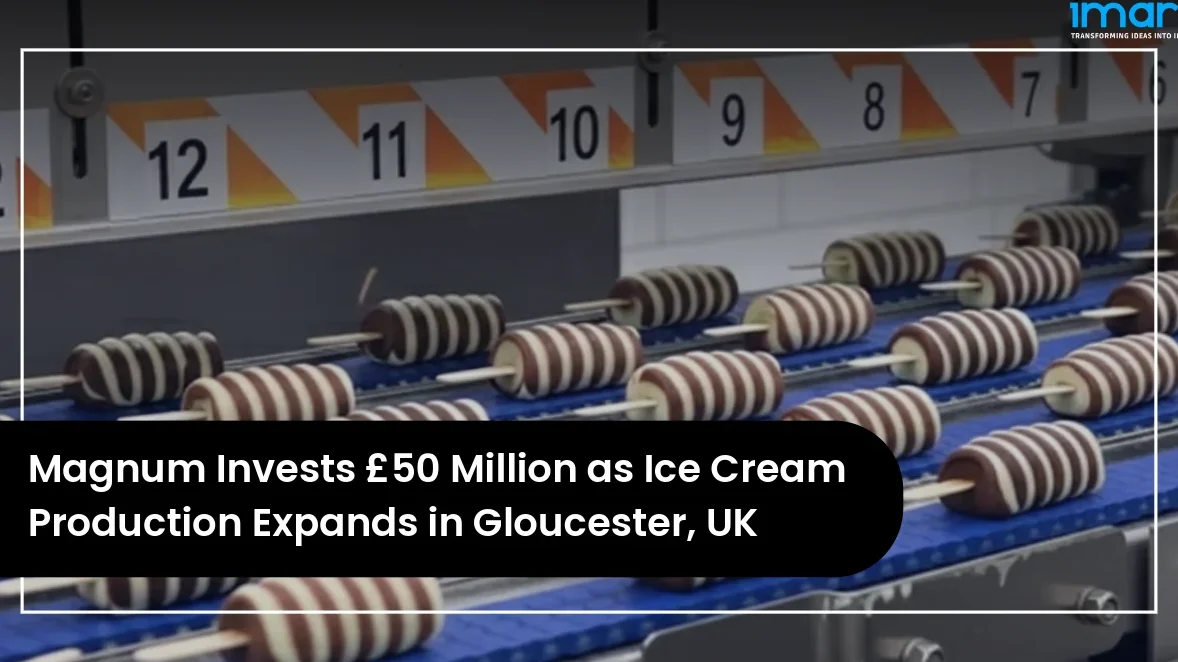
Step inside a nondescript facility near Bedford, UK, and you might not expect to find the future of dessert staring back at you in a pale yellow glow. But that is exactly what is happening at Magnum’s research and development centre, where scientists, flavour experts, and food technologists are working around the clock to keep the world’s biggest publicly listed ice cream maker relevant, profitable, and frankly, a little surprising.

The Lolly That Glows Under Club Lights
Among the various projects underway, one in particular stops visitors in their tracks: a glow-in-the-dark ice lolly. It is not a party trick dreamed up by a marketing team with too much time on its hands. The luminescent effect comes from vitamin B2, a naturally occurring compound that reacts under UV lighting, the kind that floods dance floors and festival stages across Europe.
The product was launched in Ibiza, the Mediterranean island synonymous with nightlife, and it is squarely targeted at clubbers and festival-goers who want something cold, sweet, and a little theatrical between sets. As BBC News reports from inside the Magnum facility, that pale yellow glow in the corner of the lab is more than a novelty. It represents a broader shift in how ice cream brands are thinking about their audiences, and how far they are willing to push the product to capture attention.
Why Innovation Is No Longer Optional
The ice cream industry looks sweet from the outside, but behind the scenes it is a fiercely competitive and increasingly difficult business to run. Magnum competes with major players including Froneri, the company behind Häagen-Dazs, and Baskin-Robbins, which holds the title of the world’s largest chain of ice cream specialty shops. Add a growing wave of artisan producers entering the market, and the pressure to stay fresh, in every sense of the word, is immense.
The R&D centre near Bedford exists precisely because standing still is not an option. Researchers there work on two fronts simultaneously: refining existing recipes to cut costs or improve quality, and developing entirely new products that can carve out new customer segments. Whether that means a protein-enriched scoop aimed at gym-goers or a pickled garlic flavour designed to shock food enthusiasts into a social media frenzy, nothing is off the table.
The Price Volatility Nobody Talks About
While the innovation side of the business grabs headlines, the operational pressures are what keep executives up at night. Georgia Rose, principal analyst at global market research company Kantar Retail IQ, puts it plainly: the last five years have been defined by relentless pricing instability. The war in Ukraine disrupted supply chains and drove up commodity costs. The Covid pandemic scrambled logistics globally. Then came the cost of living crisis, which squeezed consumer spending and forced brands to walk a tightrope between maintaining margins and keeping products affordable.
Now, with tension around the Strait of Hormuz adding a new layer of uncertainty to global trade, the industry finds itself in yet another cycle of unpredictability. “We’ve just been in this constant state of instability when it comes to pricing,” Rose says.
The ripple effects touch nearly every part of the ice cream supply chain. Dairy, cream, and eggs, the foundational building blocks of any frozen dessert, have all seen higher prices. Flavouring ingredients like vanilla, chocolate, sugar, and fruit are subject to their own volatile commodity markets. And then there is an expense that rarely makes it into the conversation: cold-chain energy costs. Keeping ice cream frozen from factory floor to shop freezer requires enormous amounts of energy, and those costs have climbed sharply alongside broader energy price rises across Europe.
The Ingredients Under Pressure
Vanilla alone is one of the most price-volatile agricultural commodities on the planet, heavily dependent on harvests in Madagascar and subject to weather disruptions and labour challenges that can send prices swinging wildly from one season to the next. Chocolate faces its own set of pressures, with cocoa prices hitting record highs in recent years due to poor harvests in West Africa. For an industry that relies on both as core flavours, this is not a minor inconvenience. It is a structural challenge that demands constant reformulation, sourcing strategy, and sometimes, difficult conversations about product sizing and pricing.
What Consumers Actually Want Now
The flavour landscape is shifting too. Alongside the expected classics, there is growing consumer curiosity around functional ice cream: products that deliver something beyond pure indulgence. Protein content is one avenue being explored, responding to a broader cultural obsession with high-protein diets that has reshaped everything from yoghurt to breakfast cereals. The logic is straightforward: if a product can be positioned as a treat that also supports a fitness goal, it widens the audience significantly.
At the other end of the spectrum, there is a growing appetite for bold, unusual flavours that generate conversation. Pickled garlic ice cream sounds like a dare, but in a social media economy where a single viral moment can drive weeks of product sales, unconventional flavours are a calculated bet rather than a random experiment. The R&D centre is the place where those bets are placed, tested, refined, and occasionally, quietly abandoned.
The Bigger Picture for a Resilient Industry
Ice cream has survived wars, recessions, and pandemics before. It is one of those rare product categories that tends to hold up reasonably well even when consumer confidence dips, partly because it occupies the affordable treat segment of the market. But the current environment is testing that resilience in new ways. The combination of input cost pressure, energy expenses, and a more demanding consumer base means that brands cannot simply coast on heritage and brand recognition.
Magnum’s investment in a dedicated R&D facility is a signal that the industry’s biggest players understand this reality. Innovation is not just about creating the next headline-grabbing flavour. It is about building products that can be manufactured efficiently, priced accessibly, and adapted quickly when the next wave of instability arrives, because judging by the last five years, it always does.
So the next time you unwrap a Magnum bar or watch someone’s festival lolly light up under a UV beam, remember: there is a lab near Bedford where someone spent months making sure that moment was possible. Is that the kind of food science we should be investing more in, or are we just gilding the sundae?