









Two whistleblowers went to the highest levels of the BBC with a warning that could not have been more serious: a prominent British true crime author was allegedly claiming to have obtained the missing clothes of a child murder victim, clothes that had vanished while in the broadcaster’s own possession. The BBC, according to a new investigation, did not act. The silence that followed raises questions that no public institution should be comfortable leaving unanswered.
The Missing Clothes of Karen Hadaway
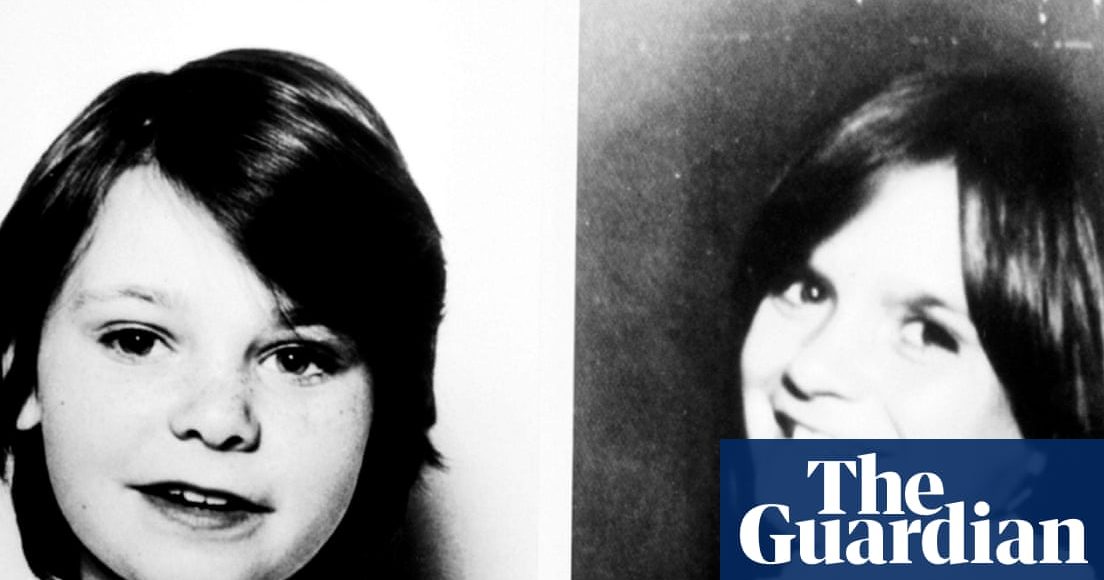
Karen Hadaway was nine years old when she was murdered in 1986. Her killing, along with that of her friend Nicola Fellows, shook Brighton and became one of the most harrowing child murder cases in modern British history. Decades later, physical evidence connected to Karen’s case, specifically her clothing, reportedly went missing while it was in the BBC’s possession. That detail alone would be deeply troubling. What happened next made it significantly worse.
According to reporting by The Guardian, Christopher Berry-Dee, widely regarded as the UK’s most commercially successful true crime author, told people that he had obtained Karen’s clothes. That claim reached the ears of at least two individuals who took it seriously enough to go to the BBC directly.
Two Whistleblowers, Two Warnings, and No Action
The whistleblowers did not stay quiet. They took their concerns to both the office of the BBC’s former director-general and to the corporation’s dedicated whistleblowing unit. In theory, those are exactly the right channels. A major broadcaster has a responsibility to handle sensitive material related to criminal cases with the utmost care, and when something goes wrong, the expectation is that internal accountability mechanisms will respond.
They didn’t. At least, not in any way that produced a visible outcome or public acknowledgment. What the whistleblowers found instead was institutional silence, which is arguably its own kind of answer.
This is not a minor administrative failure. If clothing connected to a murdered child disappeared during the BBC’s custody of it, the public, and crucially the victim’s family, deserves a full and transparent explanation. If an author then reportedly claimed possession of that same evidence, the implications reach beyond editorial embarrassment into territory that raises legitimate legal and ethical questions.
Christopher Berry-Dee and the True Crime Industry’s Grey Zones
Berry-Dee has built a career as Britain’s best-known true crime writer, with a body of work spanning serial killer profiles and high-profile criminal cases. His access to convicted murderers and to case materials has long been a part of his professional identity. That level of access, however, brings with it serious questions about where the line sits between journalistic investigation and the exploitation of victims and their families.
The true crime genre is no stranger to criticism on that front. Critics have argued for years that the appetite for crime content, whether in books, podcasts, or documentaries, can reduce real victims to narrative devices. Karen Hadaway and Nicola Fellows have already had to endure decades of public attention surrounding their deaths. For evidence connected to Karen’s case to allegedly end up in a private individual’s hands, whatever the circumstances, represents a profound failure of the systems meant to protect victims and the integrity of their cases.
What the BBC Must Answer
The BBC is a publicly funded institution built on trust. When two separate individuals used the formal mechanisms available to them to raise an alarm, those mechanisms should have worked. The fact that this story is now emerging through investigative journalism rather than through the BBC’s own disclosure process tells its own story.
Several questions now sit on the table. Who received the whistleblower reports? What, if anything, was investigated internally? Were any external authorities, such as police, notified? And what is the current status of the clothing that went missing?
Karen Hadaway’s family has already lived through more pain than most people can imagine. They are owed clarity, not silence. The BBC’s credibility as an institution depends in part on how it responds to exactly this kind of moment: not when things are going well, but when something has gone seriously wrong and powerful people inside the organisation are being asked to look the other way.
Accountability Cannot Be Optional
Whistleblowers take real personal and professional risks when they speak up. The two individuals who brought this matter to the BBC’s attention did so through the proper channels, showing faith in a system that apparently did not reciprocate that faith. That is not just a failure of process. It is a signal to everyone who might consider raising a concern in the future that doing the right thing may not get you very far.
Public institutions need to be better than that. The BBC, in particular, has a cultural and editorial reputation that it has spent a century building. That reputation is not self-maintaining. It requires accountability when things go wrong, not damage control when stories get out.
The details that have now come to light are serious enough to warrant a full independent inquiry, one that examines not just how the clothes went missing, but how two separate warnings were absorbed and apparently ignored by the people meant to act on them.
Karen Hadaway deserved justice in 1986. Her memory deserves it still. If her clothing is out there somewhere, in private hands, that is not just an embarrassment. It is a wound that no press release can close. So here is the question worth sitting with: when an institution fails a murdered child’s family, who exactly is left to hold it accountable?