





Ugandan artist Daxx Kartel stepped into a debate that has been simmering across the African music industry for years, telling Galaxy TV this week that performance fees consistently deliver stronger financial returns than what streaming platforms put in an artist’s pocket. His remarks cut straight to the heart of how musicians on the continent actually survive, and thrive, in a business that global tech giants have radically reshaped over the past decade.
The Streaming Promise vs. The Streaming Reality
Streaming changed everything. Platforms like Spotify, Apple Music, and YouTube Music promised artists a borderless audience and a new revenue stream that could tick along passively while they slept. For fans, it was a revolution in access. For most artists, especially those building careers outside of the Western markets these platforms were designed around, the picture has been considerably more complicated.
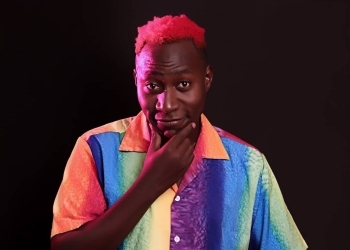
Daxx Kartel did not dismiss streaming outright. He acknowledged that it forms a legitimate part of an artist’s overall income. But he was sharp in pointing out something that many industry insiders know yet rarely say plainly: you cannot treat streaming revenue as passive income. Every stream costs money to generate. Promotion on these platforms is not free. Maintaining a strong digital presence requires consistent investment, whether through paid promotions, collaborations with marketing agencies, or the perpetual cycle of visual rebranding that keeps an artist relevant in an overcrowded feed.
As Daxx Kartel explained in his interview, streams are good because they form part of income, but artists have to invest back because promotion on these platforms is not free. You have to keep rebranding all the time and work with different agencies. That cycle of spending to earn is precisely what erodes the net value of streaming cheques for many artists.
Why Performance Fees Carry a Different Weight
The math on live performances is relatively straightforward, at least on the surface. An artist negotiates a fee, shows up, delivers a set, and gets paid. There are production costs, travel, and logistics to factor in, but the transaction is direct. No algorithm decides how much of your audience actually sees your work. No platform takes a cut based on per-stream royalty structures that routinely pay fractions of a cent per play.
For Ugandan and broader East African artists, the live circuit also carries cultural weight that streaming simply cannot replicate. Corporate events, weddings, political campaigns, and major concerts represent high-value bookings where an established name commands serious fees. An artist with genuine crowd-pulling ability can earn in a single night what months of steady streaming might generate, without factoring in the promotional spend required to maintain those stream counts.
This is not a uniquely Ugandan observation. Across the continent, from Lagos to Nairobi to Accra, artists have consistently pointed out that African listeners stream heavily but the royalty structures tied to those streams do not reflect the actual size or value of that audience. Streaming platforms calculate payouts using a pro-rata model that disproportionately favours markets where subscription revenues are highest, which typically means North America and Western Europe. An artist with millions of streams from Kampala or Dar es Salaam may walk away with a fraction of what the same stream count would yield if the audience were based in London or New York.
The Investment Trap Hidden Inside Streaming
What Daxx Kartel identified is something worth sitting with: the pressure to constantly reinvest in digital promotion creates a treadmill effect. An artist cannot simply release music and expect discovery to happen organically. Spotify’s algorithm rewards engagement, playlist placements require pitching and often relationships with curators, and visibility on social platforms that drive listeners to streaming links costs money too. The result is that the net income from streaming, after accounting for all the inputs, shrinks considerably.
Performance income, by contrast, tends to grow as an artist’s reputation grows, without the same continuous reinvestment cycle. A proven performer can negotiate upward on fees as their draw increases. Their value in that space compounds in a more tangible way than streaming numbers, which can spike and fall based on algorithmic shifts entirely outside an artist’s control.
What This Means for How Artists Build Their Careers
None of this means artists should abandon streaming. Daxx Kartel’s point was not that digital platforms are worthless but that they should not be treated as a primary income strategy in isolation. The smarter approach, and one that seasoned artists across Africa have quietly adopted, is to treat streaming as a marketing tool that builds the profile required to command better performance fees, rather than as a revenue stream that pays the bills on its own.
Streaming builds awareness. It keeps music accessible. It can attract brand partnerships and media attention. But when the rent is due, it is the performance cheque that tends to clear first and most consistently.
The conversation Daxx Kartel sparked reflects a broader maturity in how African artists are thinking about the music business. The excitement over streaming that dominated the early 2020s has given way to a more grounded calculation: what actually pays, what merely looks good on a dashboard, and how to build a sustainable career that does not depend entirely on the goodwill of a Silicon Valley algorithm.
As the industry continues to evolve, one question worth asking is this: should streaming platforms rethink their royalty models to better reflect the actual listening populations of emerging markets, or will African artists continue to build their financial security primarily on stage rather than on servers?