



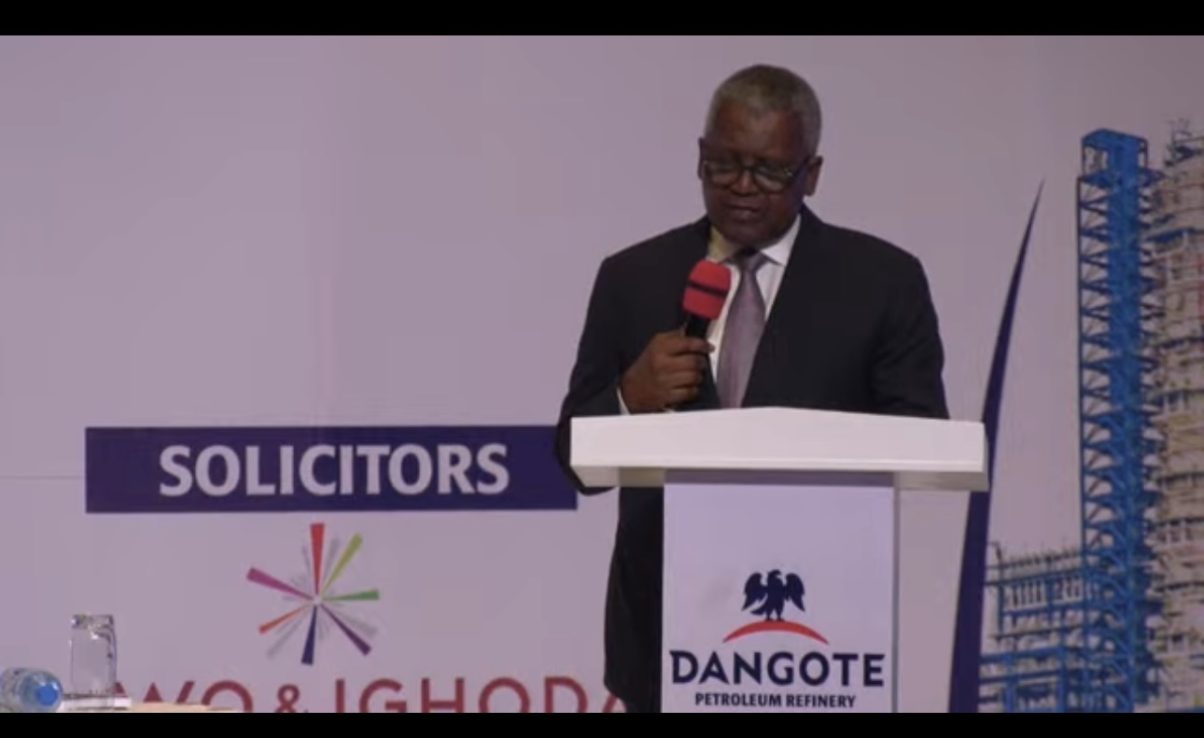
Lagos handed Africa a financial moment to remember on Monday when Dangote Petroleum Refinery and Petrochemicals FZE formally launched an initial public offering targeting roughly 2.1525 trillion naira, the equivalent of approximately $1.4 billion, at a ceremony held at the Eko Convention Centre. Organizers are billing it as the largest industrial listing the continent has ever seen, and by the raw numbers alone, it is hard to argue otherwise.
The Numbers Behind the Offer
The structure is straightforward enough. The company is selling 4.1 billion ordinary shares at a fixed price of 525 naira each, with the shares slated to trade on the Main Board of the Nigerian Exchange Limited. Subscriptions open on September 14 and run through October 13, giving retail and institutional investors roughly a month to make their move.
What makes this offer unusual in the landscape of African capital markets is the deliberately low barrier to entry. The minimum subscription is set at just 10 shares, which works out to 5,250 naira at the offer price. That figure is within reach for a wide swath of working Nigerians, and it appears to be very much the point. Eligible retail investors who hold their positions for a prescribed period could receive up to two bonus shares at no extra cost, adding an incentive layer designed to reward patience over speculation.
The issuer may also absorb oversubscription of up to 30 percent, subject to regulatory sign-off, which leaves the door open for the total raise to climb meaningfully if demand runs hot. According to Chimpreports, transaction documents presented at the signing ceremony confirm the offering has been screened as Shari’ah-compliant, broadening the pool of eligible investors further.
Dangote’s Own Words: A Journey Measured in Setbacks
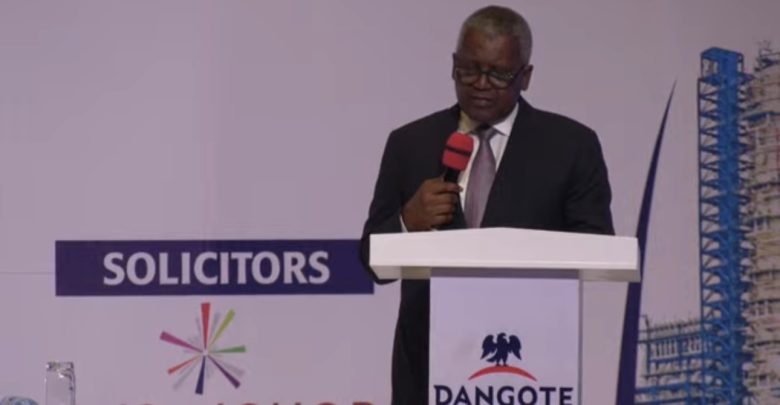
Aliko Dangote, president and chief executive of Dangote Industries Limited, took the podium at the Eko Convention Centre and gave attendees something rarer than financial projections: candour. He described the refinery project as the result of a journey that started just over a decade ago with a loan agreement signed at a moment when the company had neither secured land nor obtained an operating license.
“The sheer trust between us and our bankers made them put money on the table without asking too many questions,” he told the crowd, a line that doubles as both a tribute to long-standing relationships and a reminder of just how much personal credibility underpinned the entire venture from day one.
The road to the Lekki Free Trade Zone, where the refinery now sits, was not a straight one. Dangote recounted that the company spent three years and eight months pursuing a site at Olokola before eventually securing land at Lekki. The early days at that site were marked by conflict with the surrounding community, a dispute serious enough that an employee identified only as Mr. Dissu lost his life during the tensions. It is a sobering detail Dangote did not gloss over, and it gives the project’s eventual success a weight that pure financial metrics cannot fully capture.
The Political Goodwill That Made It Possible
Dangote made a point of acknowledging the Lagos state administrations that helped resolve the land dispute. He named former governors Babatunde Fashola and Akinwunmi Ambode, both of whom served during the years the project was taking shape, and reserved particular praise for current governor Babajide Sanwo-Olu, saying Sanwo-Olu “did even better” than his predecessors in helping bring the situation to a workable resolution.
It is worth noting that large-scale industrial projects in Nigeria have historically been hobbled by exactly these kinds of land and community complications. The fact that the refinery made it through, and is now standing as a fully operational facility preparing for a public listing, reflects a confluence of political will, private persistence, and, as Dangote himself framed it, a considerable amount of banker faith.
Why This IPO Is About More Than Raising Capital
On the pricing strategy, Dangote was direct: the goal was never primarily to maximize the capital raise. The 525 naira per share price was chosen with broad ownership in mind. That is a meaningful signal. Corporate Africa has long been criticized for keeping wealth concentrated at the top, with public listings often structured in ways that effectively shut out ordinary citizens in favour of institutional money. This offer takes the opposite posture, at least in its stated intent.
Whether that intent translates into genuine wealth redistribution depends on how the secondary market behaves once shares start trading, but the architecture of the offer, low minimum subscriptions, bonus shares for long-term holders, Shari’ah compliance, creates genuine pathways for participation that many previous Nigerian listings did not.
For Nigeria’s capital markets more broadly, the listing carries significance beyond the Dangote name. A successful industrial IPO of this scale could restore confidence in domestic equity markets at a time when the naira’s volatility has made some investors wary of local currency assets. It signals that Nigerian industrial capacity is real, productive, and investable, not merely aspirational.
What Happens Next
With the subscription window opening September 14 and closing October 13, potential investors have a few weeks to weigh their positions. The shares will list on the Main Board of the Nigerian Exchange Limited, meaning the stock will sit alongside the country’s most established publicly traded companies from day one.
Oversubscription is a realistic scenario given the profile of the issuer and the scale of public interest the refinery has generated since it began operations. If demand exceeds supply, the company has regulatory room to accommodate up to 30 percent more shares than initially offered, which could push the total capital raised meaningfully above the headline $1.4 billion figure.
Africa has watched the Dangote Refinery rise from contested land to a flagship energy asset over the better part of a decade. Now the continent’s investors, from institutions to individuals with a few thousand naira to spare, get to decide whether they want a seat at that table. The question worth sitting with is this: will this IPO mark the moment ordinary Africans began to genuinely own a piece of the continent’s industrial future, or will it be remembered as a promising idea that the secondary market quickly turned back into an elite asset?