

Uganda is heading into a week that feels less like a routine news cycle and more like a reckoning. Several converging issues, each serious on its own, are colliding at once: reports of missing citizens, renewed concerns about Ebola preparedness, a contentious fight over who legitimately leads the country’s opposition, and growing public anxiety about how government money is actually being spent. The questions are not new, but the urgency behind them is sharper than ever.
The Disappearances Nobody Wants to Talk About
At the centre of this week’s national conversation is a question that carries enormous weight: where are Uganda’s missing citizens? Reports of individuals who have vanished without official explanation, without arrest warrants, and without accountability have circulated for years in Uganda. But the persistence of these cases, and the continued absence of credible answers from state institutions, is forcing the issue back into public view.
This is not a peripheral concern. Enforced disappearances, wherever they occur, represent one of the most serious violations a government can be accused of tolerating or enabling. For families, the silence is its own form of torment. For civil society, it is a signal of how far accountability mechanisms have eroded. And for ordinary Ugandans watching from a distance, it raises a fundamental question: if the state cannot account for its own people, what exactly is it managing?
As NTV Uganda’s News Radar correspondent Johnson Mayamba reports, this issue is one of several key storylines demanding attention from both policymakers and the public in the days ahead.
Ebola Anxiety Returns
If the disappearances represent a political crisis, the renewed focus on Ebola precautions speaks to something equally vital: public health preparedness. Uganda has faced Ebola outbreaks before and knows the devastating speed with which the virus can spread through communities that are unprepared or under-resourced.
The concern this week is not necessarily that an outbreak is imminent, but that the systems meant to catch and contain a potential flare-up remain vulnerable. Questions about whether health budgets are adequate, whether frontline workers have sufficient protective equipment, and whether early-warning protocols are actually functional are not abstract policy debates. They are life-and-death considerations for communities in outbreak-prone regions.
Uganda’s geography and cross-border movement patterns make Ebola vigilance a permanent fixture of public health planning. The Democratic Republic of Congo, Uganda’s neighbour, has experienced repeated outbreaks over the past decade. Each time, Ugandan health authorities have had to operate on high alert. Maintaining that alertness costs money and political will, both of which are in constant competition with other national priorities.
Household Budgets Under the Microscope
Beyond health, there is the grinding reality of household economics. The cost of living in Uganda, like in much of the world, has placed ordinary families under sustained financial pressure. Food prices, fuel costs, and the general squeeze on disposable income are not simply economic statistics, they translate directly into how many meals a family eats, whether children stay in school, and whether medical appointments get skipped.
Public spending decisions made in government offices in Kampala ripple outward into kitchens, markets, and classrooms across the country. When budgets are misallocated, inflated by corruption, or simply inadequate, it is households that absorb the pain. The scrutiny on how public money is distributed and whether it reaches the people it is designed to serve is therefore not just a governance issue. It is personal.
Accountability as a National Habit
What links the missing citizens, the Ebola precautions, and the household budget pressures is a single thread: accountability. A government that cannot tell families where their loved ones are, cannot guarantee health safety on adequate funding, and cannot demonstrate transparent use of public resources is a government operating on borrowed trust.
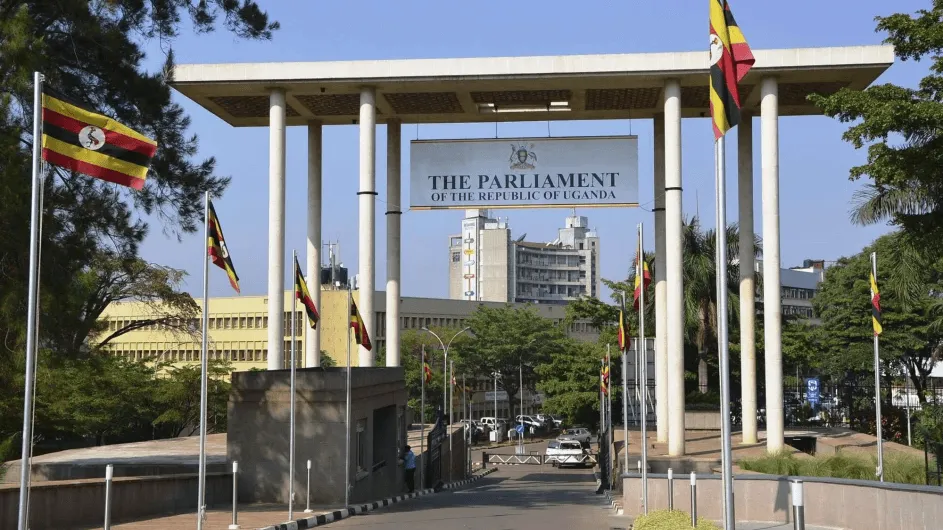
Uganda has institutions designed to provide checks on executive power, including a parliament, an auditor general’s office, and a judiciary. But institutions are only as strong as the political culture that supports them. When powerful interests resist scrutiny, or when whistleblowers face retaliation, those institutions become symbolic rather than functional.
The Opposition Leadership Battle
Adding another layer of complexity to an already charged week is the ongoing battle over leadership within Uganda’s opposition. Internal divisions in opposition movements are not unique to Uganda, but they carry particular consequences in political environments where space for dissent is already narrow.
When opposition parties fracture, the immediate beneficiary is always the ruling establishment. Divided opposition voices are easier to dismiss, easier to outmanoeuvre in parliament, and easier to discredit in the public eye. The fight over who speaks for Uganda’s opposition is therefore not just an internal party squabble. It determines whether there is a credible, unified alternative voice holding the government to account.
The outcome of this leadership dispute will shape the opposition’s capacity to engage on every other issue in the news this week, from the missing citizens to health spending and beyond. A fractured opposition cannot effectively push for answers. A united one at least stands a chance.
Why This Week Matters
Weeks like this one have a way of revealing what a country is made of. The questions being asked in Uganda right now are not comfortable ones, and the people with the power to answer them have every incentive to stay quiet. That is precisely why journalists, civil society groups, and engaged citizens need to keep pressing.
Johnson Mayamba and the team at NTV Uganda are doing what good journalism is supposed to do: holding a light up to the corners where powerful people would prefer darkness. The questions about missing Ugandans, health preparedness, budget integrity, and opposition cohesion deserve not just coverage but follow-through.
Uganda has navigated serious challenges before and will again. But navigation requires knowing where you are and where you are going. Right now, too many Ugandans are being left without answers on questions that directly affect their lives, their safety, and their political future.
So here is the question worth sitting with this week: if a government cannot account for its citizens, its spending, or its obligations, at what point does the public stop waiting for answers and start demanding them?