


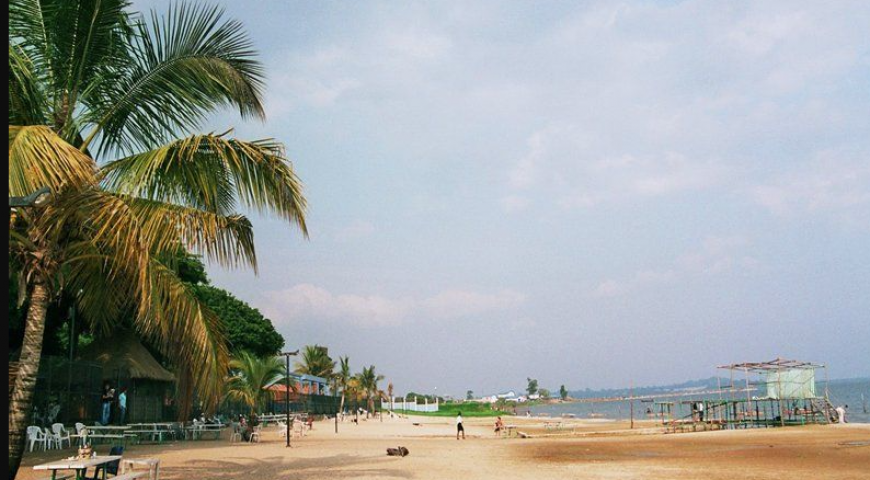
There is a certain kind of humiliation that either breaks a person or lights a fire so bright it becomes impossible to ignore. For Ugandan singer Ras Dee, that moment came in the form of a slap at Lido Beach, a crowded waterfront spot that had no idea it was about to play a small but unforgettable role in the birth of one of Uganda’s most recognizable early 2000s hits.
Ras Dee, who has since stepped back from the front lines of active music, recently sat down and told the world the story behind the real inspiration for ‘Musege’, his dancehall-reggaeton banger that captured hearts across Uganda and beyond. What he revealed was not a polished, press-ready anecdote. It was something far more relatable: a young man, struggling, trying to prove himself, and getting knocked down in the most literal sense.
The Promise He Made and Couldn’t Keep
To understand why that slap hit so hard, you have to understand the context. This was the early 2000s, a time when Ugandan musicians were beginning to command real public attention. Getting your photograph published in a newspaper was not just a vanity milestone. It was proof. It was currency. It told the world that you had arrived.
Ras Dee had made a promise to his baby mama. He told her that one day, his face would be in the papers. It was the kind of bold, romantic declaration that young dreamers make when ambition is bigger than their current reality. The problem was that, at the time, he was still performing karaoke at music bars, a promising voice without a hit song to anchor his name to anything solid.
That gap between the promise and the reality was already weighing on him. Then came Lido Beach.
The Slap That Rewrote the Script
The details of what exactly unfolded at Lido Beach carry the kind of bitter clarity that only comes from an incident that burns itself into your memory. According to Ras Dee, the encounter was humiliating, the sort of public embarrassment that strips a person down and forces them to either retreat or respond.
He chose to respond. Not with his fists. With a song.
The genius of that decision is easy to appreciate in hindsight. Turning personal pain into art is one of the oldest traditions in music, from the blues fields of the American South to the dancehall yards of Kingston, Jamaica. But doing it well, doing it in a way that people actually feel, requires something extra. It requires honesty that most people are too proud or too guarded to put into a lyric.
Ras Dee was not too proud. He channeled the sting of that slap, the frustration of being an unrecognised artist, and the complicated dynamics of being a young man trying to hold his head up in front of someone he cared about, and he poured all of it into ‘Musege.’
Why ‘Musege’ Worked So Well
The song landed with audiences not just because of its catchy dancehall-reggaeton rhythm but because it carried emotional weight. Listeners did not necessarily know the backstory, but they felt something in it. That is what authentic songwriting does. It communicates experience directly to the gut, bypassing the rational mind entirely.
Uganda’s music scene in the early 2000s was finding its footing, experimenting with blending local sensibilities with Caribbean-influenced sounds. ‘Musege’ fit neatly into that moment, a song that felt both globally influenced and distinctly Ugandan in its emotional core.
Ras Dee did eventually get his photograph in the newspapers. The promise to his baby mama was kept, though it came wrapped in circumstances he probably never anticipated when he first made it.
The Artist Who Stepped Away
What makes Ras Dee’s story particularly interesting in 2026 is the fact that he is telling it from a place of distance. He has stepped away from active music, which means this revelation is not a promotional move ahead of a new release. It is simply a man, older and presumably more at peace, deciding that the story behind one of his most memorable songs deserves to be told properly.
There is something quietly admirable about that. In an era where every piece of personal history gets packaged into content, Ras Dee’s disclosure feels genuinely reflective rather than calculated. He was an upcoming artist with no hits, making promises he was not yet equipped to keep, and a stranger’s hand across his face became the unlikely catalyst for a song that outlasted the moment that created it.
Music history is full of these pivotal incidents, the arguments, the rejections, the humiliations that pushed artists past their own limitations. The slap at Lido Beach joins that long, quietly extraordinary list.
What His Story Says About Ugandan Music
Beyond the personal drama, Ras Dee’s account offers a small but vivid window into what the Ugandan music industry looked like for struggling artists in the early 2000s. Newspaper coverage was the social media of its time, the metric by which public relevance was measured. Karaoke bars were the training grounds. And the gap between aspiring and arriving was wide enough that a single bad day at a beach could either finish a career before it started or ignite one entirely.
The fact that ‘Musege’ became a hit speaks to more than just Ras Dee’s talent. It speaks to his willingness to mine discomfort for something useful, a skill that separates artists who connect from those who merely perform.
If you have ever had a bad day that eventually became the best thing that happened to you, Ras Dee’s story might feel more familiar than you expect. So here is the question worth sitting with: how many of the songs, books, businesses, or breakthroughs you admire most were born from a moment someone desperately wanted to forget?