
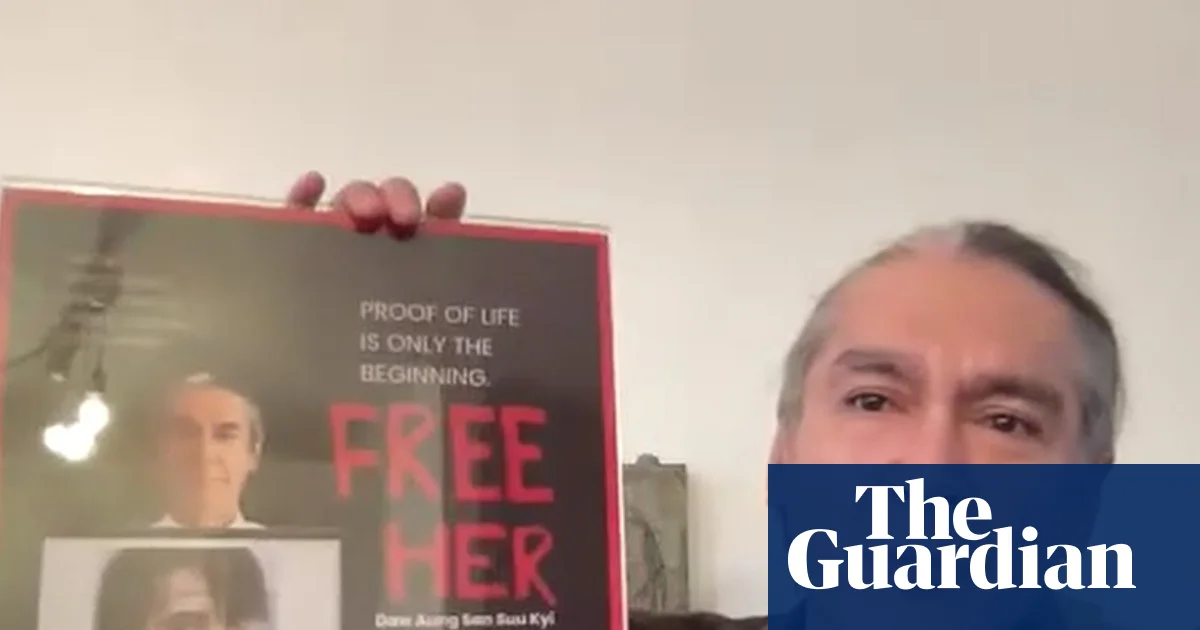
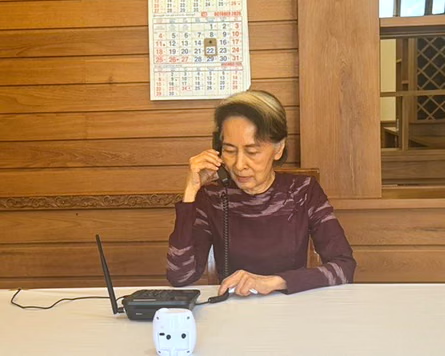
For more than five years, Kim Aris had no idea whether his mother’s voice would still carry the same quiet authority he remembered. Then, finally, the phone rang. Aung San Suu Kyi, the 81-year-old Nobel Peace Prize laureate and former democratic leader of Myanmar, spoke with her son for the first time since the military seized power in February 2021, and the conversation left him with a complicated mix of relief and alarm.
“She still sounds certainly all there mentally, and physically she sounds strong,” Kim Aris told The Guardian. But the comfort of that update was immediately undercut by what he described as the reality of her day-to-day existence: near-complete isolation, with no contact beyond the military and police personnel who oversee her detention.
A Moment of Contact, or a Calculated Move?
Kim Aris was careful not to read too much warmth into the call itself. He described it plainly as a “public relations” exercise by Myanmar’s military leadership, a strategic gesture rather than a humanitarian one. The junta, which has faced sustained international condemnation since the coup that ousted Suu Kyi’s elected government, has every reason to demonstrate that its most famous prisoner is alive and coherent. Showing she is well costs them little. Releasing her would cost them everything.
That framing matters. When a government grants access to a political prisoner on its own terms, in its own time, the optics are rarely accidental. Authoritarian regimes have long understood that a carefully managed signal of clemency, a brief phone call, a supervised letter, can take the pressure off without changing anything substantive. Kim Aris appears to understand this fully.
Solitary Confinement Without the Label
What makes his account particularly striking is the picture it paints of Suu Kyi’s social world, or rather the near-total absence of one. “I don’t think she has anybody outside of the military or the police around her, so essentially she’s been held in solitary confinement from what I gather,” he said. That is a striking phrase to use about an 81-year-old woman whose decades of house arrest during earlier periods of military rule were already considered among the longest such detentions of a political figure in modern history.
Solitary confinement, even when it does not carry that official name, carries well-documented psychological consequences. Prolonged social isolation can erode memory, concentration, and emotional regulation. The fact that Kim Aris reports his mother sounds mentally sharp after years in these conditions speaks either to extraordinary personal resilience or to conditions that, while deeply restrictive, have not reached the extremes of sensory deprivation. Or both. It is impossible to know from the outside.
What We Know About Her Detention
Suu Kyi has been held since the February 2021 coup, when the military, known as the Tatmadaw, arrested her along with other senior figures from her National League for Democracy party. She has faced a series of criminal charges brought by the junta, ranging from corruption to breaches of colonial-era laws, charges that international human rights organisations have widely dismissed as politically motivated. The trials were conducted largely behind closed doors, and her legal team faced significant restrictions in representing her.
She was sentenced to multiple prison terms that were later consolidated, though the precise details of her current custodial arrangement have been difficult to verify independently. Myanmar’s military government controls information tightly, and independent journalists operate at enormous personal risk inside the country.
The Weight of 81 Years and What Comes Next
Aung San Suu Kyi’s age adds another layer of urgency to the situation. At 81, she is not a young woman waiting out a temporary injustice. Every year that passes is a year of her life spent in isolation, and the international community’s ability to apply meaningful pressure on Myanmar’s junta has proven consistently limited since the coup.
Sanctions from Western governments have had some economic effect, but the military has diversified its relationships with China, Russia, and other regional partners who are less concerned with democratic governance. ASEAN, the regional bloc that might theoretically exert the most direct influence, has struggled to maintain a unified position on Myanmar and has not succeeded in implementing its own five-point peace plan.
Kim Aris speaking publicly, and speaking to outlets like The Guardian, keeps his mother’s name and plight in the international conversation. That visibility matters, even when it feels insufficient. History has shown repeatedly that sustained attention to political prisoners, however slowly, does create pressure. But sustained attention is precisely what fades over time, as news cycles move on and new crises emerge.
A Symbol Still, Whether She Wants to Be or Not
Suu Kyi is a complicated figure. Her global reputation, built over decades of resistance to military rule and sealed by the Nobel Peace Prize she received in 1991, suffered serious damage over her handling of the Rohingya crisis during her time in government. Critics argued she failed to speak out against, and in some instances actively defended, military operations that the United Nations and international courts have described in the starkest possible terms.
But those debates exist alongside, not instead of, the basic human reality of an elderly woman held in isolation by a military government. The two things are not mutually exclusive, and reducing her situation to either uncritical hero worship or complete dismissal misses the point. She remains the most recognisable symbol of Myanmar’s struggle for civilian rule, and her continued detention is a daily statement from the junta about who holds power and who does not.
For Kim Aris, none of that abstraction changes what he heard on the phone: his mother’s voice, still present, still sharp, calling out across five years of enforced silence from somewhere inside a country that her own son cannot freely visit.
The question worth sitting with is this: when the international community has run out of new tools to pressure Myanmar’s military government, what does meaningful solidarity with Aung San Suu Kyi actually look like, and is anyone still willing to do the hard, unglamorous work of figuring that out?