
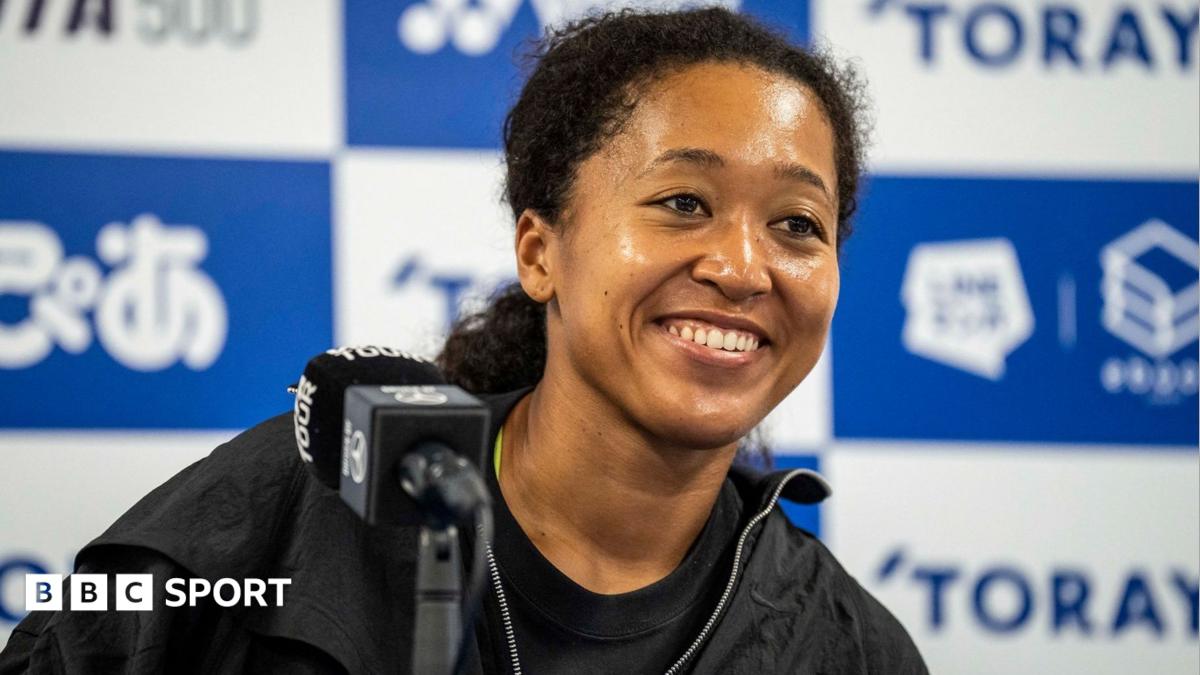
Naomi Osaka has won four Grand Slam titles, reached world number one, and navigated one of the most turbulent personal journeys in modern sport. Now, as she inches back toward the best tennis of her life, the four-time major champion has revealed that the only person who could truly pull her away from the game is her daughter, who is just three years old.
In comments reported by BBC Sport, Osaka was refreshingly candid about where her game stands right now and where her heart sits when it comes to the bigger questions about life beyond the baseline. She described herself as “not far off” her best, a phrase that, coming from a player of her calibre, carries serious weight.
A Champion Finding Her Rhythm Again
There is something almost poetic about Osaka’s current chapter. She stepped away from professional tennis to give birth to her daughter, returned to the tour with all the scrutiny that entails, and has been piecing together her game with the kind of quiet determination that rarely makes headlines but eventually produces results. The raw talent was never in question. The real story has always been about how she manages everything else around it.
For Osaka, the mental and emotional dimensions of competing at the highest level have always been as significant as the physical ones. She has spoken publicly before about anxiety and the pressures of professional sport, and her willingness to prioritise her own wellbeing, even at professional cost, changed the conversation around athlete mental health in a way that few others have managed. Returning to the court as a mother adds yet another layer to an already complex portrait.
When she says she is not far off her best, those who follow the sport closely will know that her best is something genuinely special. Her game is built on a ferocious serve, explosive groundstrokes from both wings, and an ability to raise her level in the moments that matter most. Getting all of that firing in sync after an extended break is no small task, but the signs are evidently encouraging.
The Three-Year-Old Who Could End It All
What makes Osaka’s current position particularly fascinating is the way she frames the question of retirement. For most elite athletes, the decision to walk away comes down to a combination of age, injury, motivation, and results. Osaka has introduced a factor that almost no one else has articulated quite so directly: her daughter’s wishes.
She admitted that if her daughter asked her to stop playing, she would seriously consider doing exactly that. It is the kind of statement that sounds simple on the surface but speaks to a profound shift in identity and priority. The champion who once had the tennis world revolving around her is now revolving, at least partly, around a toddler’s world.
This is not unusual for parents, of course. What is unusual is hearing it said out loud by someone still actively competing at the top of one of the most demanding individual sports on earth. There is no corporate-speak here, no careful management of public image. It reads as genuine, which is precisely why it lands so differently from the standard athlete retirement speculation.
Motherhood and Professional Sport: A Conversation Still Being Written
Osaka is far from the first elite athlete to return to competition after having a child. Serena Williams famously continued competing at the highest level as a mother, winning the 2017 Australian Open while pregnant and reaching Grand Slam finals in the years that followed. Kim Clijsters returned from retirement as a mother and won multiple Grand Slams. But each story is distinct, and Osaka’s willingness to be so open about the tension between her professional ambitions and her role as a parent adds something genuinely new to that conversation.
The pressure on women in sport to compartmentalise, to keep the personal and professional neatly separated, has always been intense. What Osaka is doing, whether intentionally or not, is refusing that separation. She is saying: these parts of my life are connected, and the person I love most in the world has a say in what I do with my time and my career.
What Comes Next for Osaka
With her form reportedly trending upward and her motivation clearly intact, the near-term picture for Osaka looks genuinely competitive. A player of her ability who is even approaching her peak is a threat to anyone on any surface. The Grand Slam titles she has already won came on hard courts, and she has shown the kind of firepower that does not quietly fade away.
Whether she gets back to the very summit of the women’s game remains to be seen. The WTA tour is ferociously competitive, stacked with a generation of players who have spent recent years filling the vacuum that Osaka’s absences created. Getting back to the top will require not just her best tennis but sustained consistency over months of competition.
But here is the thing about Naomi Osaka: she has never been entirely predictable, and that has always been part of what makes her compelling to watch. She operates on her own terms, at her own pace, guided by her own sense of what matters. Right now, what matters includes a three-year-old daughter who may, at some point, have the most important opinion in professional tennis.
So the question worth sitting with is this: in a sport that demands total commitment and relentless sacrifice, is there something quietly radical about an athlete who openly admits that family love could outrank every trophy? And what does it say about the future of elite sport that more and more champions are willing to say it out loud?