







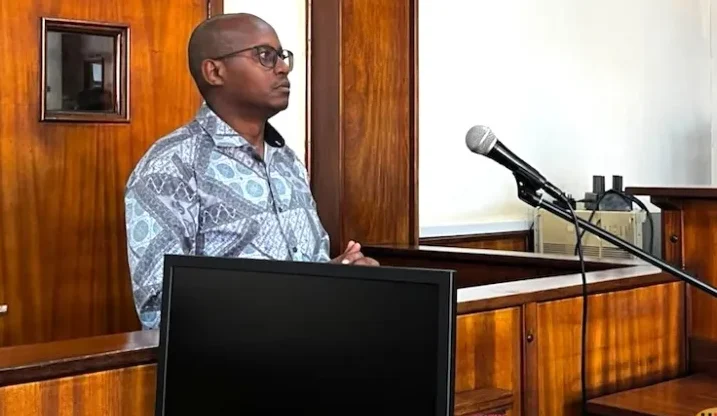
A Kampala High Court judge has cleared the path for extradition proceedings against Michael Katungi Mpeirwe to resume, after dismissing the former Ugandan diplomat’s application to halt the process. Justice Simon Peter Kinobe, delivering his ruling on Monday through the judiciary’s electronic ECCMIS platform, found that Katungi’s bid to invoke the court’s revisionary jurisdiction was fundamentally premature, given that the Chief Magistrate had not yet issued a final ruling on the pending objections from his legal team.
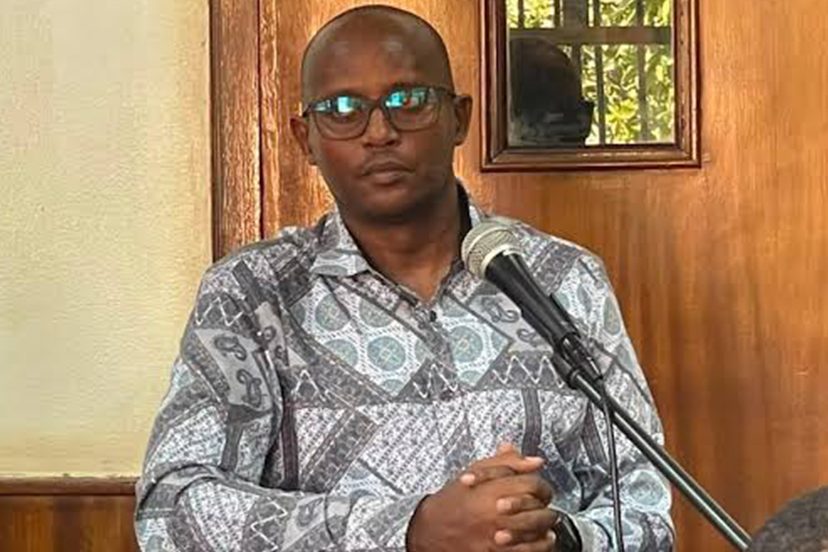
What the Court Actually Said
The ruling was pointed and unambiguous. Justice Kinobe noted that the objections raised by Katungi’s lawyers as grounds for revision had not yet been decided at the lower court level, meaning there was no concluded matter for the High Court to revisit in the first place. “This application is, in substance, an attempt to have this Court invoke its revisionary jurisdiction in respect of matters not yet decided,” the judge stated in the ruling. “Such an approach is premature and falls outside the intended scope of revision.”
Beyond dismissing the application without costs, Kinobe ordered the case file returned to Buganda Road Chief Magistrate’s Court for the extradition proceedings to be concluded. Crucially, all interim orders that had stayed the case were lifted, meaning no legal barrier now stands between Katungi and the continuation of those proceedings.
Who Is Michael Katungi Mpeirwe?
Katungi is identified in court documents as a former Ugandan diplomat. He was arrested on June 27, 2026, following an extradition warrant issued by Buganda Road Chief Magistrate’s Court, itself triggered by a formal extradition request from the United States government. He appeared before the court on June 30 and was remanded to Murchison Bay Prison in Luzira, where he has remained.
The charges he faces in the U.S. District Court for the Eastern District of Virginia read like something from a federal crime drama. According to reports on the extradition proceedings, Katungi is alleged to have conspired to distribute and possess with intent to distribute at least five kilograms of cocaine. Alongside that, he faces a conspiracy charge involving the possession of firearms, including a machine gun and a destructive device, in connection with drug trafficking. The most serious allegation, however, is a conspiracy to provide material support to a designated foreign terrorist organization.
The Legal Maneuver That Failed
Katungi’s lawyers had gone to the High Court asking it to reverse a July 10, 2026 ruling by the Chief Magistrate, stay the extradition case entirely, and order their client’s unconditional release. It was an aggressive legal strategy, but it ran into a fundamental procedural wall. Revisionary jurisdiction, which allows a higher court to review decisions of a lower one, only applies once there is actually a final decision to review. The Chief Magistrate had not wrapped up her consideration of the objections raised, so there was nothing concrete for the High Court to act on yet.
The judge’s dismissal without costs was a signal that the application was not frivolous enough to warrant penalising the applicant financially, but it was nonetheless a clean sweep in favour of the prosecution’s position. No costs awarded, no orders sustained, and the file heading straight back to the magistrate.
What Happens Next
With the interim stay orders now lifted and the file returned to Buganda Road Chief Magistrate’s Court, the extradition hearing can pick up from where it left off. The Chief Magistrate is still expected to rule on the objections that Katungi’s lawyers had originally raised at that level, which means the legal fight is far from over. If those objections are dismissed and the extradition is approved, Katungi could ultimately find himself standing trial in Virginia on charges that carry severe federal penalties under United States law.
Extradition cases involving terrorism-related allegations tend to draw intense scrutiny, both legally and diplomatically. The combination of drug trafficking, weapons charges, and alleged material support for a terrorist group makes this one of the more complex extradition matters Uganda’s courts have handled in recent years. How the magistrate rules on the outstanding objections will determine whether this becomes a landmark case in Uganda-US legal cooperation, or a prolonged battle that winds its way further up the judicial ladder.
The Bigger Picture
Cases like this one sit at the intersection of domestic legal procedure and international law enforcement cooperation. Uganda and the United States maintain extradition arrangements, and American prosecutors have shown a consistent willingness to pursue cases with an international dimension, particularly those touching on narcotics and national security. For Katungi, the legal road ahead is steep. His lawyers still have arguments to make at the magistrate level, and every avenue within Uganda’s judicial system remains open to them before any extradition could physically take place.
Still, Monday’s ruling was a significant setback. The attempt to short-circuit proceedings at the High Court did not work, and the case now moves forward with renewed momentum. Whether Katungi ultimately boards a flight to the United States or manages to defeat the extradition bid on legal grounds remains to be seen, but the courts have made clear they will not allow procedural shortcuts to delay a process that is still very much in motion.
As this case heads back to Buganda Road, one question lingers for legal observers and the public alike: when a former diplomat stands accused of bridging the worlds of narcotics, weapons, and terrorism, what does that say about the gaps in how governments vet and monitor their own representatives abroad?