



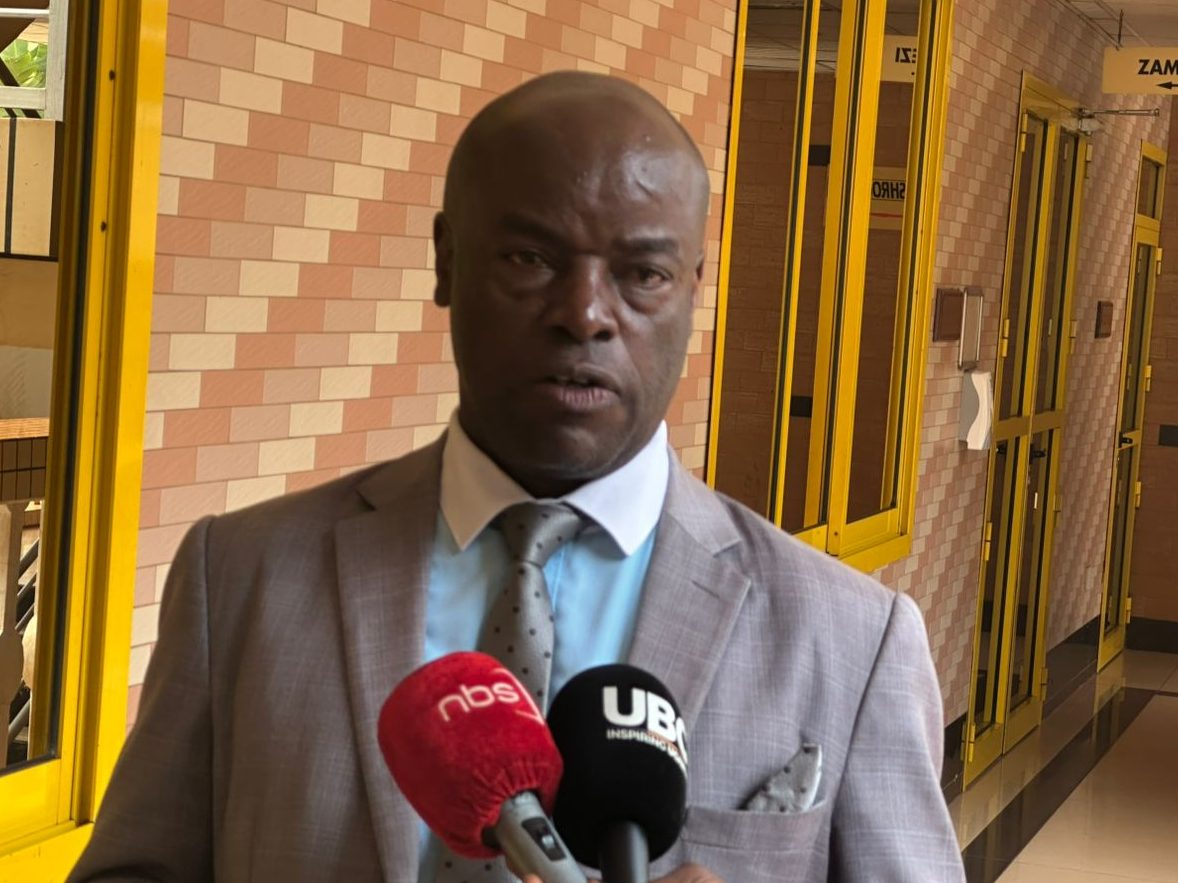
There is a certain irony so sharp it almost cuts. Philip Luswata, one of Uganda’s most respected actors, comedians, and educators, entered the creative arts industry for one very simple, very relatable reason: he did not want to go back to school. Nearly three decades later, that same career path has delivered him, almost against his own will, to the final stretch of a doctoral degree.
In a candid interview that has since captured the attention of many across Uganda, Luswata opened up about the real motivation behind his entry into the arts, admitting that his younger self genuinely believed a life on stage would be a clean escape from the rigours of formal education. Spoiler: it was not.
The Great Escape That Wasn’t
Most people who know Philip Luswata today see a polished, articulate, and deeply intellectual figure. What they may not know is that the road to that version of him started with something far less noble than passion or calling. It started with avoidance.
“I joined the arts and entertainment industry with the aim that I didn’t want to return to school,” he said, with the kind of honesty that only comes from someone who has long made peace with their past. “However, I found out that it needed more reading and studying.”
That admission is significant. Not because it is embarrassing, but because it is human. The idea that someone could stumble into one of Uganda’s most demanding creative professions while trying to sidestep academic pressure, and then come out the other side holding a PhD, tells you something profound about what the arts actually ask of the people who choose them.
What the Stage Actually Demands
There is a persistent myth that creative careers are the soft option. That acting, comedy, and performance are routes taken by people who could not handle the structure of university life or the pressure of professional academia. Luswata’s story dismantles that notion with considerable force.
The arts, particularly theatre and performance, require an enormous amount of intellectual labour. Actors must understand psychology to inhabit characters convincingly. Comedians must study timing, cultural context, language, and human behaviour. Educators in the creative space must synthesise theory with practice, often in real time, in front of live audiences. None of that is light work.
Luswata quickly discovered that the industry he had hoped would free him from books was, in fact, built on them. Scripts demand literary understanding. Character development borrows from psychology and sociology. Storytelling, at its best, is applied philosophy. The stage, it turns out, is just a classroom with better lighting and higher stakes.
Three Decades of Creative Excellence
What makes Luswata’s trajectory even more striking is the depth and duration of his career. With nearly thirty years in Uganda’s entertainment landscape, he has built a body of work that spans performance, education, and cultural commentary. He is not a fringe figure who stumbled into a doctorate by accident. He is a veteran, a respected one, who has earned every title through genuine craft and continuous growth.
His longevity in an industry that chews through talent quickly speaks to the discipline he developed, the same discipline he once tried to outrun in school hallways. The irony is almost poetic.
A PhD at the End of the Road (or Maybe the Beginning)
Now, as he approaches the completion of his doctoral studies, Luswata stands as a rare example of full-circle growth. The young man who avoided academia has become, by most definitions, a scholar. And not just any scholar, but one who brings lived experience, professional credibility, and artistic depth to his research.
This matters for Uganda’s broader conversation about education and the creative economy. For years, parents have warned their children away from arts careers, pushing them toward medicine, law, or engineering as the only paths worth taking seriously. Luswata’s story complicates that narrative in the best possible way. It suggests that excellence in any field, including entertainment, eventually demands the same intellectual rigour that formal education is supposed to build.
What His Story Means for Young Creatives
For young Ugandans considering a career in the arts, Luswata’s journey offers something more valuable than inspiration. It offers a reality check. The creative industry will not let you coast. It will push you to read more, think harder, and understand the world more deeply than you thought you needed to. The question is whether you are willing to meet that demand.
His path also reframes what education looks like. A PhD earned after decades of professional experience is not the same as one earned straight out of secondary school. It is richer, more contextualised, and arguably more meaningful. Luswata did not just study his field. He lived it first, then went back to understand it at the deepest level possible.
The Classroom Was Always There
In a strange way, Philip Luswata never actually escaped school. He just changed the building. Every rehearsal was a lesson. Every performance was an exam. Every audience was a peer review panel. He was learning all along, just not in the way he expected when he was young enough to think he could outrun it.
Now, with a doctorate nearly in hand, he has made it official. The boy who fled the classroom has become a doctor. Uganda’s arts community has a new kind of story to tell, and it is a good one.
So here is something worth sitting with: if one of Uganda’s most celebrated entertainers found that his creative career demanded more intellectual depth than he ever anticipated, what does that say about the careers we dismiss as “easy” or “not serious”? And what might happen if we started treating every profession, creative or otherwise, with the same academic respect we reserve for medicine and law?