











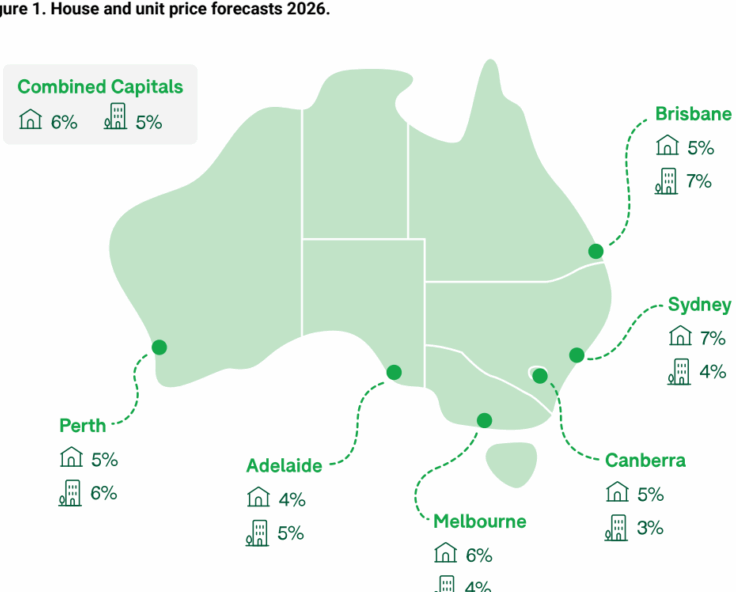
Australia’s property market is doing something it rarely does with any grace: it is retreating. And on August 5, 2026, the conversation around that retreat grew louder, with a prominent political figure arguing that declining house prices are not a crisis to be managed but a correction to be welcomed. At the same time, the Labor government moved to extend its solar discount scheme beyond residential homes to commercial buildings, signalling a broader push on energy policy that could reshape how businesses think about their operating costs.
Falling Prices, Rising Debate
Senator David Pocock made headlines this week by stating plainly that falling house prices are, in his words, “a good thing for our country.” It is the kind of statement that makes real estate agents wince and first-home buyers exhale. In a country where property ownership has long been treated as both a financial strategy and a cultural rite of passage, saying that prices should come down is still, somehow, a controversial position to hold publicly.
Pocock’s view cuts against decades of political instinct in Australia, where both major parties have historically been reluctant to say anything that might spook existing homeowners, who also happen to be a large chunk of the voting population. But the affordability crisis has become so severe in cities like Sydney and Melbourne that the political calculus may finally be shifting. Younger Australians locked out of the market have grown into a significant electoral force, and their frustration is impossible to ignore.
The Profit Paradox: Sellers Are Still Winning
Here is where the story gets genuinely interesting. Despite the narrative of a market in “tailspin,” the data tells a more nuanced story. According to Australian housing market reports tracked throughout the day, almost every single property sold in the first six months of 2026 still returned a profit to its seller. The vast majority of homeowners are walking away from sales with more money than they put in, even as nominal prices drift downward.
This is the paradox at the heart of Australia’s property conversation. A market can be “falling” in headline terms while still rewarding the people who own homes, simply because those owners bought years or decades ago when prices were dramatically lower. The paper losses are largely theoretical for long-term holders. The real pain lands squarely on those who bought at or near the peak, and on those who have never owned at all.
What this means in practical terms is that a price correction, even a meaningful one, does not automatically mean a wave of distressed sales or negative equity for most Australians. The buffer built up during the extraordinary price surge of the past decade is thick enough to absorb a considerable amount of decline before most sellers start losing money. That is cold comfort for renters watching the market, but it does suggest the system is not as fragile as some of the more alarming commentary implies.
What a Genuine Correction Would Look Like
For housing to become meaningfully more affordable, prices would need to fall substantially relative to incomes, or incomes would need to rise substantially relative to prices, or some combination of both. Australia has experienced neither for long enough to change the fundamental picture. The median home in Sydney remains well beyond the reach of a household on the median income, regardless of whether prices are up two percent or down three percent in any given quarter.
Economists who study housing affordability consistently point to supply as the core problem. Australia has not built enough homes in the right places for years. Zoning restrictions, planning delays, and the political sensitivity around density in established suburbs have all contributed to a structural shortage that no amount of interest rate movement can fully fix. Falling prices help at the margin, but they do not solve the underlying mismatch between supply and demand.
Labor’s Solar Push: Commercial Buildings Join the Party
Separate from the housing debate, the Labor government announced an expansion of its solar discount program to include commercial buildings. The scheme, previously focused on residential properties, will now allow businesses to access subsidised solar installations, a move that could meaningfully cut operating costs for small and medium enterprises grappling with high energy bills.
The timing is deliberate. Energy costs have remained a persistent pressure point for Australian businesses, and the government is clearly looking to demonstrate economic management credentials ahead of what promises to be a fiercely contested political period. Rooftop solar on commercial buildings also fits neatly into Australia’s broader renewable energy targets, adding generation capacity in a distributed way that does not require new transmission infrastructure.
For business owners, the practical question is straightforward: how quickly will the subsidy translate into lower bills, and what are the upfront requirements to access it? The details of eligibility and rollout will determine whether this becomes a widely used program or a policy that sounds better in a press release than it works in practice.
The Bigger Picture: Affordability, Energy, and Political Positioning
Taken together, the housing price debate and the solar expansion reflect a government trying to speak to two different anxieties simultaneously. The first is the cost of getting into, or staying in, the housing market. The second is the cost of running a household or a business day to day. Both are legitimate concerns, and both are politically charged in ways that reward boldness from some quarters and caution from others.
Pocock’s willingness to say falling prices are good is a kind of permission structure, giving other politicians cover to acknowledge something many economists have said for years: that Australia’s obsession with ever-rising property values has come at a serious social cost. Whether that view gains mainstream traction, or whether the instinct to protect existing owners reasserts itself, will shape housing policy for years to come.
The property market will keep moving, interest rates will keep being debated, and the solar panels will keep going up on rooftops across the country. But the underlying question remains as sharp as ever: is Australia finally ready to accept that making housing cheaper is a policy goal worth pursuing, even when it makes headlines that make investors nervous?
So here is the question worth sitting with: if almost every seller is still making a profit even as prices fall, what exactly are we afraid of losing by letting the correction continue?