



Ugandan saxophonist Happy Kyazze used a deeply personal moment of mourning to send a pointed message to the country’s policymakers this week, calling on the government to slash the import taxes levied on musical instruments. His appeal, made as he paid tribute to the late Afrigo Band lead singer Moses Matovu, cuts to the heart of a long-standing frustration within Uganda’s creative industry: that the cost of making music has become a barrier too high for the next generation to clear.
A Plea Wrapped in Grief
Matovu, regarded as one of Uganda’s most treasured musical voices, passed away last week. Investigations into the circumstances of his death are still ongoing. For those who knew him, the loss is not simply personal. It is cultural. And it was against this backdrop that Kyazze stepped forward to speak, not just about the man he admired, but about the conditions that shape whether future artists like Matovu ever get the chance to develop their craft at all.
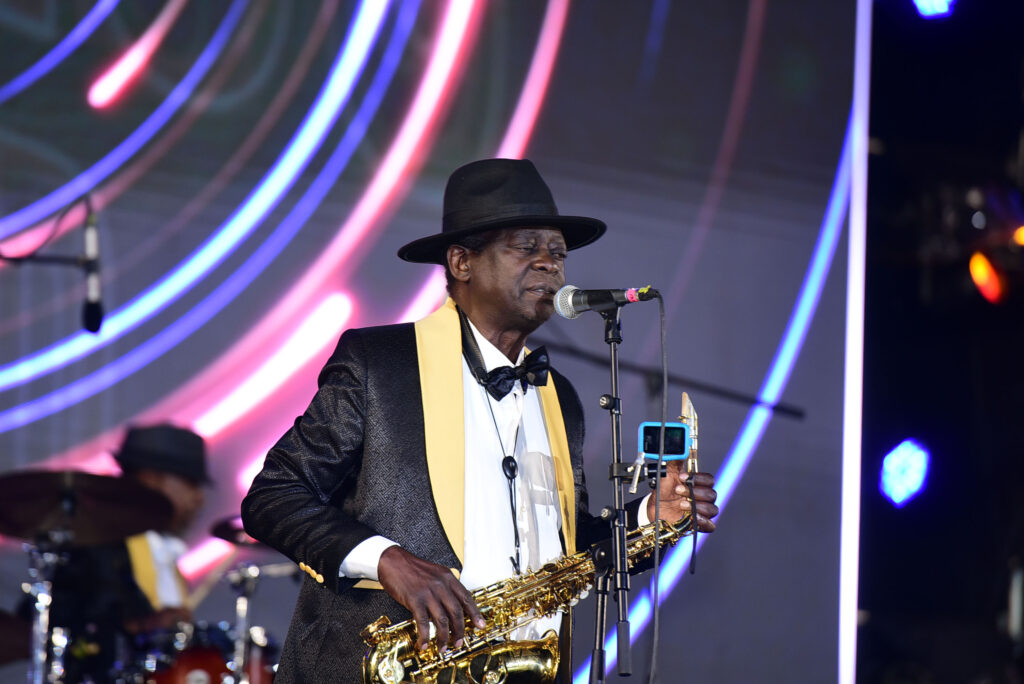
Kyazze revealed something that made the tribute even more poignant: he and Matovu had been actively collaborating on a musical project that now sits unfinished. A piece of work, suspended mid-creation. It is the kind of detail that reminds you how abruptly life can interrupt art, and why protecting the conditions for artistic growth matters so much.
The Real Cost of a Guitar or a Saxophone in Uganda
The tax issue Kyazze raises is not new, but his visibility gives it renewed weight. Importing musical instruments into Uganda attracts duties that send the final retail price soaring well beyond what most families, schools, or emerging artists can afford. A decent saxophone, a quality keyboard, or even a well-made acoustic guitar becomes less a tool of learning and more a luxury item.
For a country with a young, musically rich population, this is a quiet crisis. Uganda’s music scene has produced genuine continental stars, but talent alone does not build a musician. Practice does. Repetition does. Owning an instrument, having it available at odd hours, being able to experiment without booking studio time, that is how skills actually form. When instruments are priced out of reach, that development process simply does not happen for most young people.
As reported by Mbu, Kyazze was direct in his message: reduce the tax on imported instruments. No diplomatic hedging. No softening. Just a clear ask from a working musician who understands exactly what is at stake.
Why This Conversation Matters Beyond the Music World
Creative industries contribute meaningfully to national economies, and Uganda has the raw material to build something formidable. Music tourism, streaming revenue, live performance ecosystems, instrument manufacturing tie-ins, these are real economic pipelines, but they require investment upstream. Taxation policy on instruments is, in this sense, also economic policy.
Countries that have actively reduced barriers to music education have seen measurable returns. When young people can access instruments affordably, music schools grow, local production increases, and artists emerge who go on to generate export revenue and cultural influence. The equation is not complicated. The political will to act on it is where things tend to stall.
Honouring Matovu by Building What He Believed In
Moses Matovu spent decades fronting one of Uganda’s most beloved bands. His voice, his presence, and his commitment to live performance defined an era. The best tribute any government or cultural institution could offer would not be a plaque or a ceremony. It would be policy that ensures the next Matovu actually gets a chance to pick up an instrument, fall in love with sound, and spend a lifetime making something worth remembering.
Kyazze understands this. His appeal is part eulogy, part action plan. He is grieving a collaborator and, at the same time, refusing to let that grief be passive. It is a posture the country’s music community would do well to rally behind collectively.
What Needs to Happen Next
The government has before it a relatively straightforward lever to pull. A review of import duties on musical instruments, particularly those used for educational and non-commercial purposes, could meaningfully shift who gets access to music training in Uganda. Schools in rural areas, youth community programmes, and self-taught musicians grinding without institutional support would all benefit from a more accessible market.
Industry stakeholders, music educators, and cultural bodies could strengthen this case by putting numbers to it: how many instruments are imported annually, what percentage of young musicians cite cost as the primary barrier to consistent practice, and what neighbouring countries charge in comparable duties. Data tends to move policy faster than sentiment, even when the sentiment is entirely justified.
Kyazze has opened the door. The question now is whether enough voices join his to make the government listen, and whether Uganda chooses to invest in its musicians before it is left mourning not just the ones it has lost, but the ones who never got started. What would change in Uganda’s music industry if instruments were actually affordable for every young person with a dream?