

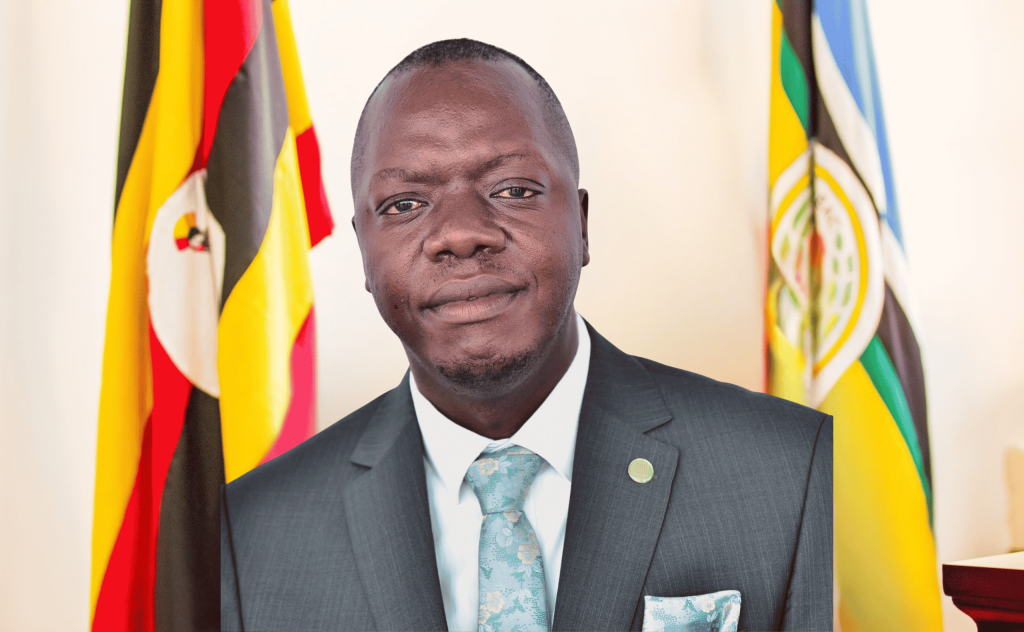
Uganda’s fish farming industry sits on enormous potential, yet it has long operated without a clear, government-backed research structure guiding its growth. That gap is now squarely in the crosshairs of the State Minister for Fisheries, Hon. Robert Migadde, who has formally called on the National Agricultural Research Organisation, widely known as NARO, to establish a dedicated department that will serve the country’s fish farmers with the technical guidance they need to work productively and responsibly.
A Direct Challenge to the Research Establishment
Migadde’s call is not a gentle suggestion. It is a pointed directive to one of Uganda’s most important scientific institutions, telling NARO that fish farmers cannot continue to navigate a complex, environmentally sensitive industry without a proper support structure behind them. Speaking publicly on the matter, the minister made clear that this new department should not only assist farmers in boosting their yields but must equally ensure that aquaculture activities do not degrade Uganda’s lakes, rivers, and wetlands in the process.
As reported by NTV Uganda, the minister’s appeal centres on creating a formal, institutionalised channel through which fish farmers can access research-backed advice, practical training, and ongoing technical support rather than relying on fragmented, informal networks.
Why This Matters for Uganda’s Aquaculture Sector
Uganda is a country surrounded by water. Lake Victoria alone ranks as the world’s largest tropical lake, and together with Lakes Albert, Edward, George, and Kyoga, Uganda’s freshwater resources represent one of the most significant aquatic ecosystems on the African continent. Fish farming, both in cages on natural water bodies and in purpose-built ponds, has grown rapidly as wild fish stocks in major lakes come under increasing pressure from overfishing and habitat degradation.
That growth, however, has been uneven. Many fish farmers operate with limited knowledge of water quality management, fish nutrition, disease control, and responsible waste disposal. The result is a sector that sometimes undermines the very natural resources it depends on. Without structured research guidance, poorly managed fish farms can contribute to the eutrophication of lakes, reduce dissolved oxygen levels, and accelerate the spread of aquatic diseases that wipe out both farmed and wild fish populations.
A dedicated NARO department focused specifically on fisheries and aquaculture could change that dynamic. NARO already operates a network of research institutes across Uganda covering crops, livestock, and natural resources. Adding a specialised fisheries research and extension arm would give the organisation the capacity to develop Uganda-specific feed formulas, breed improvement programmes, disease diagnostics, and environmental monitoring protocols tailored to local conditions.
The Environment Angle Cannot Be Ignored
Migadde’s insistence on environmental responsibility is not incidental. It reflects a growing concern across East Africa that rapid aquaculture expansion, if poorly managed, can create ecological problems that take decades to reverse. Lake Victoria has already experienced the consequences of environmental mismanagement, from the introduction of the Nile perch in the mid-twentieth century, which decimated hundreds of endemic fish species, to the recurring spread of water hyacinth that chokes fishing grounds and disrupts oxygen levels.
A NARO fisheries department would be positioned to develop evidence-based guidelines on cage stocking densities, acceptable feed conversion ratios, and safe zones for aquaculture activity near sensitive wetland habitats. Farmers equipped with that kind of knowledge are far less likely to accidentally damage the ecosystems that sustain their livelihoods. This is the precise logic underpinning Migadde’s push: economic productivity and environmental stewardship are not opposing goals. They are conditions of each other.
What NARO Would Need to Make It Work
Building a functional aquaculture research department is not a small undertaking. NARO would require dedicated staffing, including fisheries scientists, aquatic ecologists, extension officers, and data analysts. It would also need physical infrastructure such as hatchery facilities, water quality laboratories, and demonstration fish farms where farmers can observe best practices in action before replicating them at home.
Funding, predictably, will be the central question. Uganda’s agricultural research budget has historically been stretched thin across multiple competing priorities. Earmarking resources specifically for a fisheries department will require political will at both the ministerial level and within the broader cabinet. Migadde’s public advocacy is one piece of that puzzle, but it will need to translate into budget allocations and institutional mandates to produce lasting results.
There is also the matter of outreach. A research department that produces technically excellent work but fails to communicate it to ordinary fish farmers scattered across Uganda’s coastlines and inland areas will fall short of its purpose. Effective extension services, community-level training programmes, and partnerships with farmer cooperatives will be just as important as the science itself.
A Sector Ready for Its Moment
Uganda’s fish farming community is not waiting passively. Across the country, farmer groups, cooperative societies, and private investors have been putting money into aquaculture at a steady pace. Cage fish farming on Lake Victoria has expanded dramatically over the past decade, and pond aquaculture in regions like the Western Highlands and Northern Uganda is increasingly seen as a reliable source of income and protein for rural households.
What this growing industry lacks is a reliable institutional partner that understands its specific scientific needs. Universities produce graduates with fisheries knowledge, but they are not structured to provide the ongoing, applied, farm-level guidance that NARO’s extension model is designed to deliver. Bridging that gap is exactly what Migadde is asking for.
If NARO responds with genuine commitment, the benefits could ripple outward far beyond the fish farms themselves. A stronger aquaculture sector means more affordable fish for Ugandan consumers, more export revenue from value-added fish products, and better-protected natural water bodies for future generations. It also means a fishing community that feels supported by the state rather than left to navigate a complicated, environmentally charged industry on its own.
The question now is whether NARO and the broader government will treat this as the structural priority it deserves to be, or whether it will join the long list of good ideas that stall somewhere between a public statement and actual policy action. Uganda’s fish farmers, and its lakes, are watching. What will it take for NARO to finally give aquaculture the dedicated scientific home it needs?