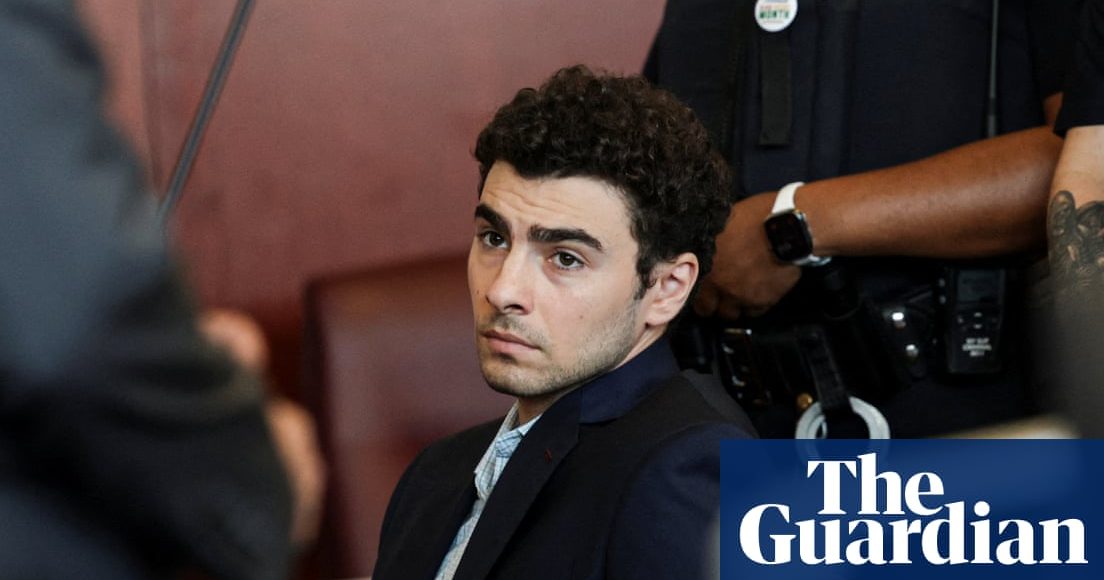
Weeks before Luigi Mangione is scheduled to stand trial for the killing of UnitedHealthcare executive Brian Thompson, the proceedings are already threatening to collapse under the weight of their own spectacle. Lawyers, media critics, and legal observers are sounding the alarm, not about the evidence, but about the circus forming around the courthouse before the first gavel drops.
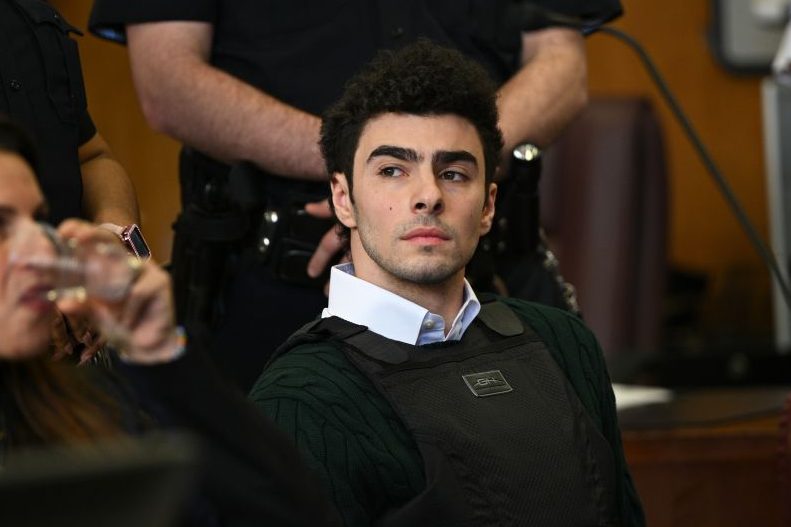
A Case That Gripped the World Before It Reached a Courtroom
The murder of Brian Thompson, the chief executive of one of America’s largest health insurance companies, sent shockwaves well beyond the usual circles of true-crime followers. The case touched a raw nerve in a country where frustration with the healthcare system had been simmering for years. Mangione became a figure of intense, polarizing public fascination, simultaneously vilified and, in certain corners of the internet, perversely celebrated. That combination of corporate resentment, violent crime, and social media virality created something courts rarely have to contend with: a defendant who arrived at trial already transformed into a cultural symbol.
By the time the case is set to go before a jury, the global interest surrounding it has grown so intense that seasoned legal analysts are already drawing comparisons to the most sensational American trials of the past several decades. The phrase “trial of the century” gets thrown around loosely in cable news green rooms, but in this instance, the hyperbole feels closer to prophecy than exaggeration.
The Press Credential Problem Nobody Saw Coming
Here is where things get genuinely complicated. Mangione’s own legal team has raised concerns about the way press access to the trial is being managed, and the concern is not abstract. According to reporting from The Guardian, social media influencers have successfully obtained press credentials and are positioning themselves alongside traditional journalists to cover the proceedings. These are individuals whose primary motivation is clicks, revenue, and algorithmic reach, not the careful, accountability-driven journalism that court coverage demands.
This is not a small distinction. Traditional court reporters understand the weight of the work. They know when to hold back, how to contextualize a legal argument, and why accuracy matters more than speed. An influencer chasing engagement metrics operates on a fundamentally different set of incentives, and those incentives do not always align with the dignity a murder trial requires, or the fairness a defendant is entitled to under the law.
Mangione’s lawyers raising these red flags is significant. Defense attorneys rarely wade into press management debates unless they believe the media environment around a case is genuinely threatening their client’s right to a fair trial. When they do speak up, courts tend to listen.
The Minute-by-Minute Expectation Problem
There is a broader structural issue at play here, one that extends far beyond this single case. The modern news consumer expects constant updates. Silence feels like absence. A courtroom recess that lasts forty minutes becomes, on social media, a void that speculation rushes to fill. Rumors calcify into accepted fact. Context gets stripped away in the race to be first.
This dynamic has been building for years, accelerating with every high-profile criminal case that crosses into viral territory. What makes the Mangione trial different is the sheer scale of the audience and the particularly charged emotional atmosphere surrounding the case. The victim was a powerful corporate figure. The alleged crime touched on themes of healthcare access and economic inequality that resonate deeply with millions of people. The result is an audience that does not just want updates, it wants a narrative, a hero, a villain, a verdict that confirms whatever it already believes.
Courts are not built to deliver that kind of storytelling. They are slow, procedural, and deliberately resistant to drama. That tension between what the public craves and what a courtroom can actually provide is where the real danger lies.
What Fair Coverage Actually Looks Like
None of this means the trial should be conducted in darkness. Transparency in the justice system is not just a media preference, it is a democratic principle. The public has a legitimate interest in watching how the courts handle a case of this magnitude. Open proceedings protect against judicial abuse and keep the system honest.
The question is not whether the trial should be covered, but how. There is a meaningful difference between a reporter who files a careful daily account of testimony and an influencer who goes live from the courthouse steps with breathless speculation about body language. One serves the public interest. The other serves an algorithm. Courts need to make that distinction clearly, and enforce it.
Some legal experts have suggested that stricter credentialing standards, including editorial oversight requirements and demonstrated reporting experience, could help filter out the worst of the noise. Others argue that such restrictions open their own constitutional can of worms around press freedom. It is a genuine dilemma with no clean answer.
A System Being Stress-Tested in Real Time
What the Mangione trial is really doing, before it has even begun, is exposing the fault lines in how American justice and modern media coexist. The courtroom was designed for a world where press meant newspapers and broadcast meant three television networks. It was not designed for a world where anyone with a ring light and a loyal following can credibly claim to be a journalist.
The legal system will survive this trial, whatever happens inside the courtroom. The more interesting question is whether the media ecosystem surrounding it will produce something that actually serves the public, or whether it will produce something that simply serves itself.
As the start date approaches and the cameras begin to gather outside the courthouse, one thing is already clear: the verdict in this case will be reached by a jury, but the story of this trial is already being written by forces that no judge has the power to sequester. What does it say about our justice system, and our media, when the spectacle around a trial becomes as consequential as the trial itself?