



In what may be the single largest capital commitment to artificial intelligence infrastructure ever assembled, Nvidia has secured $500 billion in financing from a coalition of Wall Street’s most powerful institutions. The announcement, confirmed in August 2026, signals a fundamental shift in how the world’s biggest money managers view AI hardware: not as a speculative technology bet, but as a fully-fledged asset class deserving the same long-term capital treatment as roads, ports, and power grids.
The Names Behind the Money
The list of investors reads like a who’s-who of global finance. Apollo, BlackRock, Blackstone, Brookfield, Goldman Sachs, and KKR have all struck individual deals with the chipmaker, each committing capital toward what Nvidia is calling AI infrastructure. It is, by any measure, a remarkable gathering of institutional firepower around a single technology thesis.
KKR’s co-chief executives Joe Bae and Scott Nuttall captured the mood with characteristic bluntness. “Compute has become a critical infrastructure asset,” they said in a joint statement. “As we’ve scaled our approach to digital infrastructure, we’ve learned that delivery, not ambition, is the hard part.” That last line is worth sitting with. After years of breathless AI promises, the smartest money in the room is betting on the physical pipes, not just the dreams flowing through them.
What Does $500 Billion Actually Build?
The capital will fund two broad categories of physical infrastructure. First, new data centres, the vast, power-hungry facilities that house row upon row of computer chips, all working in concert to process the staggering computational demands of modern AI. These are not modest server rooms. They are industrial-scale operations requiring enormous amounts of land, electricity, cooling systems, and engineering expertise to keep running around the clock.
Second, the fund will back new chip manufacturing facilities, increasing the production capacity for the graphics processing units, or GPUs, that Nvidia designs and that the entire AI industry depends on. Supply has consistently struggled to keep pace with demand since the AI boom accelerated, and expanding manufacturing capacity is the most direct fix available.
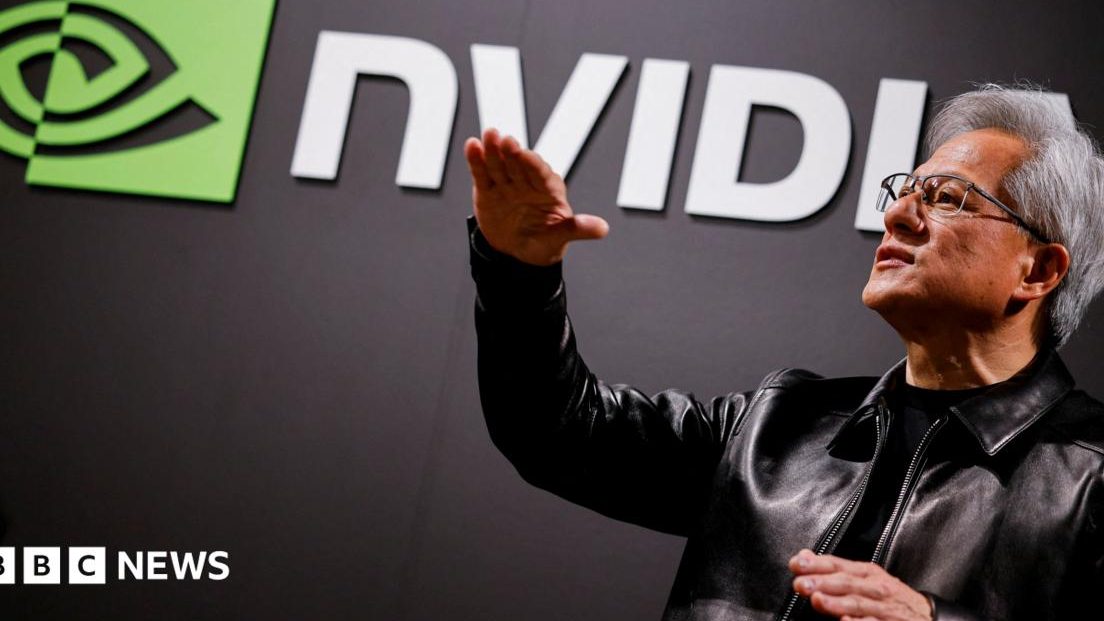
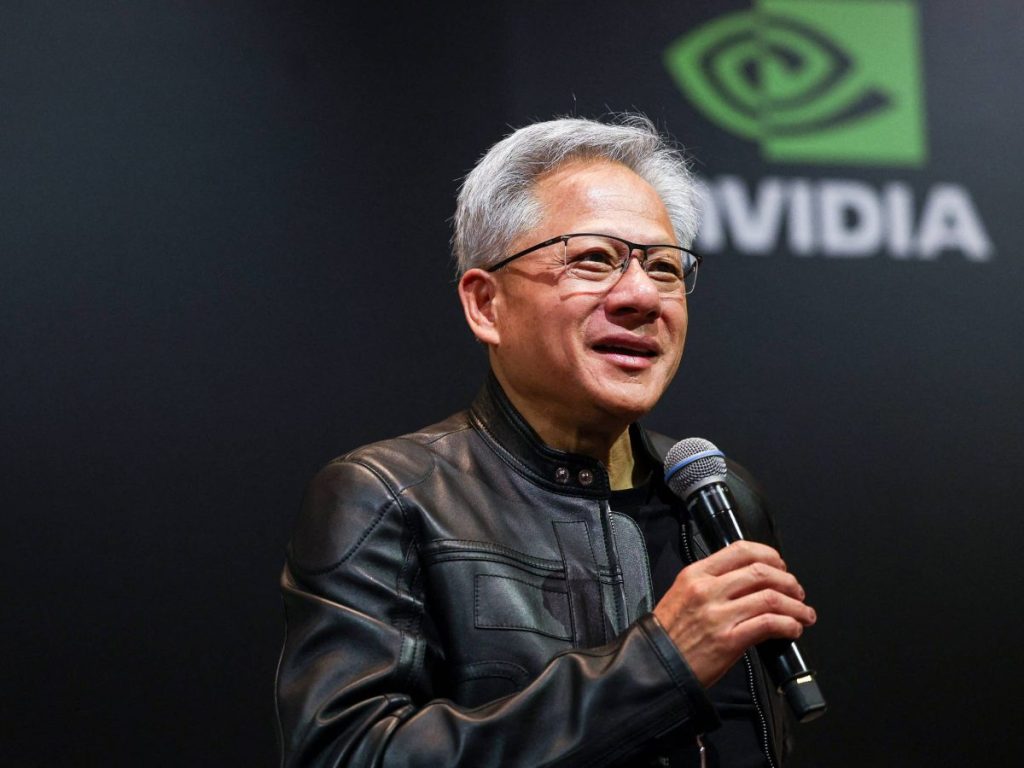
Nvidia’s chief executive Jensen Huang framed the logic cleanly. “In AI, compute is revenue,” he said, adding that the goal was to bring the world’s leading long-term capital providers together to independently underwrite AI infrastructure. Strip away the corporate language and the message is stark: whoever controls the compute controls the revenue, and Nvidia intends to keep sitting at the center of that equation.
Why Wall Street Is Paying Attention Now
For years, institutional investors treated AI as a growth story best accessed through equity markets, buying shares in companies developing software, platforms, or applications. The shift toward treating the underlying hardware as infrastructure is genuinely new, and it carries significant implications.
Infrastructure assets are attractive to large, long-duration capital pools like pension funds and sovereign wealth vehicles because they generate steady, predictable cash flows over long time horizons. Airports, toll roads, electricity transmission lines, and gas pipelines have long been favored on that basis. The argument being made now, and clearly accepted by some of the world’s most sophisticated allocators, is that AI compute infrastructure deserves a seat at the same table.
Jane Sydenham, senior investment manager at Rathbones, explained the underlying logic to the BBC with admirable clarity. “Nvidia is absolutely enormous and produces these chips that everybody needs for AI,” she said, “and it needs to keep facilitating the growth of AI.” In other words, the company is not merely a participant in the AI economy. It is the foundational layer upon which that economy is being constructed.
Nvidia’s Unrivalled Position in the AI Stack
To understand why this deal carries such weight, you need to appreciate just how thoroughly Nvidia has penetrated the AI technology stack. Virtually every major technology company, from hyperscale cloud providers to AI research labs to consumer-facing chatbot developers, relies on Nvidia’s GPUs to power their systems. The chips do the heavy computational lifting required to train large language models, run inference at scale, and process the real-time data inputs that make AI products actually useful.
That dominance did not happen by accident. Nvidia spent years building not just the chips but the software ecosystem around them, most notably the CUDA programming platform, which locked developers into a workflow that works best on Nvidia hardware. Competitors have tried to close the gap, but the combination of hardware performance and software stickiness has proved extremely difficult to replicate at speed.
The result is a company whose market value has soared through the AI boom, and whose CEO has become one of the most closely watched figures in global technology. Jensen Huang’s ability to assemble half a trillion dollars in institutional capital is, in part, a reflection of that accumulated credibility.
The Bigger Picture for AI Development
What this financing round ultimately signals is that the AI infrastructure build-out is not slowing down. If anything, it is accelerating into a new phase, one where the construction of physical compute capacity is treated with the same strategic seriousness as national energy grids or telecommunications networks.
That has implications beyond technology. Data centres consume vast quantities of electricity, putting pressure on power grids and raising genuine questions about energy sourcing and environmental impact. The factories producing chips require sophisticated supply chains, rare materials, and geopolitical stability to function. And the concentration of this infrastructure, both in terms of geography and ownership, will shape how AI capability is distributed around the world for decades to come.
The $500 billion figure is striking on its own terms. But the more significant development is the conceptual one: the world’s largest money managers have decided that AI infrastructure is real, durable, and worth treating like any other critical system humanity has built and maintained across generations. Whether that confidence proves well-placed will be one of the defining questions of the next ten years.
So here is the question worth considering: as artificial intelligence becomes as essential to daily life as electricity or running water, who should ultimately control the physical infrastructure that powers it, and do we have the right frameworks in place to govern that responsibility?