




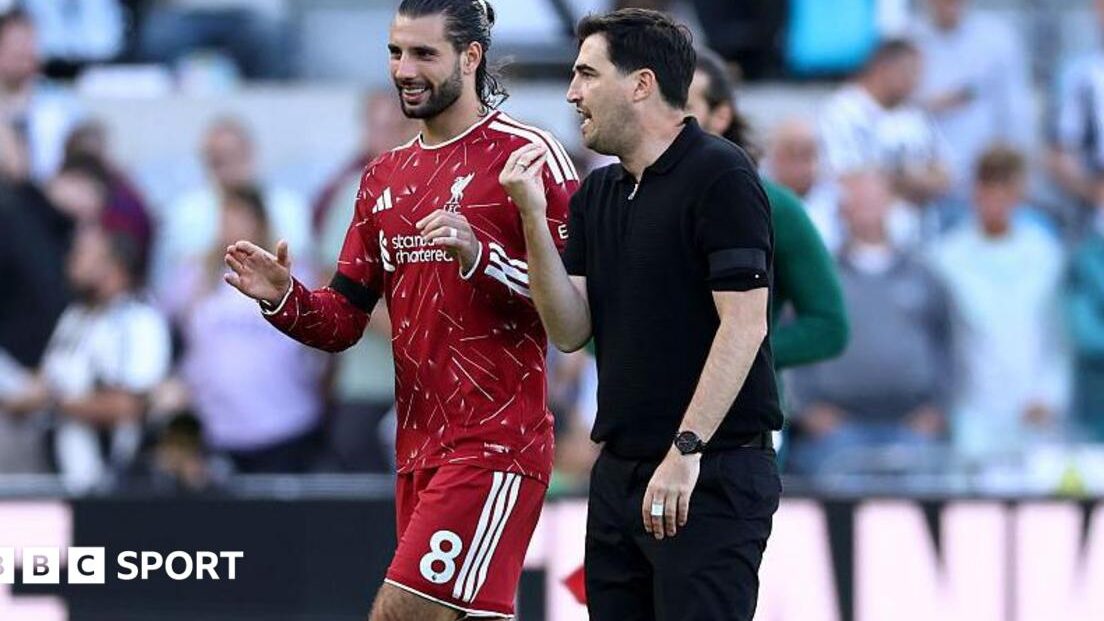
It was the kind of opening chapter that makes a new manager reach for antacids. Liverpool travelled to Newcastle United on Sunday, August 23, 2026, for the first competitive fixture of the Andoni Iraola era, and they left St. James’ Park with a single point courtesy of a Dominik Szoboszlai penalty deep into injury time. The scoreline softened the blow. The ninety-odd minutes that preceded it told a far less comfortable story.
A Point That Feels Like Two Dropped
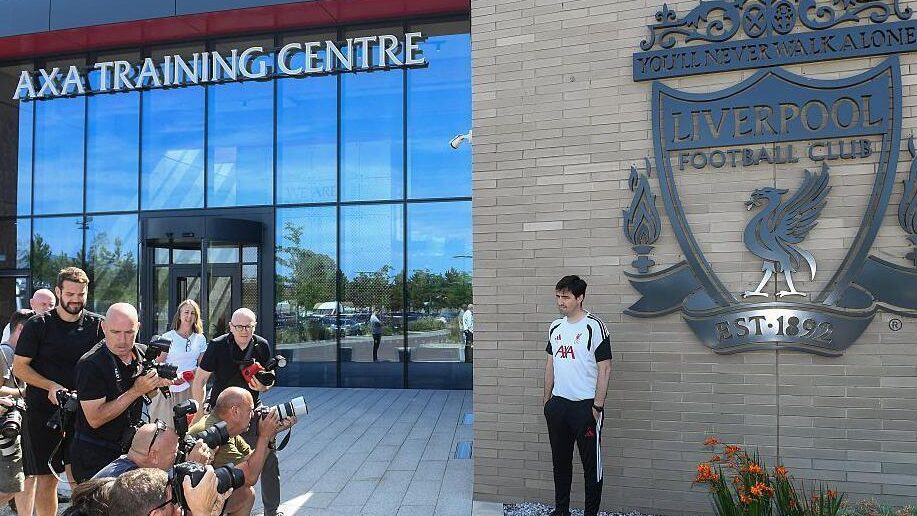
There is a particular brand of relief that comes with a last-minute equaliser, and it is never quite as sweet as the scoreboard suggests. Liverpool know that better than most. The BBC’s match report framed the result as relief for Iraola, and that framing is exactly right. A defeat on day one, with questions already swirling about the team’s shape and sharpness, would have handed the early-season narrative to the critics before the new head coach had even properly unpacked his training cones at the AXA Training Centre.
Szoboszlai, the Hungarian midfielder who has quietly become one of the most reliable high-pressure performers in the squad, stepped up when it mattered most. His nerve held. The net rippled. Liverpool did not lose. Those are the bare facts, and in the cold arithmetic of a league table, a draw away from home is not a catastrophe. But football is not purely arithmetic, and the manner of this result demands scrutiny.
Iraola’s First Test Reveals Real Work Ahead
Andoni Iraola arrives at Liverpool with a reputation built on intense, well-organised pressing football. His work at Bournemouth demonstrated an ability to take a squad with limited resources and make them genuinely difficult to play against. The expectation at Anfield, with considerably greater resources at his disposal, is a team that does all of that and then some.
Sunday’s showing at Newcastle suggested that translating his ideas into this particular group of players will take time, patience, and probably a few uncomfortable conversations in the dressing room. Liverpool were below their best by a significant margin. The pressing was inconsistent. The attacking play lacked the fluid, purposeful movement that supporters have come to expect in the club’s best years. Newcastle, buoyed by their home crowd and sharp in transition, exposed the gaps.
The Szoboszlai Factor
If there is one image Iraola can hold onto from the wreckage of an unconvincing performance, it is the sight of Szoboszlai placing the ball on the spot and delivering under pressure. Penalty-taking is as much psychology as technique, and the midfielder passed that test with something to spare. His goal kept Liverpool’s unbeaten start to the season intact, a thread thin enough to snap at any moment, but a thread nonetheless.
Szoboszlai’s contribution also raises a broader point about where this Liverpool side finds its identity during the transition to Iraola’s methods. The Hungarian is a player who thrives in space and with licence to arrive late into dangerous areas. How Iraola builds his system to use those qualities, rather than asking the midfielder to perform tasks that blunt his best attributes, will be a fascinating subplot to watch as the season develops.
Newcastle Showed What Good Looks Like Right Now
Credit, too, to Newcastle. They were sharp, compact, and threatening throughout, and on another day they would have taken all three points without any late drama clouding the result. Howe’s side looked like a team that knows exactly what it is doing and how it wants to play. That clarity of purpose was the starkest contrast to what Liverpool produced.
The gap between the two sides in terms of organisation and momentum was visible to anyone watching. That is not a comfortable observation for a club with Liverpool’s ambitions, and it is the kind of gap that does not close through wishful thinking.
The Road Ahead
One match does not define a season, and any journalist or pundit who declares a managerial era dead after a single draw is selling a narrative rather than covering sport. Iraola deserves time, and the squad deserves the chance to absorb his ideas before judgement is passed. Pre-season is one thing. Competitive football, with points on the line and 50,000 Geordies roaring, is another entirely.
But the performance at Newcastle has set a clear, honest benchmark. Liverpool were not good enough. The manager knows it. The players know it. The supporters who watched every minute of it definitely know it. Acknowledging that reality, rather than retreating behind the consolation of the equaliser, is exactly the right starting point for what needs to happen next.
The real question now is whether Sunday’s draw acts as a wake-up call that accelerates Liverpool’s development under Iraola, or whether it becomes the first in a series of underwhelming results that forces the new era into a defensive crouch too early in the season. Which version of Liverpool shows up next weekend will tell us far more than a single point from a difficult away trip ever could.
So, Liverpool fans: how long are you prepared to give Iraola before patience turns to pressure, and what does the Szoboszlai rescue say about where the real leadership in this squad currently lives?