


A Ugandan opposition party is unraveling fast. The Common Man’s Party (CMP), fronted by former presidential candidate Mubarak Munyagwa, has suspended its Secretary General, Moses Bigirwa, with immediate effect, citing allegations of substantial misconduct. The decision, formalized on November 5, 2026, was communicated to the Electoral Commission just a day later and lands at a moment when the party is already reeling from questions about where exactly its president has been.
The Letter That Changed Everything
An Extraordinary National Executive Committee meeting passed the resolution to suspend Bigirwa indefinitely, pending an investigation. The party sent a formal letter to the Electoral Commission on November 6, 2026, citing Section 10(4) of the Political Parties and Organisations Act, Cap 178 as the legal basis for notifying the commission of the changes in party leadership. Curiously, the letter does not name Bigirwa directly, referring instead to the suspension of the “substantive Secretary General.” However, Bigirwa has been occupying that role, making the connection unmistakable.
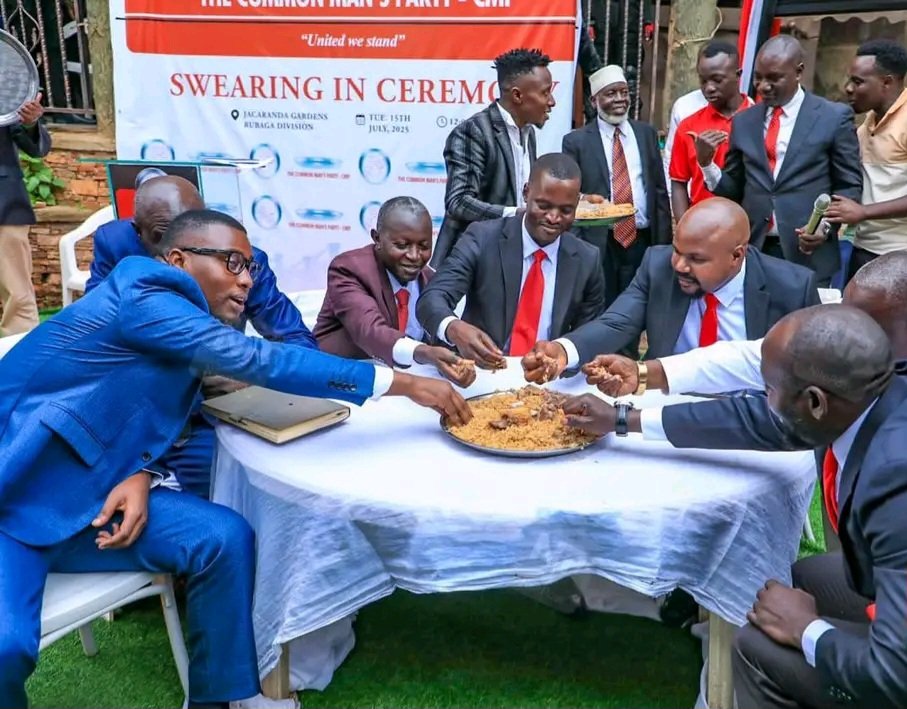
Two acting officials were swiftly appointed to absorb his responsibilities. Mrs. Ropan Proscovia steps in as Acting Secretary General overseeing research, while Mr. Semmindi Asadullah takes charge of administration and will serve as the party’s liaison with external bodies. The dual appointment suggests the workload was split deliberately, perhaps to dilute any single point of authority filling the vacuum left by both Bigirwa’s suspension and Munyagwa’s absence.
Three Days Before the Suspension, Bigirwa Had Already Spoken
The timing here is worth sitting with. On November 4, just one day before the extraordinary committee meeting that sealed his fate, Bigirwa went on record to flag a problem the party clearly did not want aired publicly. He said Munyagwa had not returned to party headquarters after taking personal leave following the 2026 general elections, in which Munyagwa ran an unsuccessful presidential campaign. More than that, Bigirwa said attempts to reach the party president had hit a wall, with efforts to contact him reportedly going nowhere.
His concern was not merely logistical. He made clear that Munyagwa’s sustained absence was disrupting the party’s operations and creating uncertainty around its leadership and internal structures. For a party still trying to establish itself as a credible opposition force in Ugandan politics, those are serious concerns. Someone at the top has to be steering the ship.
Misconduct or Retaliation? The Question the Party Won’t Answer
The party’s letter offers no specifics on what the alleged misconduct actually involves. No details, no context, no prior public record of any grievance against Bigirwa before he raised his concerns about Munyagwa’s whereabouts. That absence of detail is itself telling, even if it proves nothing on its own.
Opposition politics in Uganda has never been a smooth road, and internal disagreements within smaller parties rarely stay quiet for long. But the sequence of events here, a public criticism of the leadership on November 4, followed by a suspension resolution on November 5, is the kind of timeline that invites scrutiny. Whether the party’s move is a legitimate disciplinary response to genuine misconduct, or whether it functions as a warning shot to anyone else tempted to speak candidly about the president’s absence, may only become clear when the investigation concludes. If it concludes.
What This Means for the Common Man’s Party
The Common Man’s Party positioned itself around accessibility and representation for ordinary Ugandans, with Munyagwa as its flag bearer. After an election cycle, opposition parties typically consolidate, debrief, and rebuild. Instead, the CMP finds itself dealing with a missing president, a suspended secretary general, and two acting officials trying to hold together an institution that appears to have no one firmly at the wheel.
Splitting the secretary general’s role across two acting officials is an unusual structural choice. It may reflect a desire to prevent any single person from gaining too much influence while the party sorts out its internal situation. Or it may simply reflect a lack of anyone trusted enough to take the full role alone. Either reading points to a party short on stable leadership at exactly the wrong moment.
The Electoral Commission has been formally notified of the changes, which at minimum keeps the party compliant with its legal obligations under Ugandan law. But administrative compliance and genuine organizational health are very different things, and right now the CMP appears to have the former without much of the latter.
The Bigger Picture
Uganda’s opposition landscape has long been characterized by fragmentation, internal tensions, and parties that struggle to convert electoral energy into durable institutions. The CMP’s current situation fits a pattern that political observers have flagged repeatedly: when a party’s identity is too tightly bound to a single individual, the absence of that individual creates a vacuum that formal structures alone cannot fill.
Munyagwa’s post-election disappearance from party life, whatever the personal reasons behind it, left a gap that Bigirwa tried to address through public disclosure. His suspension does not close that gap. It simply removes the person who was willing to name it.
As Uganda moves deeper into a post-election period and parties recalibrate their strategies for future contests, the question now is whether the Common Man’s Party can hold its structure together long enough to even have that conversation. Because right now, the man at the top is nowhere to be found, and the man who said so out loud has been shown the door.
What does it say about a party built on the promise of representing ordinary people when the people within it cannot even get a straight answer about where their own president is?