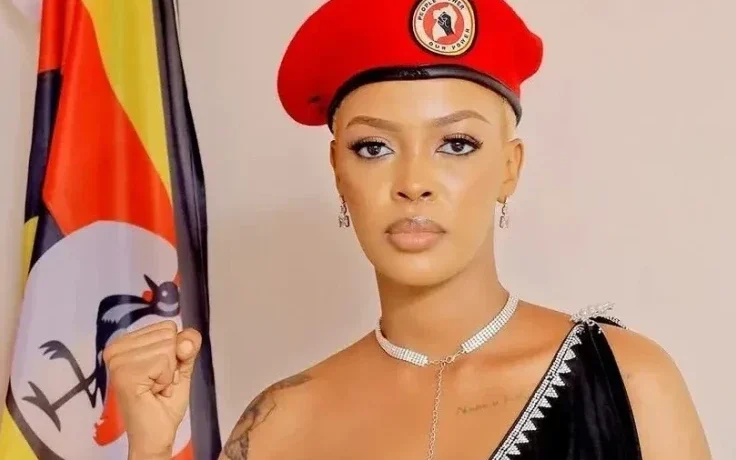
Ugandan music star Nina Roz, whose full name is Nina Kakunda, has spoken out with a direct challenge to the country’s youth, calling on them to be sharper, more alert, and far more selective about the content they consume and pass along on social media. Her message, delivered with the kind of bluntness that fans have come to expect from her, comes at a time when online platforms are increasingly becoming battlegrounds for manipulation, character attacks, and deliberately distorted information.
A Star Who Has Had Enough
Nina Roz is not a newcomer to the realities of social media toxicity. As a prominent figure in Uganda’s entertainment industry, she has witnessed firsthand how online spaces can be weaponised, how words get twisted, and how public figures suddenly find themselves defending statements they never quite made. That lived experience appears to be fuelling her current call to action.
According to a report by Mbu, the singer has urged young Ugandans to remain observant and critical when they encounter content online, particularly content that involves public figures or sensitive community matters. She argued that certain individuals deliberately craft posts to confuse audiences, bending real statements into something unrecognisable.
The concern is legitimate. Social media misinformation is not a Ugandan problem alone, but it hits communities hard when trust in public figures and institutions is already fragile. A rumour can circle an entire city before anyone bothers to verify the source. Nina Roz clearly wants young people to be the ones who pause before hitting share.
What She Is Actually Asking For
Her appeal is not a vague, feel-good request for people to “be kind online.” It is more specific than that. Nina Roz has called out a category of social media users who she says operate with deliberate intent, using platforms to belittle others, spread confusion, and drag reputations through the mud. She wants young people to recognise those patterns and refuse to participate, either as spreaders of that content or as passive audiences who normalise it through engagement.
She also called for a shift in how people think about what social media is actually for. Rather than using platforms as arenas for trolling and personal attacks, she argued that these tools carry real potential to uplift communities, spread honest information, and foster genuine connection. The infrastructure exists. The question is whether users will choose to use it constructively.
Truth, Respect, and Meaningful Engagement
Nina Roz used three words that deserve unpacking: truth, respect, and meaningful engagement. These are not abstract ideals. They translate into practical habits. Verifying information before sharing it. Disagreeing with someone without attacking their character. Choosing to comment something worth reading rather than something designed purely to wound. Small choices, repeated across millions of users, shape the entire texture of online life.
Her message also carries an implicit reminder that young people are not helpless in the face of online manipulation. Awareness is a defence. When you know how disinformation works, when you understand that some accounts exist specifically to provoke and mislead, you become harder to fool and harder to weaponise against others.
Why This Moment Matters
Uganda’s youth population is one of the youngest and most digitally connected on the continent. Smartphone penetration keeps growing, data costs keep dropping, and social media platforms sit at the centre of how millions of people get their news, form opinions, and build identity. That is not a small thing. The values that take root in those digital spaces will shape public discourse for decades.
When an artist with Nina Roz’s reach chooses to use her platform to say something serious rather than something sensational, it sends a message worth listening to. She is not lecturing from a distance. She is someone who lives in that same digital ecosystem, someone who has felt the heat of online controversy herself. That gives her words a texture that a policy statement or a government campaign simply cannot replicate.
The Responsibility on All of Us
There is a tendency to treat social media irresponsibility as someone else’s problem. The trolls are out there. The manipulators are hiding behind anonymous accounts. The algorithm rewards outrage. All true. But every person who shares an unverified story, every person who laughs at a targeted attack on someone’s reputation, every person who scrolls past obvious misinformation without flagging it, is a participant in the system.
Nina Roz is asking young Ugandans to opt out of that cycle. Not by abandoning social media, but by raising the standard of what they will and will not amplify. It is a call for digital maturity, the kind that no school syllabus has quite figured out how to teach yet.
The conversation she has opened is bigger than any single controversy. It touches on media literacy, civic responsibility, and the kind of online culture Uganda wants to build. Those are not entertainment questions. They are questions about the country’s future.
So here is the real question worth sitting with: if you scrolled through your own recent shares and comments, would you be comfortable with what you contributed to the digital conversation this week?