







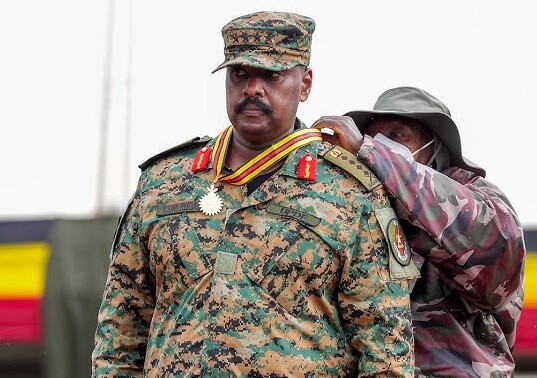
On Friday, August 28, 2026, Uganda’s military chief Gen. Muhoozi Kainerugaba took to X with a declaration that sent shockwaves through government corridors in Kampala: the Presidential Advisory Committee on Exports and Industrial Development, known as PACEID, was finished. Done. Over. And its chairman, Odrek Rwabwogo, was left in a position of uncomfortable limbo, his status described only as something currently “being discussed.”
The announcement, blunt and unapologetic, read: “We are officially dissolving PACEID as an organisation. All its functions, budgets and responsibilities will be taken over by Operation Wealth Creation. This starts immediately.” No committee. No consultations. No long press briefing. Just a post on social media that landed like a hammer.
What Is PACEID, and Why Does It Matter?
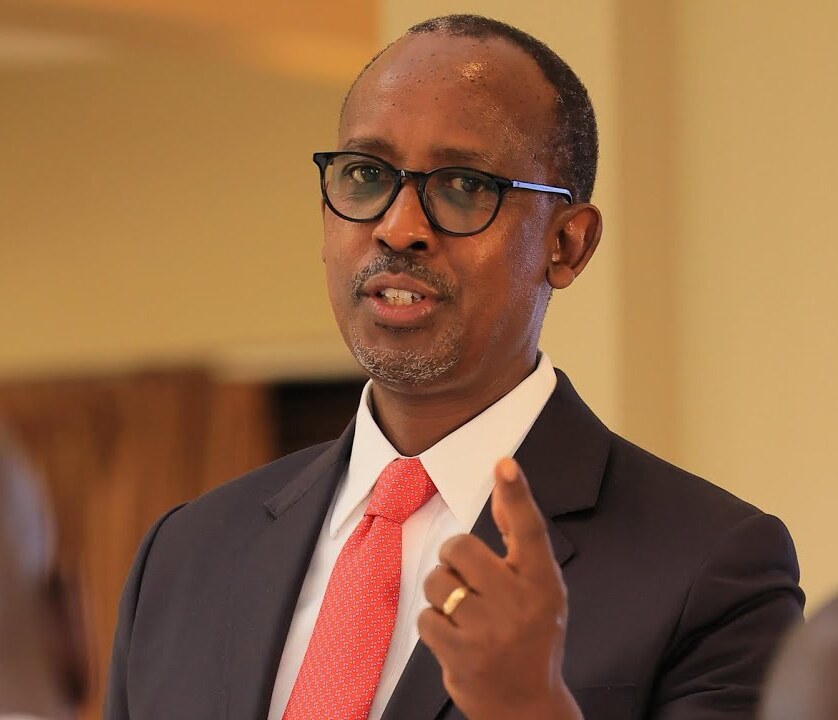
PACEID is not some obscure footnote in Uganda’s bureaucratic machinery. According to Rwabwogo, the body was created by President Yoweri Museveni on March 16, 2022, and subsequently placed under the Office of the President on May 25 of that same year. Its mandate covered exports and industrial development, two pillars that carry serious weight in any economy still pushing to industrialise and grow its foreign exchange earnings.
Rwabwogo has publicly pushed back against Muhoozi’s declaration, arguing that only the President has the authority to terminate PACEID’s mandate. He went further, stating that Museveni himself told him no such directive had been issued. That is a significant claim. It draws a direct line between Muhoozi’s announcement and a potential overreach of authority, and it frames this entire episode as a constitutional and institutional question, not merely a personality clash between two powerful men.
As reported by Chimpreports, neither the Office of the President, the Finance Ministry, nor PACEID itself had responded to Muhoozi’s statements at the time of publication. That silence, in a country where political messaging is rarely accidental, speaks loudly.
The Transfer to Operation Wealth Creation
Operation Wealth Creation is no stranger to Ugandans. The programme, coordinated by Gen. Salim Saleh, Muhoozi’s uncle and one of the country’s most senior military figures, focuses on supporting farmers and boosting agricultural productivity at the grassroots level. It has both its admirers and its critics, with debates running for years over its actual impact on rural incomes versus its political utility.
Directing PACEID’s functions, budget and responsibilities to OWC is therefore not a neutral administrative act. It is a consolidation. It shifts resources and institutional clout away from Rwabwogo’s sphere of influence and deposits them squarely within the orbit of a programme tied to Gen. Saleh. Whether that reflects a strategic realignment of government priorities or something more personal is a question Ugandans are openly debating.
The Money: Ushs 52 Billion and Soldiers’ Housing
Perhaps the most striking detail in Muhoozi’s announcement was the financial dimension. He directed the Finance Ministry to divert an alleged Ushs 52 billion payment, equivalent to roughly $14 million, that was linked to Rwabwogo. Rather than allowing those funds to flow through their originally intended channel, Muhoozi said the money should go to the Uganda Peoples’ Defence Forces to construct housing for soldiers.
That is a remarkable instruction. Redirecting funds of that scale, through a social media post, bypassing the Finance Ministry’s own processes, raises serious questions about procedure and institutional authority. It also gives the dispute a very concrete financial edge that moves it well beyond the realm of a war of words.
A Feud Playing Out in Public
What makes this situation particularly unusual is its setting. Uganda’s political culture has long accommodated intense rivalries behind closed doors, with resolutions brokered quietly and announcements made through official channels. This is different. Muhoozi has chosen to fight this battle openly, using social media as both his weapon and his platform.
Rwabwogo, for his part, is not just any official. His connection to the Museveni family runs deep. The public nature of this confrontation, and the fact that Rwabwogo is citing the President’s own words as a counter to Muhoozi’s orders, puts Museveni in a position where silence itself becomes a statement. Every hour the Office of the President does not respond is an hour that Muhoozi’s version of events goes unchallenged officially.
What Happens Next?
Uganda watchers are now asking a straightforward question: who actually has the authority to dissolve a body created by presidential directive? If Rwabwogo’s account is accurate and the President did not sanction this move, then Muhoozi’s declaration exists in a legal and institutional grey zone. The Finance Ministry faces the uncomfortable position of receiving conflicting signals, and without a clear directive from State House, it is unclear which instruction it will follow on the Ushs 52 billion.
PACEID staff and stakeholders who depend on the body’s work are equally left in uncertainty. Programmes tied to export development and industrial policy do not pause politely while powerful men sort out their differences. The real cost of this standoff could ultimately be measured not in political capital but in delayed contracts, stalled projects and frustrated businesses.
Uganda has seen institutional upheaval before, and it has a way of absorbing dramatic announcements within its complex political ecosystem. But the open defiance Rwabwogo is showing, combined with the very public aggression in Muhoozi’s posts, suggests this particular standoff is far from resolved. If Museveni does weigh in directly, his response will be among the most closely watched statements to emerge from State House in years.
So here is the question worth sitting with: when a country’s institutions can be publicly declared dissolved through a social media post, what does that say about the strength of those institutions in the first place?