Uganda’s Cabinet has taken a significant step toward modernising the country’s tax infrastructure, formally approving the use of the National Identification Number, issued by the National Identification and Registration Authority, as the official Tax Identification Number for all taxpayers. The decision, reached at a Cabinet meeting held at State House Entebbe on Monday, August 31, 2026, effectively retires the long-standing practice of maintaining two separate identification systems for citizens and taxpayers.
For context, the Tax Identification Number has traditionally been a unique code assigned by the Uganda Revenue Authority to anyone conducting tax-related business with the government. It has been a standalone system, largely manual in operation, and over the years it has accumulated the kind of data inconsistencies that make any finance ministry nervous. Duplicate records, outdated information, and compliance gaps have been persistent headaches in a system that was built for a different era.
One ID to Rule Them All
The logic behind the merger is straightforward enough. If every Ugandan citizen already holds a National Identification Number through NIRA, why ask them to register separately with the Uganda Revenue Authority and generate yet another number? The government’s answer, it turns out, is that there is no good reason to keep doing so.
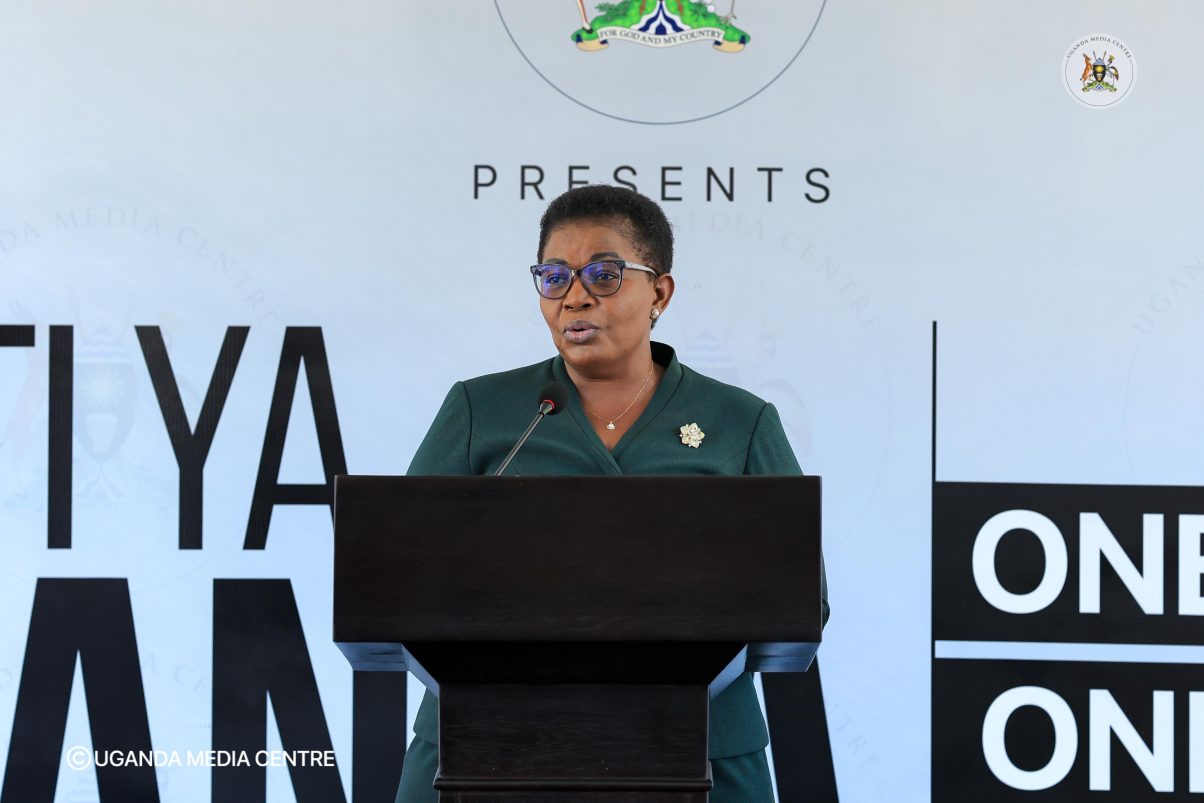
According to Chimp Reports, the Minister of ICT and National Guidance, Justine Kasule Lumumba, announced the decision to reporters in Kampala on Tuesday, reading out the Cabinet resolutions. She did not mince words about the weakness of the old arrangement, noting that operating two separate systems had created real problems around data accuracy, compliance, and service delivery.
The new approach essentially collapses both identities into one. A citizen’s NIN becomes their taxpayer identity automatically, which means no fresh registration process, no additional paperwork, and no risk of the two records contradicting each other. For millions of Ugandans who have already enrolled with NIRA, the transition could be largely invisible, at least on the surface.
Why This Matters Beyond Administrative Tidiness
It would be easy to dismiss this as a bureaucratic housekeeping exercise, the kind of technocratic reform that governments announce and citizens never quite feel. But there is considerably more at stake here than cleaner spreadsheets at the URA.
Minister Lumumba specifically highlighted the government’s interest in gaining visibility into worldwide income. That is a phrase worth pausing on. Uganda, like many developing nations, has long struggled to tax income earned abroad by its residents. Strengthening the link between a citizen’s national identity and their tax profile is one of the foundational steps toward building the kind of data infrastructure that makes cross-border income tracking feasible.
Revenue leakage, another term Lumumba used, is a polite way of describing money the government is owed but never collects. It happens when taxpayers slip through the cracks of a fragmented system, sometimes inadvertently, sometimes not. A unified identity makes those cracks considerably harder to exploit. When a person’s national ID and their tax record are one and the same, it becomes much more difficult to exist in one system while evading the other.
Compliance Gets a New Set of Teeth
There is also a compliance angle that deserves attention. The current dual-system model places the burden on citizens to register with the URA separately, a process that many simply never complete, either because they are unaware of the requirement or because the friction of the process discourages follow-through. By anchoring tax identity to the NIN, which citizens typically obtain as part of national registration, the government removes that friction almost entirely.
Businesses and individuals who already interact with government services using their NIN will find that their tax identity is already established. This lowers the barrier to entry for tax compliance among smaller traders, informal sector workers, and first-time earners, groups that have historically been difficult to bring into the formal tax net.
The Broader Vision: Uganda’s National ID as a Governance Backbone
What this Cabinet decision also signals is a broader ambition to make the national identification system the connective tissue of Uganda’s public administration. When a single number can serve as your identity for healthcare, banking, voter registration, and now taxation, that number becomes enormously powerful, and enormously consequential if it is compromised or mismanaged.
This is not unique to Uganda. Countries across the world have moved toward unified national identity frameworks precisely because they reduce duplication, improve service delivery, and give governments a cleaner picture of their populations. India’s Aadhaar system is perhaps the most cited example, having been linked to everything from bank accounts to cooking gas subsidies. The benefits have been substantial; so have the debates around privacy and exclusion.
Uganda will need to navigate similar tensions. A more connected identity system is only as good as the data quality feeding it, and NIRA’s records will need to be robust, current, and accessible to make the integration work smoothly. Any gaps in the national register, whether from rural communities with low registration rates or from citizens who have not updated their records after relocating, could translate directly into gaps in the taxpayer base.
What Citizens Should Know Right Now
For the average Ugandan, the immediate practical takeaway is straightforward: your NIN is now your tax identity. If you have not yet obtained your national identification number, this is a considerably more urgent reason to do so. The URA will, in time, need to communicate clearly how existing TIN holders should reconcile their records, and what the transition timeline looks like for businesses that have built systems around the old TIN format.
The government has framed this as a simplification, and in many ways it is. Fewer numbers to remember, fewer forms to fill, and fewer agencies to register with. For a country working to broaden its tax base and modernise its revenue systems, it is a move that points clearly in the right direction.
Whether the execution lives up to the ambition is, as always, the real question. Good policy architecture means little without the implementation muscle to back it up. Uganda’s track record on large-scale digital integration projects is mixed, and the success of this reform will depend heavily on coordination between NIRA, the URA, and the Ministry of ICT.
One thing is clear: the days of Uganda’s two-identity tax system are numbered. What replaces it, and how smoothly, will tell us a great deal about the maturity of the country’s digital governance ambitions. So here is the question worth sitting with: if your NIN is now your financial fingerprint with the state, are Ugandans confident enough in the systems protecting that data to hand over that level of integration without reservation?