










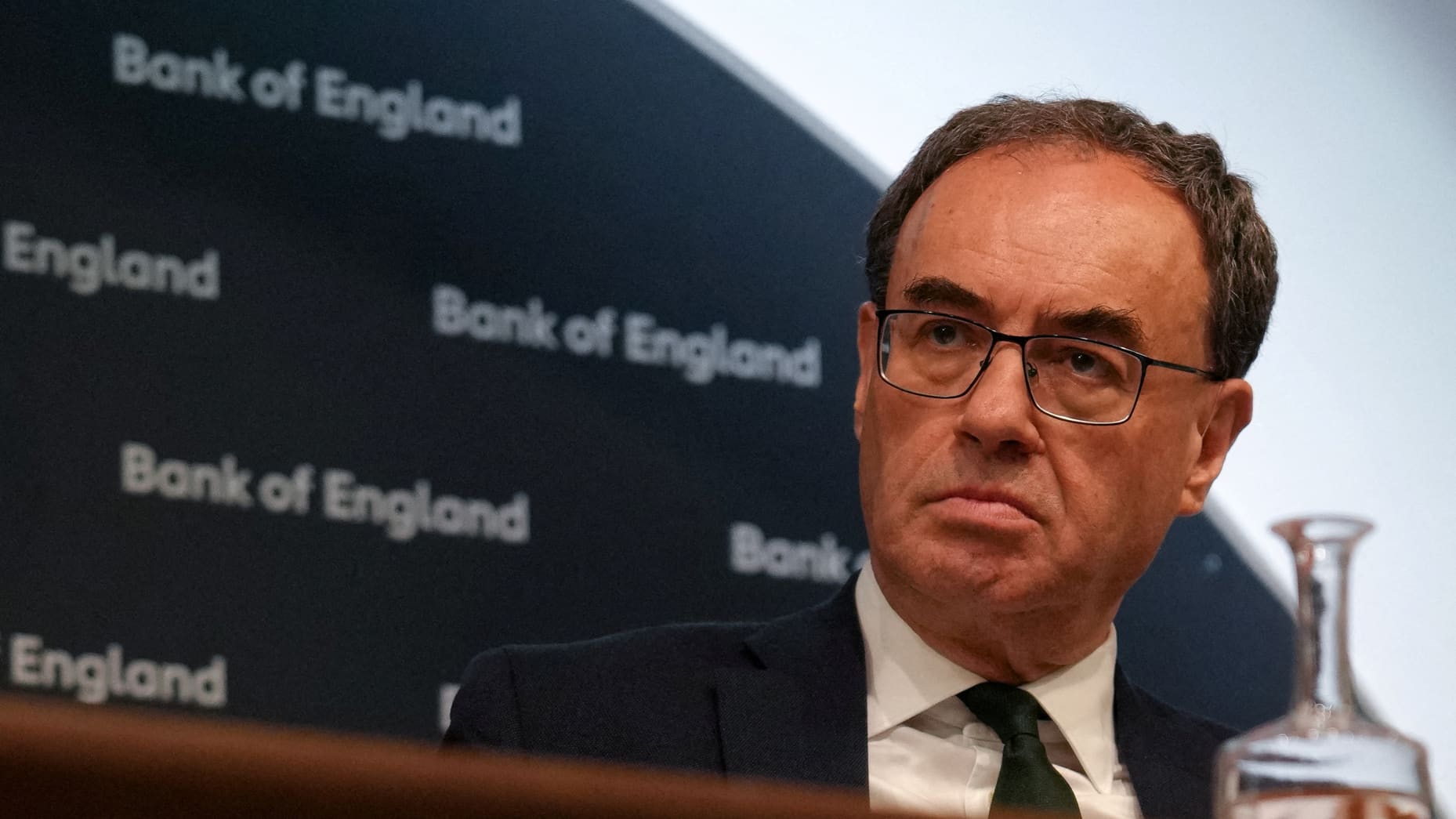
Andrew Bailey, the governor of the Bank of England, has delivered one of the starkest warnings about artificial intelligence that any major financial authority has issued to date. Speaking directly to G20 finance ministers gathered in the United States, Bailey argued that the rapid, concentrated growth of the AI sector carries serious risks for financial stability worldwide, and that a collapse in confidence in that sector could trigger a market correction with global consequences.
A Warning Wrapped in Numbers
What makes Bailey’s intervention particularly striking is the precision of his concern. This is not a general unease about technology moving too fast. His argument targets a specific and measurable vulnerability: the cocktail of highly valued stock markets, rising investor borrowing, and the concentration of capital into a small group of dominant technology companies. When those three forces interact, he said, they create the conditions for an amplified crash rather than an orderly correction.
“The issue is not simply that investors are borrowing more, but that leverage is interacting with high valuations and market concentration, in particular the increasing cross-investment between artificial intelligence companies and hyper scalers, in a way that could amplify a future market correction,” Bailey told ministers. The use of the phrase “hyper scalers” refers to the enormous cloud and infrastructure companies, the Googles and Microsofts of the world, whose balance sheets are now deeply intertwined with AI development. If one wobbles, the whole structure shakes.
You can read the full BBC report on Bailey’s G20 address for the broader context behind his statement.
The Cybersecurity Dimension Nobody Is Talking About Enough
Beyond the market risk, Bailey raised a second alarm that arguably deserves equal attention: the cybersecurity threat that advanced AI poses to the global financial system. He called on financial institutions to prepare for breaches that don’t hit one firm at a time but instead hit many simultaneously. Coordinated, AI-enabled attacks on multiple financial institutions at once would be a different kind of crisis from anything regulators have managed before.
This is not a fringe concern. Earlier in August 2026, a coalition of 100 companies, including Google, Microsoft, Anthropic, and OpenAI, urged governments to strengthen their cyber defences before AI systems grow powerful enough to overwhelm them. The fact that the very companies building these tools are the ones sounding the alarm says something important about where the technology currently sits.
Bailey, who also chairs the Financial Stability Board, called for “appropriate steps to support safe and responsible model release and deployment on a global basis.” The language is diplomatic, but the underlying message is urgent: the world’s financial infrastructure was not built to withstand what AI could throw at it in the next few years.
Energy Shocks and Geopolitical Pressure
Bailey also flagged the volatility created by energy supply disruptions linked to the ongoing US-Iran conflict. That geopolitical dimension adds another layer of instability to an already pressured global economy. AI data centres consume enormous amounts of energy, and any sustained shock to supply chains or energy prices directly affects the cost and viability of the AI boom. The connections between military conflict, energy markets, and technology investment are no longer abstract; they are operational concerns for financial regulators.
Britain’s Sovereign AI Bet
The timing of Bailey’s remarks is interesting when set against the UK government’s own position on artificial intelligence. UK Chancellor John Healey announced a £100 million fund earlier this year specifically to back British AI start-ups, part of a broader push to build what the government calls “sovereign AI” capacity. The idea is straightforward: if the world is going to run on AI infrastructure, Britain wants some of that infrastructure to be homegrown, reducing its dependence on services built and controlled abroad.
That is an understandable strategic objective. But Bailey’s warning complicates the picture. Pouring public money into a sector that a senior global financial official is describing as a potential systemic risk requires extremely careful oversight. The £100 million fund and the Financial Stability Board’s concerns can coexist, but not without some tension at the policy level.
What Happens If the AI Bubble Pops?
Markets have seen technology bubbles before. The dot-com collapse of the early 2000s wiped out trillions of dollars in market value and took years to work through the system. The difference this time, as Bailey is at pains to point out, is the degree of leverage and concentration involved. When a handful of companies account for a disproportionate share of stock market value, and when investors are borrowing heavily to fund their positions in those companies, a correction does not stay contained. It spreads, fast.
The AI sector has attracted capital at a pace that has made even seasoned investors nervous. Valuations in some cases have raced ahead of actual earnings or proven business models. That is not inherently catastrophic, but it does mean the sector is sensitive to sentiment shifts, regulatory changes, or a single high-profile failure that dents public confidence.
Global Cooperation Is Not Optional
Bailey’s choice of forum matters. Addressing G20 finance ministers directly means he is speaking to the people who can actually move policy. His call for coordinated global action on both market regulation and cybersecurity standards reflects the reality that AI does not respect national borders. A financial contagion that starts with an AI-sector crash in one country will not stay there.
The challenge is that international coordination on financial regulation moves slowly. The frameworks that currently govern global banking took years of negotiation after the 2008 financial crisis. AI is moving at a speed that traditional regulatory timelines cannot match, and that gap is precisely what makes Bailey’s warning timely rather than alarmist.
The question worth sitting with is this: if the people building AI, the people regulating global finance, and the governor of one of the world’s most respected central banks are all raising their hands at the same time, what exactly are we waiting for before treating this as the priority it clearly is?