





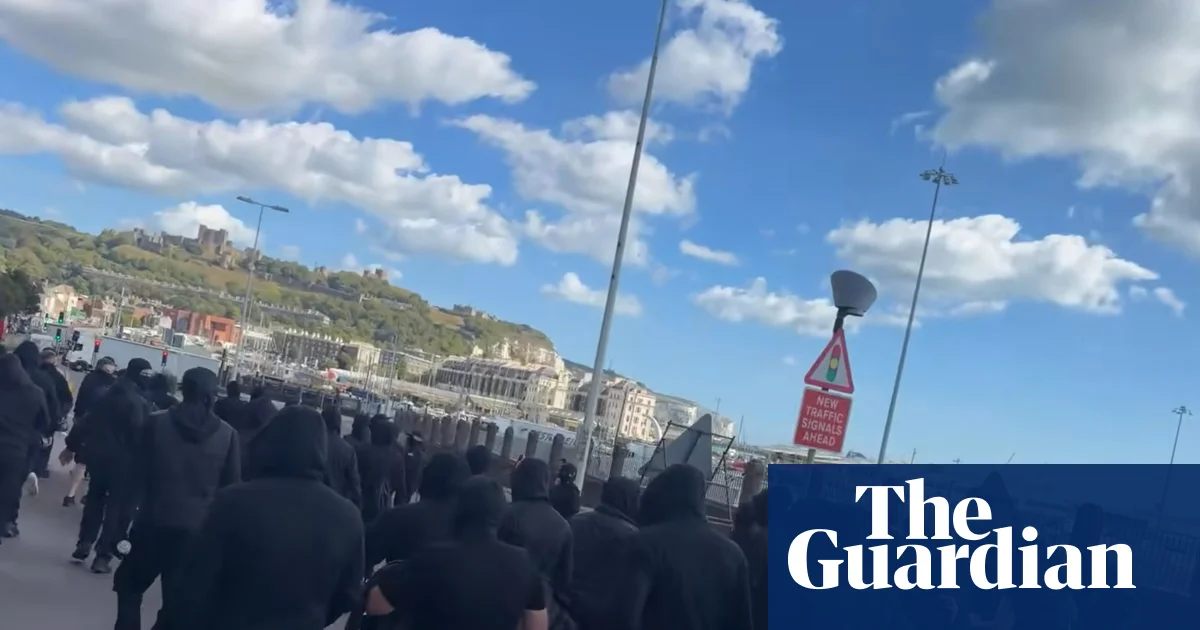
On a Saturday morning in early September 2026, dozens of masked demonstrators dressed entirely in black descended on the roads around Dover, one of Britain’s busiest and most symbolically loaded port towns, blocking traffic and drawing the kind of attention that was clearly the point. By the time the disruption had subsided, a senior cabinet minister was already in front of cameras making clear that the government wanted no part of what it had just witnessed.
What Happened in Dover
The protest, which carried an anti-immigration message, saw participants clad in dark clothing and masks bring traffic to a halt in the Dover area. The coordinated nature of the dress code, full black attire paired with face coverings, gave the demonstration a theatrical quality that went beyond a standard street protest. It was the kind of visual statement designed to circulate on social media, and it did exactly that.
Dover has long sat at the centre of Britain’s most heated immigration arguments. As the main crossing point between the UK and continental Europe, it has become a recurring backdrop for debates about Channel crossings, border control, and the broader question of who gets to enter the country and on what terms. Choosing Dover was not accidental. It was a statement layered on top of a statement.
Reynolds Draws the Line
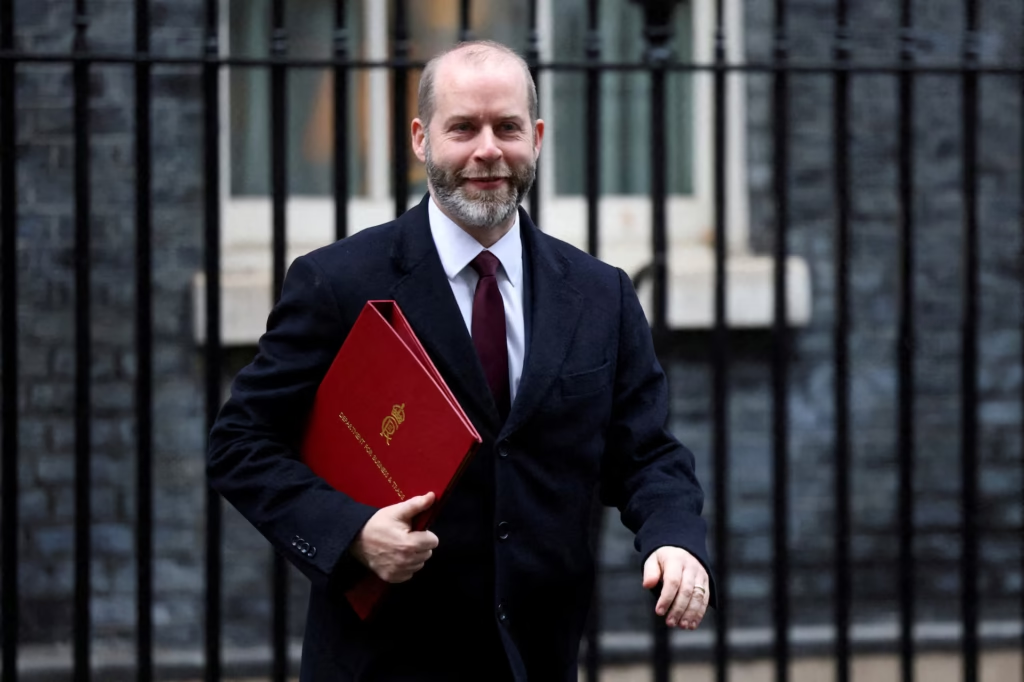
Jonathan Reynolds, serving as Business Secretary in the current government, wasted little time in registering his disapproval. Speaking publicly after the scenes emerged, Reynolds acknowledged that peaceful protest holds a genuinely important place in British civic life. He was careful to frame it that way, understanding that any politician who appears to dismiss the right to protest invites a different kind of trouble entirely.
But Reynolds made equally clear that what took place in Dover fell outside that protected category, at least in his view. Describing the demonstrators as “dressing up in costumes” and disrupting ordinary people’s lives, he said the scenes were not something the government would want on British streets. It was a pointed choice of words, reducing a politically charged act of protest to something resembling a fancy dress exercise rather than a serious political statement.
The framing matters. By characterising the clothing and masks as costumes rather than tactical gear or political symbolism, Reynolds subtly delegitimised the protest without having to engage with its underlying message at all. It is a technique that sidesteps the messier question of what the demonstrators were actually saying and focuses instead on how they said it.
The Tension Between Protest Rights and Public Order
Britain has been wrestling with the legal and ethical boundaries of protest for several years now. The debates that followed high-profile demonstrations across various causes have produced legislation, controversy, and a great deal of argument about where exactly the line sits between a protected right and a public nuisance.
Blocking roads is not a novel tactic. Environmental groups made it a signature move, and the legal and political fallout from those actions is still unfolding through the courts and parliament. The Dover protest borrows that same playbook but applies it to immigration, a topic carrying its own distinct emotional charge in post-Brexit Britain.
The masks add another layer of complexity. Face coverings during protests have been viewed in different contexts as everything from a safety measure to an intimidation tactic. When the entire group adopts an identical look, the visual effect is deliberately unsettling, which is precisely why it generates coverage and precisely why it makes politicians uncomfortable.
Why Dover Keeps Drawing This Kind of Attention
The port town has become something of a political theatre for Britain’s immigration debate. Its white cliffs carry obvious nationalistic symbolism, and the fact that small boats crossing the Channel often land nearby means the location is never just a geographic backdrop. It is part of the argument itself.
Anti-immigration sentiment in Britain is not a fringe position, even if its most confrontational expressions sit at the edges of the mainstream. Polling consistently shows that immigration ranks among the issues voters care most about, and political parties across the spectrum have spent years trying to find language that acknowledges those concerns without being seen to endorse the more extreme expressions of them.
Saturday’s protest sits in that uncomfortable grey zone. Its participants had a message, they chose a location with maximum symbolic weight, and they adopted a visual style designed to be noticed. Whether that constitutes legitimate political expression or a deliberate attempt to intimidate is, predictably, a question that divides opinion sharply.
What Comes Next
Reynolds’ condemnation represents the government’s opening position, but it is unlikely to be the last word. Groups on the right will argue that ministers are more comfortable criticising the style of this protest than they are addressing the substance of what drove people to the streets in the first place. Groups on the left will note that the government has shown flexibility in how it responds to different protest movements, raising questions about consistency.
Police will review the events, and there may well be arrests or charges related to the road-blocking itself, which is where the law is clearest regardless of the politics involved. What is harder to police is the message, the mood, and the growing appetite for dramatic, visually striking demonstrations as a way of cutting through in an information environment where subtlety rarely travels.
Britain’s streets have always been a venue for political argument. The question the Dover protest raises, and does not answer, is whether the country has settled on what kinds of argument it is willing to tolerate, and whether that tolerance shifts depending on which direction the argument is coming from.
So here is the question worth sitting with: if the method of a protest determines whether it deserves to be taken seriously, who exactly gets to decide which methods are acceptable, and can that judgment ever be truly free from political bias?