

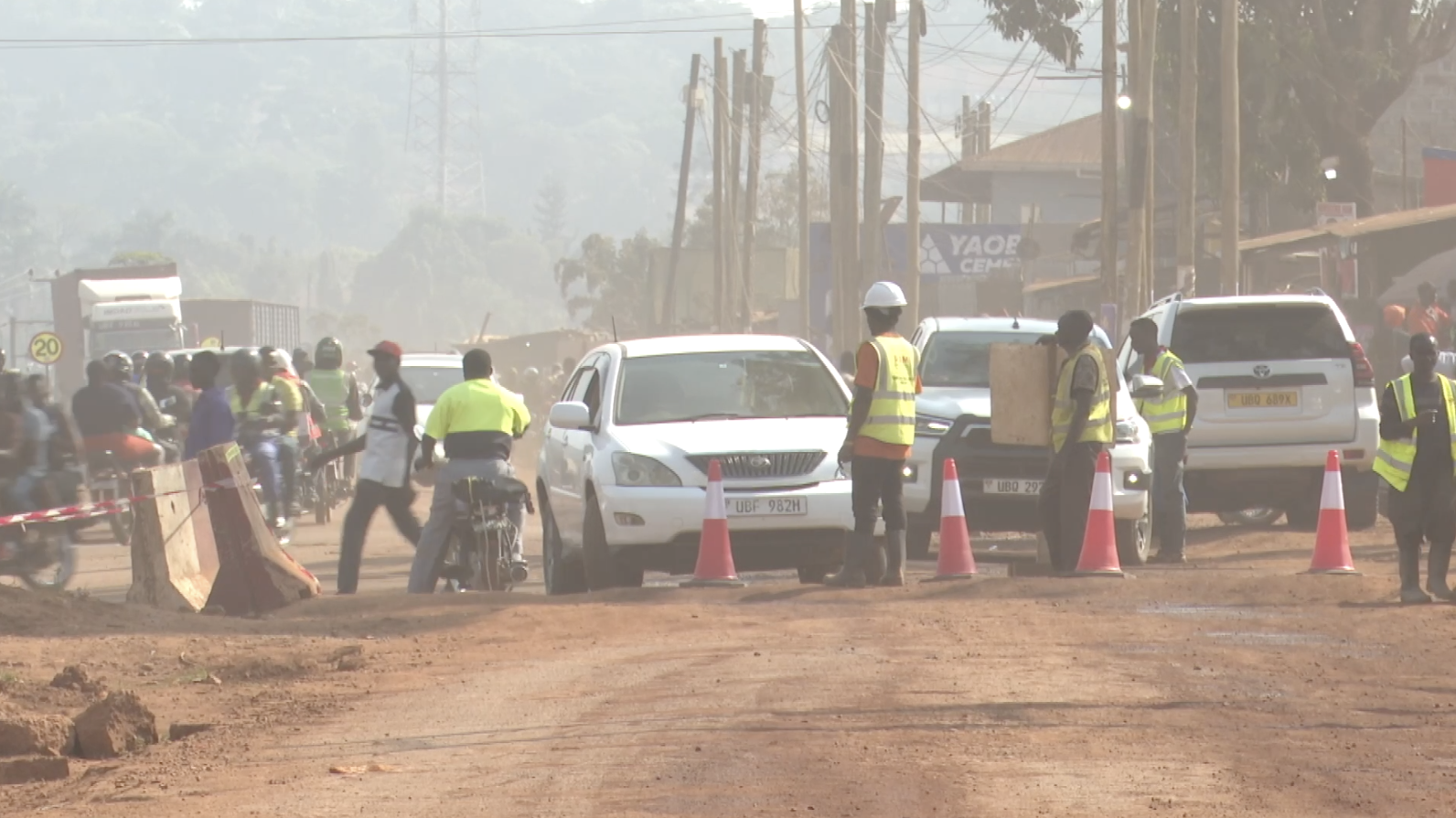
The Kampala Capital City Authority has officially broken ground on the Mbuya-Kinawataka Road in Nakawa Division, kicking off a construction project that carries a price tag of Shs19.2 billion and a deadline of December 31 this year. The 2.32-kilometre stretch is not just another line item in an urban budget; it is a calculated intervention designed to ease one of Kampala’s most stubborn pressure points ahead of the Africa Cup of Nations, scheduled to begin in June 2025.
Why This Road, Why Now
Anyone who has sat in traffic on the Jinja Highway during peak hours knows the particular brand of frustration that comes with watching cargo trucks inch forward while commuters grip their steering wheels and surrender their evenings. The Jinja Highway has long served as a dual-purpose artery, absorbing both heavy freight and everyday urban traffic, a combination that routinely produces gridlock at some of Kampala’s busiest entry and exit points.
The Mbuya-Kinawataka Road is designed to offer cargo vehicles an alternative route, pulling them off the Jinja Highway and routing them through a corridor better suited to that kind of load. Less freight on the main highway means smoother movement for everyone else. It is a logical fix, and the fact that it has taken this long to materialise says something about how complex urban infrastructure decisions can be, even when the problem is plainly visible.
Kampala Lord Mayor Balimwezo Nsubuga has framed the project squarely around the traffic relief angle, and the timing is no accident. As NTV Uganda reports, KCCA is moving with urgency, with the December 31 completion target leaving little room for delays.
Football’s Infrastructure Dividend
Uganda’s hosting of the Africa Cup of Nations has become a forcing function for infrastructure investment that might otherwise have spent years in planning limbo. AFCON is not just a sporting event; it is a city-wide stress test. Tens of thousands of visitors, elevated media attention, and the kind of logistical pressure that exposes every pothole, bottleneck, and broken traffic signal. Kampala’s roads need to be ready, and KCCA is clearly treating that deadline seriously.
The Mbuya-Kinawataka project fits neatly into a broader pattern of upgrades being accelerated by AFCON preparations. Roads, drainage, public spaces, all of it is being viewed through the lens of what the city will look like when international eyes turn toward Uganda. That is not entirely a bad thing. Some of the most durable infrastructure in African cities has been built under the compressed timelines that major sporting events demand.
The Numbers Behind the Tarmac
Shs19.2 billion for 2.32 kilometres works out to a construction cost that reflects the reality of urban road-building in a congested area. You are not just laying tarmac; you are working around existing utilities, managing drainage, building in durability for heavy vehicle loads, and doing all of it inside a city that cannot simply pause while construction unfolds. The per-kilometre cost reflects those layers of complexity.
The December deadline adds further weight. Contractors working on urban roads in Kampala face weather, supply chain variables, and community disruption concerns that can push timelines in ways that are difficult to anticipate. That the authority is publicly committing to a year-end finish signals confidence, but it also means accountability is baked in from day one.
What Nakawa Division Stands to Gain
Nakawa Division is one of Kampala’s busiest and most commercially active zones. It hosts a mix of residential areas, industrial activity, and transit corridors that make road quality a direct economic issue. Businesses in the area bear the cost of congestion in delayed deliveries, lost hours, and elevated transport costs. A functioning alternative route for cargo trucks could have a meaningful ripple effect on how smoothly the local economy moves.
Residents who live near the Jinja Highway have long dealt with noise, emissions, and safety risks from heavy truck traffic pushing through spaces that were not always designed for it. Rerouting freight through a purpose-appropriate corridor is also, at some level, a quality-of-life intervention, not just a traffic management exercise.
The Bigger Picture
Kampala has been talking about its infrastructure deficit for years. What is different now is the combination of political will, a hard external deadline in the form of AFCON, and actual funding committed to a specific project with a specific road and a specific date. That convergence is rarer than it sounds in urban infrastructure planning, and it is worth watching closely to see whether the December 31 target holds.
If the Mbuya-Kinawataka Road delivers on schedule, it will not just ease traffic. It will set a precedent for how Kampala approaches targeted infrastructure fixes in the future. Cities do not transform overnight, but they do change one functional road at a time.
Will KCCA beat the clock and deliver a completed road before the year runs out, or will this be another infrastructure story where the ribbon-cutting moment outlasts the deadline? Drop your thoughts below and let us know what you think Kampala’s biggest infrastructure priority should be heading into 2027.