
On August 6, 2026, thousands of SpaceX employees woke up to something most workers only dream about: the moment their company stock finally became theirs to sell. For Andre Lavoie, a 63-year-old engineer who joined the firm back in 2009, that moment has been a long time coming. His 200,000 shares, earned as part of his compensation package when SpaceX was still a scrappy rocket startup, are now worth roughly $23 million. And he has a plan.
The Engineer Behind the Tanks
Lavoie’s job at SpaceX was deeply technical. He designed the pressure tanks that help power the company’s rockets, which means he was present, in the most literal sense, for the engineering foundations of what became the world’s most valuable space company. Like many employees at early-stage startups, he accepted stock as part of his pay, a trade-off that often looks risky in the short term but can be transformative over time.
The gamble paid off at a scale few could have anticipated. Speaking to the BBC, Lavoie was candid about his strategy going forward: “Every chance I get going forward, I’ll sell a little bit more.” His reasoning is grounded and almost philosophical. “The shares have been going up so radically it keeps messing up my life plans,” he said. “You really can’t know the future, so it’s better to sell early and in intervals.”
The Biggest IPO in History
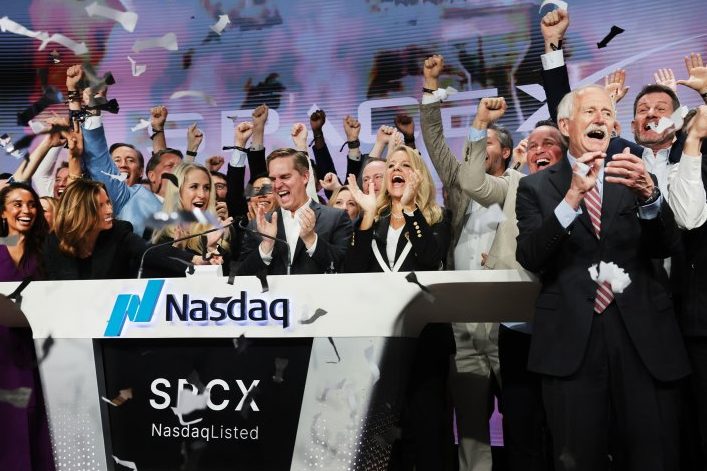
SpaceX listed on the Nasdaq in June 2026, and the numbers attached to that event are difficult to wrap your head around. The listing valued the rocket and satellite company at more than $2 trillion, making it the largest initial public offering in history by a significant margin. For context, that valuation places SpaceX alongside the most valuable companies ever to trade on public markets.
Elon Musk, appearing on Fox News, said the listing had likely created “several thousand” millionaires among SpaceX staff, including workers on the production line. Reports suggest the number of newly minted millionaires from the IPO stands at around 4,400 people. That is not a rounding error. That is a workforce transformed.
A Staged Unlock, Not a Free-for-All
Unlike most newly public companies, SpaceX is releasing shares to employees in phases rather than all at once. The first 20% became available on August 6, with additional batches expected throughout the rest of the year. This staged approach is significant. It prevents a sudden flood of selling pressure on the stock, and it forces employees to think carefully about their approach rather than making one sweeping decision in a moment of excitement or anxiety.
That structure suits someone like Lavoie perfectly. His plan to sell gradually over time, rather than dumping everything at once, aligns with the kind of disciplined thinking that tends to serve long-term investors well. Whether other employees follow the same logic, or choose to hold their shares entirely in the hope of even greater gains, is a deeply personal call.
To Hold or to Sell: The Classic Dilemma
The tension between cashing out and holding on is one of the oldest stories in investing. Employees who held early shares in companies like Amazon or Apple for decades became extraordinarily wealthy. But for every story like that, there are quieter ones about people who waited too long, watched a stock correct sharply, and wished they had taken some money off the table when the getting was good.
Lavoie’s measured approach recognizes this honestly. He is not predicting a crash. He is acknowledging that life requires actual money, not paper wealth, and that a $23 million stake is meaningful regardless of what the stock does next quarter.
What This Means Beyond One Engineer’s Story
The SpaceX IPO is not just a financial event. It is a cultural one. It represents the conclusion of a multi-decade arc in which a private rocket company, founded on ideas that most of the aerospace establishment initially dismissed, became a public company worth more than some national economies. The people who built it, from engineers designing pressure tanks to workers assembling rocket components, are now stakeholders in that story in the most tangible way possible.
For a generation of workers who watched Silicon Valley create overnight billionaires and wondered if that kind of wealth-building was only for people who coded apps or founded social networks, the SpaceX IPO offers a different kind of answer. You can build something physical, something that literally leaves the Earth, and still be rewarded accordingly.
Lavoie plans to keep selling, bit by bit, as his life plans demand. That is a very human response to an extraordinary circumstance. The real question worth sitting with is this: if you had spent 17 years helping build something worth $2 trillion, would you have the patience to sell slowly, or would the temptation to take it all at once prove too strong?