








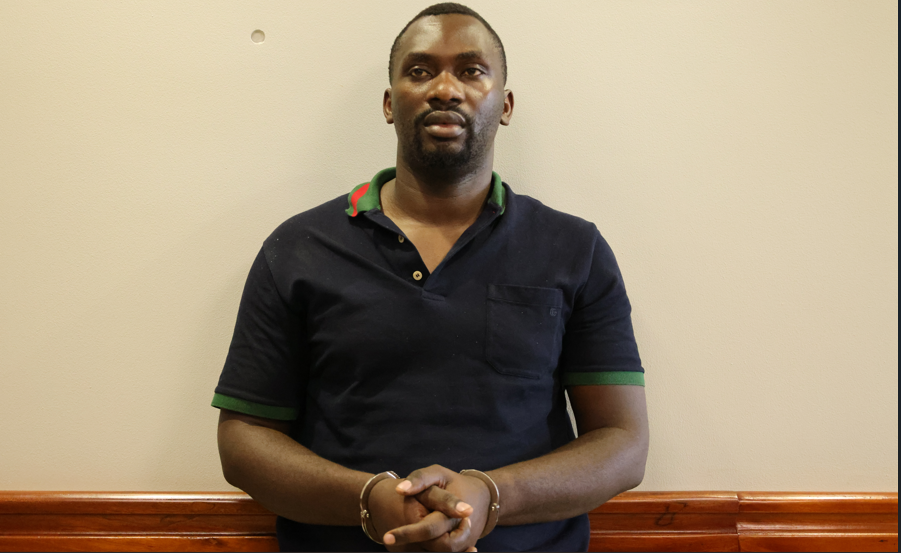
A Ugandan court refused bail to self-described businessman and serial smuggler Timothy Segane on Friday, August 29, 2026, leaving him confined to Murchison Bay Prison in Luzira as prosecutors build what they describe as a sprawling case of customs fraud, tax evasion, and outright bribery of government officials.
The case landed before His Worship Paul Mujuni, Principal Magistrate Grade I of the Anti-Corruption Division of the High Court, who ordered that Segane remain in custody until September 16, 2026, when the matter returns for further mention. That decision came just days after Segane was first arrested on August 25, 2026, following an attempt to bribe a customs officer, a brazen move that put him squarely in the crosshairs of investigators who, it turns out, already had a file building against him.
Four Charges, One Big Problem for the Accused
The charge sheet, filed under the header “Uganda vs Timothy Segane and Others,” lays out four serious counts. Segane and his accomplices face accusations of making false declarations to customs authorities, evading taxes, corruption, and conspiring to violate customs laws. The charges are brought under two pieces of legislation: the East African Community Customs Management Act (EACCMA) and Uganda’s Anti-Corruption Act, a combination that signals just how seriously the state is treating this matter.
According to court documents, the scheme was not exactly subtle in its ambition, even if it was designed to stay invisible to regulators. Investigators allege that Segane paid customs officials to wave his containers past scanning equipment entirely, bypassing a system specifically designed to catch exactly this kind of fraud. He is also accused of paying officers to deliberately under-declare the value of his imported goods, reducing the taxable amount on paper and slashing what he owed the state in practice.
The prosecution contends that these actions caused the Ugandan government to lose hundreds of millions of shillings in revenue. That is not a rounding error. That is a deliberate and sustained attack on public finances.
The Uganda Revenue Authority Speaks Out
Robert Kalumba, Assistant Commissioner for Public and Corporate Affairs at the Uganda Revenue Authority (URA), had confirmed Segane’s initial arrest and was quick to welcome the court’s latest decision. His reaction was measured but pointed.
“This is exactly the kind of corruption we are fighting,” Kalumba said, adding that the new details about bribery and scanner manipulation reveal the true scale of the accused’s operation. He also made clear that Segane did not operate alone, and that investigators are continuing to pursue others connected to the scheme.
That last point matters enormously. Customs fraud at this level does not happen without institutional knowledge and cooperation from people on the inside. Someone had to know which scanners to avoid, which officers were open to a proposition, and how to file paperwork that looked legitimate enough to pass casual review. Those questions are now at the heart of an active investigation that extends well beyond one man sitting in a cell in Luzira.
A System Under Pressure
Uganda’s customs and tax collection infrastructure has long faced the challenge of plugging revenue leaks that drain public coffers. The Segane case puts that vulnerability in sharp relief. When a smuggler can allegedly pay to have containers skip scanners entirely, and pay again to have their goods undervalued on official documents, it raises uncomfortable questions about how many others may have operated the same playbook without getting caught.
The EACCMA exists precisely to create a unified customs framework across East Africa, reducing inconsistencies that bad actors exploit. Prosecuting cases under it sends a signal to regional trading partners that Uganda is serious about enforcement. Whether that signal translates into systemic reform at the ports and border crossings where these transactions happen is a different question entirely.
What Happens on September 16
When the case returns to court next month, prosecutors are expected to give an update on the wider investigation, including the status of Segane’s unnamed accomplices. The fact that the charge sheet explicitly names “others” suggests that arrests or appearances by additional accused parties are a real possibility before the year is out.
For now, Magistrate Mujuni has made his position clear. Bail is off the table. The accused stays at Murchison Bay Prison, a facility that has housed some of Uganda’s most high-profile suspects, while the case takes shape around him.
Segane’s legal team will almost certainly push again for bail at the next hearing. Whether they succeed will depend in part on how much of the prosecution’s case is ready to be disclosed and how persuasively they can argue that their client poses no flight risk. Given that he allegedly tried to bribe his way out of trouble the moment he was confronted by customs officials, that argument may be a hard sell.
The Bigger Picture
Tax evasion through customs fraud is not a victimless crime, no matter how it gets dressed up. Every shilling that bypasses the official system is a shilling not going into roads, hospitals, schools, or the dozens of other public services that governments are expected to fund. When that evasion happens with the cooperation of the very officials appointed to prevent it, the damage is compounded, because public trust in institutions erodes alongside the revenue.
The URA’s willingness to go public with this case, and to keep the pressure on through the courts, suggests an institution that understands it needs visible wins to maintain credibility. Whether this case delivers one of those wins remains to be seen. But the machinery is moving, the charges are serious, and the man at the centre of it is not going anywhere anytime soon.
As investigations into his network continue, one question hangs over the entire affair: how many more containers got through before anyone thought to look?