









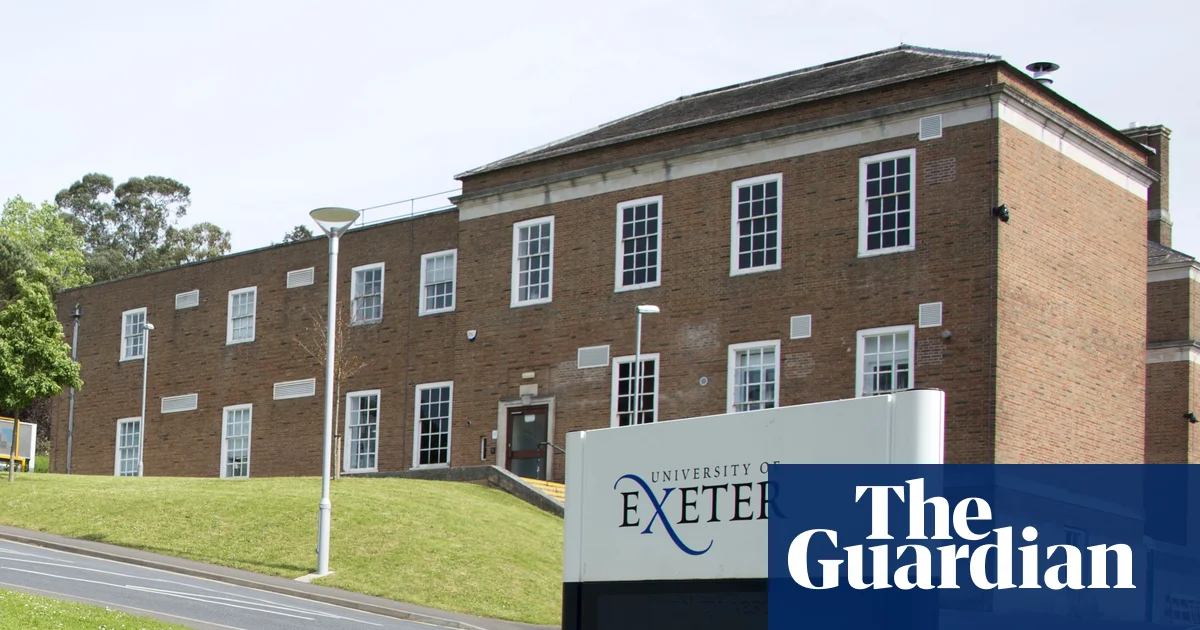
The University of Exeter has formally approved a partnership with Saudi Arabia that will see its academics fly to Riyadh to deliver a postgraduate degree programme to senior military officers and government officials, setting off a fresh debate about the ethical limits of academic commercialism. According to reporting by the Guardian, the Russell Group university signed off on the arrangement, which will deliver a Master of Arts in applied security and strategy, also known as an MStrat, to a cohort based at the National Defense University in Riyadh. The financial upside for the university is substantial, with the deal potentially worth millions of pounds.
What the Deal Actually Involves
At its core, the arrangement is an academic export. Exeter faculty will travel to Saudi Arabia and teach the MStrat curriculum directly to students enrolled at the National Defense University, an institution that trains the kingdom’s most senior military minds and government administrators. The programme covers applied security and strategy, a field that sits squarely at the intersection of military theory, geopolitical analysis, and statecraft.
For Exeter, it represents a significant international expansion of its academic portfolio. The university has long cultivated a reputation in security studies, and the MStrat is one of the flagship programmes in that space. Exporting that programme to the Gulf is, from a purely institutional perspective, a logical next step in an era when British universities are under constant pressure to diversify their revenue streams.
But the optics are considerably more complicated than the spreadsheets suggest.
The Human Rights Question Nobody Wants to Answer Out Loud
Saudi Arabia’s human rights record remains one of the most scrutinised in the world. The killing of journalist Jamal Khashoggi in 2018 cast a long shadow over the kingdom’s international relationships, and that shadow has not fully lifted. Reports of the treatment of political dissidents, restrictions on civil liberties, and the conditions endured by migrant workers in the country have drawn sustained criticism from international bodies, civil society groups, and academics themselves.
British universities are not immune to this conversation. Over the past several years, institutions across the UK have faced growing internal pressure, from student unions, faculty senates, and independent ethics committees, to apply stricter scrutiny to partnerships with governments that have questionable records on freedom of expression and academic independence. The irony of training military officers in “applied security” under a government that has, by multiple accounts, deployed security apparatus against its own citizens is not lost on critics.
Exeter’s approval of this deal, despite what the Guardian describes as “long-held concerns” within the institution about Saudi Arabia’s record, suggests that financial logic ultimately won the internal argument. That is a familiar story in British higher education right now, but it doesn’t make it a comfortable one.
The Wider Pattern in UK Higher Education
Exeter is far from the only British university navigating this kind of tension. Across the Russell Group and beyond, institutions have been aggressively pursuing Gulf partnerships as domestic funding pressures mount. Government funding per student in the UK has remained under strain for years, international student visa policy has introduced new uncertainties, and the cost of running world-class research facilities continues to climb. Against that backdrop, a multi-million-pound arrangement with a well-resourced Gulf institution can look very attractive to a university’s finance committee.
The Gulf states, for their part, have invested heavily in positioning themselves as knowledge economies. Saudi Arabia’s Vision 2030 strategy, the sweeping modernisation agenda championed by the kingdom’s leadership, explicitly includes ambitions around education, training, and institutional capacity-building. Bringing in a reputable Western university to deliver a postgraduate programme is entirely consistent with that agenda.
That doesn’t resolve the ethical tension. It simply explains why it keeps arising.
Academic Freedom and the Question of Curriculum Control
One of the less-discussed dimensions of arrangements like this is the question of what happens inside the classroom. When a British university delivers a programme on a foreign military campus, under the auspices of a foreign government, the usual guarantees of academic freedom become considerably harder to enforce. What happens if a lecturer wants to discuss a case study that reflects poorly on the host country? What are the contractual obligations around curriculum content? Who controls the syllabus, and who has the final say if there is a disagreement?
These are not hypothetical concerns. Universities that have entered similar arrangements in other parts of the world have, on occasion, found themselves in precisely these situations. The University of Exeter has not, based on available information, publicly addressed how it plans to handle those eventualities in Riyadh.
Staff and Student Reaction
The internal reaction at Exeter remains to be seen in full. Academic staff at universities across the UK have become increasingly vocal about their institution’s international partnerships, and deals involving Gulf states or authoritarian governments have historically attracted some of the loudest opposition. It would be surprising if this arrangement passed entirely without comment from within the university community.
Student groups, too, have shown a growing appetite for engaging with these questions. Campaigns around fossil fuel divestment, arms industry research funding, and similar issues have demonstrated that there is a constituency within British universities that takes institutional ethics seriously and is prepared to make noise about it.
Money, Reputation, and the Long Game
There is a reasonable argument to be made that engagement, including academic engagement, is more constructive than isolation. Training military officers in strategic thinking, international law, and security theory could, in theory, produce leaders who are more sophisticated in their understanding of global norms. That is the optimistic reading, and it is not an entirely implausible one.
The more sceptical reading is that arrangements like this provide diplomatic legitimacy to governments that have not earned it, dress up commercial deals in the language of knowledge exchange, and expose universities to reputational risk that no amount of tuition fees can fully offset. When the next controversy involving Saudi Arabia surfaces, and history suggests it will, Exeter will find its name in the same sentence.
The University of Exeter has made its decision. Whether it proves to be shrewd institutional strategy or a reputational liability dressed up in academic robes may depend entirely on how the next few years unfold in the kingdom itself.
So here is the question worth sitting with: at what point does a university’s pursuit of financial sustainability become incompatible with the values it claims to uphold, and who should be the one to draw that line?