







In Brussels this week, protestors carried ten coffins through the streets. Not for people, but for an industry. The demonstration, organised to draw attention to a crisis quietly unfolding across the continent, is a visceral signal that Europe’s manufacturing sector is in serious trouble. According to the trade body Eurometal, the bloc stands to lose 300,000 factory jobs before the end of 2026, driven by what industry leaders are now openly calling the “colonisation” of European supply chains by Chinese component makers.
A Trade Imbalance That Has Become Impossible to Ignore
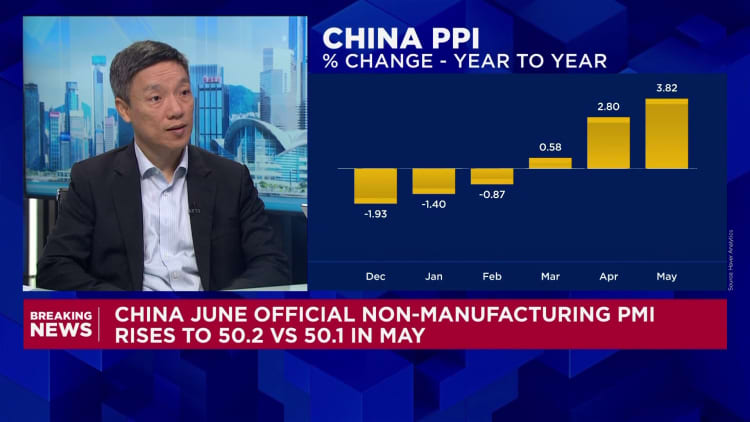
The numbers are striking. China is currently running a trade surplus with the European Union that has hit a record €1 billion per day. Every single day. That figure alone tells you something important: the relationship between these two economic blocs is no longer a balanced exchange of goods and expertise. It has become something far more lopsided, and European manufacturers are increasingly finding themselves on the wrong side of that equation.
Eurometal, a prominent industry trade body representing metal manufacturers across Europe, is warning Brussels that unless the EU takes decisive action, the job losses will accelerate dramatically in the months ahead. The group’s concern centres not just on finished goods being imported from China, but on the deeper structural issue: Chinese component suppliers are now so embedded in European industrial supply chains that local manufacturers are struggling to compete on cost, speed, or scale.
What “Colonisation” Actually Means in Practice
The word “colonisation” is being used deliberately here, and it is worth unpacking. When Eurometal talks about Chinese manufacturers colonising supply chains, they are describing a scenario where European companies that once sourced parts and materials from domestic or nearby suppliers are now systematically dependent on Chinese alternatives. Those alternatives are often cheaper, sometimes faster, and backed by state support that European competitors simply cannot match.
This is not a new concern. European steel, aluminium, and automotive component makers have been raising alarms about Chinese competition for years. But the scale and speed of market penetration being reported in 2026 appears to have crossed a threshold. Once a supply chain becomes deeply wired to a particular source, switching becomes expensive and operationally painful. The worry is that Europe has already passed the point where the transition was easy.
The Human Cost Behind the Statistics
Those ten coffins in Brussels are a reminder that trade policy is not abstract. Each job that disappears from a factory floor represents a family, a community, a local economy. European manufacturing towns have already lived through painful deindustrialisation in previous decades. A fresh wave of 300,000 losses, concentrated in a short window, would not just be an economic statistic. It would be a social rupture in regions that are already politically fragile.
Historically, industrial job losses have had long political tails. They reshape voting patterns, fuel resentment toward governing institutions, and create conditions where populist movements gain traction. European policymakers who dismiss Eurometal’s warnings as industry lobbying may find themselves dealing with far more complicated consequences down the line.
What Can Brussels Actually Do?
This is where the debate gets genuinely thorny. The EU has tools available: tariffs, anti-dumping investigations, carbon border adjustment mechanisms, and procurement rules that could favour domestic suppliers. Some of these are already in use. But applying them aggressively risks retaliatory measures from Beijing, complicating an already tense bilateral relationship that touches everything from electric vehicles to critical minerals.
There is also the internal EU debate to consider. Not every member state feels the same urgency. Countries with strong export ties to China, or those that benefit from cheap imported components in their own domestic industries, may not share the appetite for confrontation that hard-hit manufacturing regions are demanding.
The Structural Question Europe Keeps Avoiding
Beneath all of this lies a question the EU has been reluctant to answer directly: does Europe actually want to maintain a broad industrial manufacturing base, and if so, what is it prepared to pay for that ambition? Keeping factories open in high-wage economies against competition from state-supported manufacturers operating in lower-cost environments requires deliberate, sustained policy commitment. Subsidies, infrastructure investment, skills programmes, and strategic procurement decisions all have to move in the same direction at the same time.
The coffins in Brussels suggest the industry believes it is running out of time to have that conversation. Eurometal’s projection of 300,000 jobs lost in the remaining months of 2026 is not a forecast designed to be comfortable. It is a warning shot, aimed at prompting action before the structural damage becomes permanent.
Europe has reinvented its industrial identity before, notably after the post-war reconstruction period and again after the Eastern enlargement of the early 2000s. Whether it has the political will and institutional coherence to do so again, against a far more formidable external competitor, is a question that Brussels urgently needs to answer.
So here is what we want to know: should the EU treat Chinese supply chain dominance as a security risk and act accordingly, or is the real problem European industry’s failure to adapt to a changing global economy? Drop your thoughts in the comments below.