










It was the kind of week that reminds you why technology journalism exists. On one end of the spectrum, the world’s largest gaming convention threw open its doors in Cologne, Germany, sending shockwaves through an industry that never really sleeps. On the other, a California-based company was quietly, methodically working toward something that would make even the most seasoned aerospace engineers raise an eyebrow: a privately built replacement for the International Space Station. BBC journalist Laura Cress captured the gaming spectacle at Gamescom, while reporter Lily Jamali went behind the scenes at the California firm chasing the orbital frontier. Two stories. One very clear picture of where human ingenuity is headed.
Gamescom 2026: The World’s Biggest Gaming Convention Delivers Again
Gamescom has long held the title of the planet’s largest gaming event, and this year it showed no signs of surrendering that crown. Held annually in Cologne, Germany, the convention draws hundreds of thousands of attendees from across the globe, representing players, developers, publishers, and the kind of passionate fan communities that camp out for days just to get five minutes with a new demo. The scale of it is genuinely staggering.
What makes Gamescom particularly relevant right now is the broader context in which gaming exists. The industry generates more revenue globally than film and music combined, and its cultural footprint continues to grow year on year. New titles, new hardware, new storytelling formats, and increasingly sophisticated virtual worlds are redefining what interactive entertainment can look and feel like. Every announcement made on that convention floor sends ripples far beyond the gaming community.
Laura Cress brought viewers into that world with the kind of reporting that cuts through the noise. The highlights from the convention floor tell a story about an industry that is maturing without losing its energy. Developers are pushing boundaries not just technically but narratively, creating experiences that blur the line between game and art. Hardware makers are responding with increasingly powerful tools that put those visions within reach of ordinary players. It is a feedback loop of ambition and execution that shows no signs of slowing.
Why Gaming Events Still Matter in a Streaming-First World
Some people ask whether massive in-person conventions still make sense when game reveals can reach millions instantly via online streams and social media. The answer, as Gamescom consistently proves, is an emphatic yes. There is something irreplaceable about physical presence: the energy of a crowd reacting to a trailer in real time, the ability to pick up a controller and feel a new game rather than simply watch it, the informal conversations between developers and players that never make it into press releases but often shape the direction of the industry.
Beyond the floor excitement, conventions like this serve as a barometer. The games and technologies that generate the most buzz here tend to define the cultural conversation for months afterward. That alone makes Gamescom essential viewing for anyone trying to understand where interactive media is going.
California’s Space Race: Building the Station After the ISS
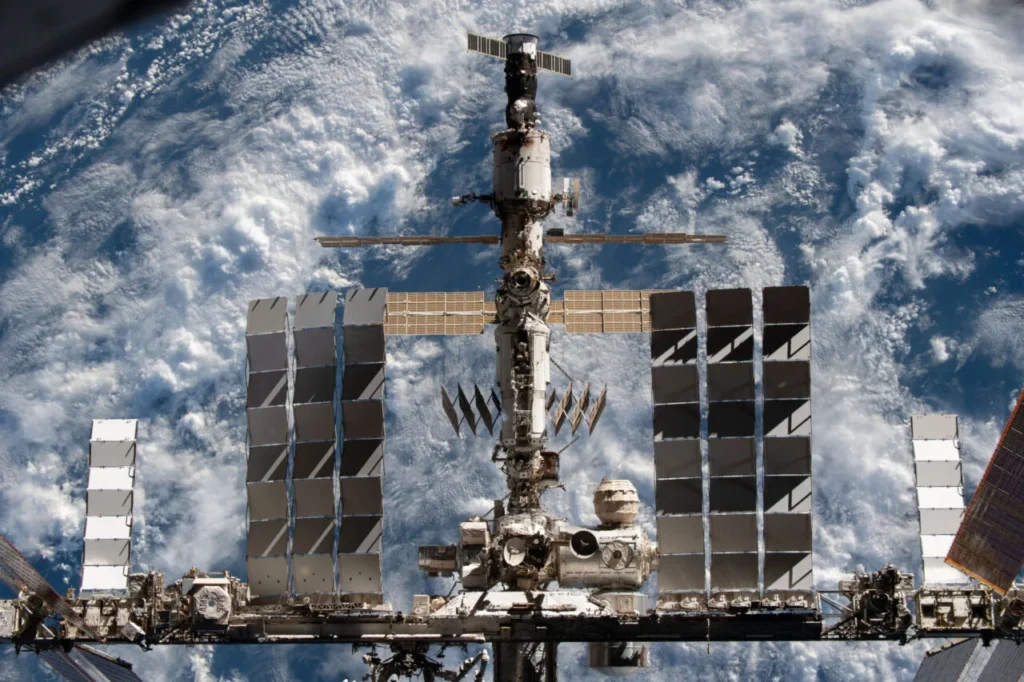
If gaming represents one frontier of human creativity, the work happening inside a California company represents something altogether more audacious. Lily Jamali’s behind-the-scenes reporting sheds light on a private firm racing to develop what could succeed the International Space Station, a structure that has served as one of humanity’s most remarkable collaborative achievements since its first components reached orbit in 1998.
The ISS is aging. That is not an opinion; it is engineering reality. NASA and its international partners have been open about the fact that the station’s operational lifespan has limits, and that planning for what comes next is not optional. The question has always been: what does “next” look like? Increasingly, the answer is pointing toward the private sector.
Private Space Stations: From Science Fiction to Construction Plans
The idea of a privately owned and operated space station would have seemed fantastical even twenty years ago. Today it is the subject of serious investment, serious engineering, and serious competition. Several companies across the United States are working on concepts, but the California firm featured in Jamali’s reporting appears to be moving with particular urgency. The ambition is to create a successor habitat that can carry scientific research, commercial activity, and human presence in low Earth orbit forward once the ISS is eventually decommissioned.
The challenges involved are not trivial. Building a structure that can sustain human life in the harshest environment imaginable, at a cost that makes commercial viability possible, while meeting regulatory and safety standards that leave zero room for error, requires a caliber of engineering and organizational discipline that very few entities on Earth can marshal. The fact that a private company is attempting it speaks to how dramatically the space industry has transformed over the past decade.
NASA has been actively supporting commercial space station development through its Commercial Low Earth Orbit Destinations program, recognizing that the agency’s long-term interests are best served by fostering a healthy private market in orbit. It is a partnership model, not a handoff, and the California company working in this space appears to be one of the more compelling participants in that ecosystem.
Two Stories, One Technological Moment
What connects Gamescom and a California aerospace startup might not be immediately obvious. Gaming hardware and orbital habitats do not share a supply chain. But they share something more fundamental: the willingness to build things that did not exist before and to bet on the human appetite for experiences, exploration, and connection that push against the edges of what is currently possible.
The reporters covering these stories, Laura Cress on the convention floor and Lily Jamali in a facility where the next chapter of human spaceflight is being written, are doing exactly what technology journalism should do. They are going to the places where the future is being made and bringing the rest of us along.
In 2026, the distance between a teenager discovering a breathtaking new game at Gamescom and an engineer designing a module that humans will someday call home in orbit feels smaller than it ever has. Both are products of the same restless, relentless drive to build something that matters. The only real question worth sitting with: which of these two frontiers, the virtual or the orbital, will define the next generation of human experience more profoundly?