


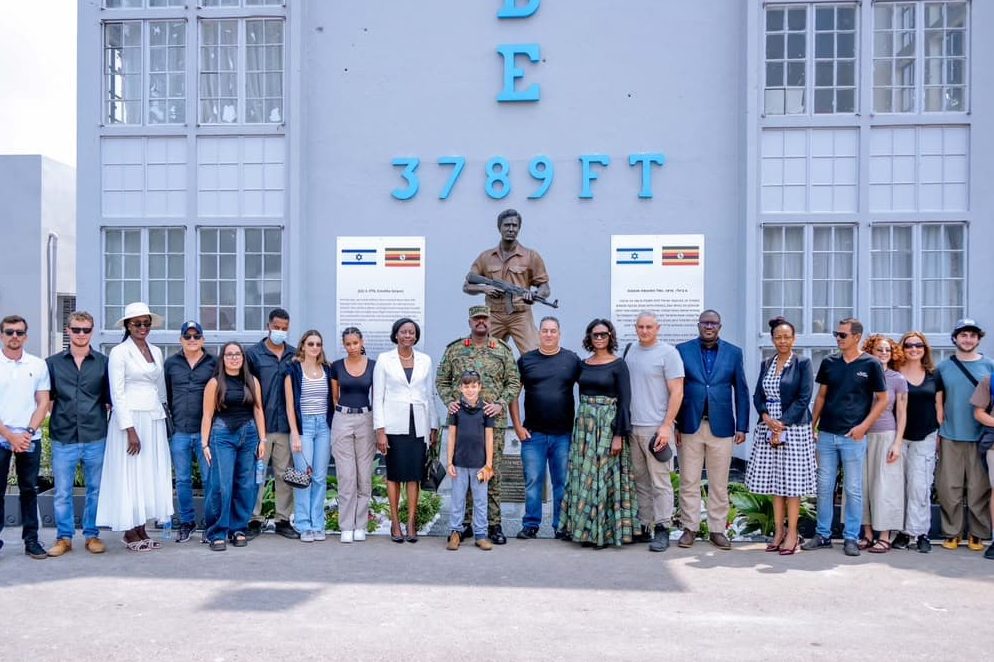




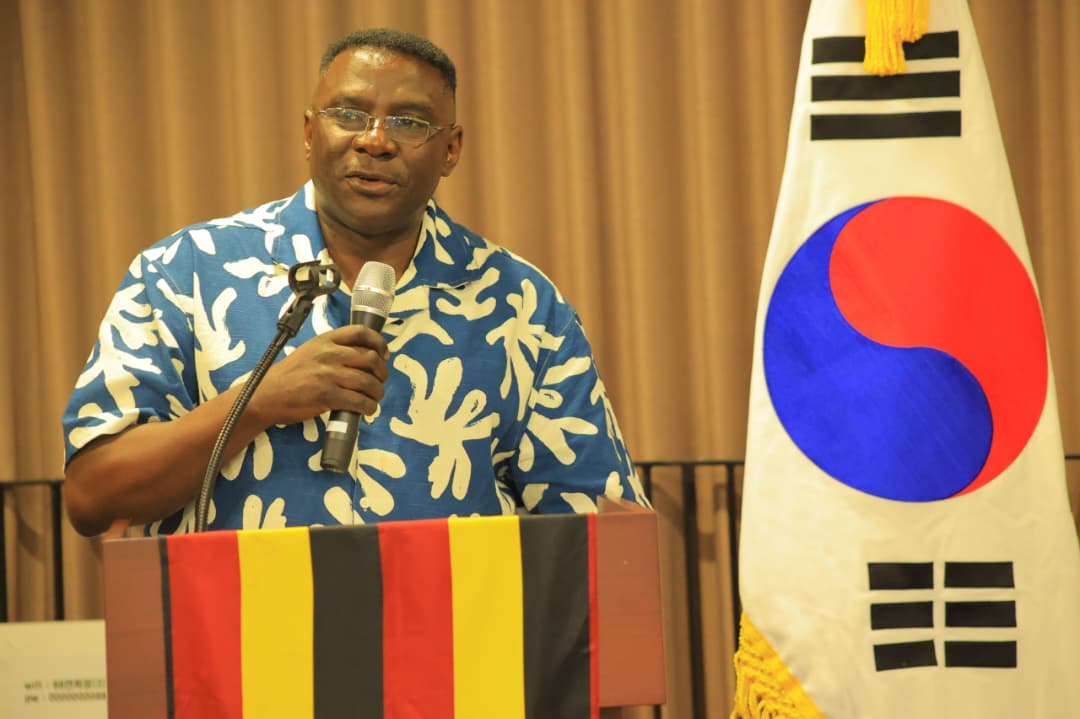
Seoul, South Korea, On a Saturday in early September 2026, a group of Ugandans gathered at the 88 Hotel in Seoul for something that went well beyond a typical embassy social. The occasion was a diaspora outreach event, organized by Uganda’s embassy in Tokyo, which also holds accreditation to South Korea. The message delivered that evening was pointed and precise: go home, at least financially speaking, and help build something bigger than yourselves.
The gathering was timed deliberately. Just days later, on September 6, Uganda and South Korea kicked off a formal trade and investment meeting in partnership with the Korea International Trade Association (KITA), a five-day forum designed to open new corridors between the two countries. The diaspora outreach was the warm-up act, but it carried its own weight.
Grassroots Ambassadors With Capital to Spare
Uganda’s Ambassador to South Korea, H.E. Tophace Kaahwa, who is resident in Tokyo, set the tone for the evening with language that reframed how the diaspora ought to see themselves. She called Ugandans living abroad “grassroots ambassadors,” a phrase that cuts through the usual diplomatic pleasantries and asks something real of its audience. Remittances, she noted, matter to Uganda’s growth, but so does the expertise these Ugandans have picked up in one of Asia’s most technologically advanced economies.
Kaahwa pointed to four sectors she believes are ripe for diaspora capital and know-how: tourism, mineral development, science and technology, and agribusiness. Uganda’s tourism sector, anchored by mountain gorilla trekking and expansive national parks, remains significantly underdeveloped relative to its natural wealth. Agribusiness, meanwhile, is the backbone of the Ugandan economy, yet it still lacks the cold-chain infrastructure, processing facilities, and export networks that could multiply its value several times over.
She also highlighted what she described as improved power generation capacity as a catalyst for broader economic activity, energy that was once a choke point for manufacturing and industry. And in a practical aside, she encouraged Ugandans in South Korea to register for national identification cards, a step that connects them more formally to the systems and opportunities back home.
A $70 Billion Economy With $500 Billion Ambitions
The headline figure of the evening came from the Second Deputy Prime Minister, Crispus Kiyonga, who led the Ugandan government delegation. After conveying personal greetings from President Yoweri Kaguta Museveni, Kiyonga offered a snapshot of where Uganda stands and where it is pointed.
He put Uganda’s current economy at roughly $70 billion, a figure that reflects steady, if uneven, growth over recent decades. The target the government has set is dramatically more ambitious: a $500 billion economy by 2040. That is not a number anyone would call conservative. Hitting it would require Uganda to grow its economic output more than sevenfold in roughly fourteen years, a pace that demands foreign investment, technology transfer, infrastructure, and exactly the kind of skilled diaspora engagement the evening was designed to spark.
Kiyonga also spoke about the country’s infrastructure trajectory. Roads are being built. And in what may be the most transformative logistical project in the region, the railway line connecting Nairobi to Kampala is being extended, a move that would fundamentally change how goods move across East Africa and sharpen Uganda’s position as a regional trade hub.
Why South Korea Matters for This Conversation
South Korea is not an accidental partner in this story. The country’s own development arc, from war-ravaged poverty in the 1950s to one of the world’s leading industrial and technological economies within a generation, is a reference point that developing nations frequently invoke. Korean companies like Samsung, Hyundai, and LG did not just grow; they engineered entire industries. The knowledge embedded in Korean industrial culture is precisely what Uganda’s government wants to see flow through its diaspora back to Kampala.
The Korea International Trade Association, which is co-hosting the September 6-10 trade and investment meetings, is one of the oldest and most influential trade bodies in Asia. Its involvement signals that this is not a ceremonial exchange. Real business conversations are on the table.
For Ugandans living and working in South Korea, the moment carries a particular kind of pressure. They are positioned between two economic worlds: one that has already figured out how to build a technological powerhouse, and one that is still laying the tracks, sometimes literally, to get there.
The Diaspora Calculus: Return, Invest, or Both
Diaspora investment is not a new concept for African governments. From Nigeria to Kenya to Ethiopia, embassies and state officials have made similar appeals for years, with varying degrees of success. The challenge has always been creating the conditions, reliable rule of law, clear investment frameworks, functional infrastructure, that make sending money home feel like an investment rather than a donation.
Uganda’s pitch in Seoul leaned heavily on stability. Kiyonga described the country as secure and peaceful, a message clearly aimed at reassuring potential investors who track political risk as closely as they track return on capital. The framing matters. Diaspora members who have built comfortable lives abroad are not going to risk their savings without confidence that the environment back home can protect and grow what they put in.
The combination of improved power supply, expanding road networks, and a rail link to the Kenyan coast gives that pitch some structural credibility. These are not just talking points. They are the scaffolding on which investment decisions get made.
Tourism, Minerals, and Agribusiness: Uganda’s Investment Sweet Spots
Of the sectors highlighted by Ambassador Kaahwa, each carries its own logic for diaspora-led investment. Tourism benefits from personal networks and cultural knowledge that outside investors simply do not have. A Ugandan entrepreneur in Seoul who understands both Korean travel culture and Uganda’s natural assets is uniquely placed to build something neither a Korean tour operator nor a Kampala-based developer could easily replicate.
Mineral development is more capital-intensive and more politically complex, but Uganda’s known reserves, including significant oil deposits in the Albertine Graben, make it a sector where patient, well-connected investors can find opportunity. Science and technology, perhaps the most forward-looking of the four areas mentioned, speaks directly to Ugandans working in Korea’s tech sector, many of whom have skills in engineering, software, and electronics manufacturing that Uganda’s domestic economy sorely needs.
Agribusiness, though less glamorous, may offer the most immediate impact. Uganda grows coffee, tea, cocoa, and a wide variety of food crops. The gap between what is grown and what reaches international markets at competitive prices represents both a problem and an opening, one that diaspora capital, paired with Korean agro-processing technology, is well-positioned to close.
The week of trade talks that followed the Seoul gathering will be watched closely by those who believe Uganda is on the edge of a meaningful economic acceleration. Whether the diaspora answers the call is a question that only time, and bank transfers, will answer. So here is the real question worth sitting with: if you had skills or savings sharpened by years in one of the world’s most advanced economies, what would it take for you to bet on your homeland?