






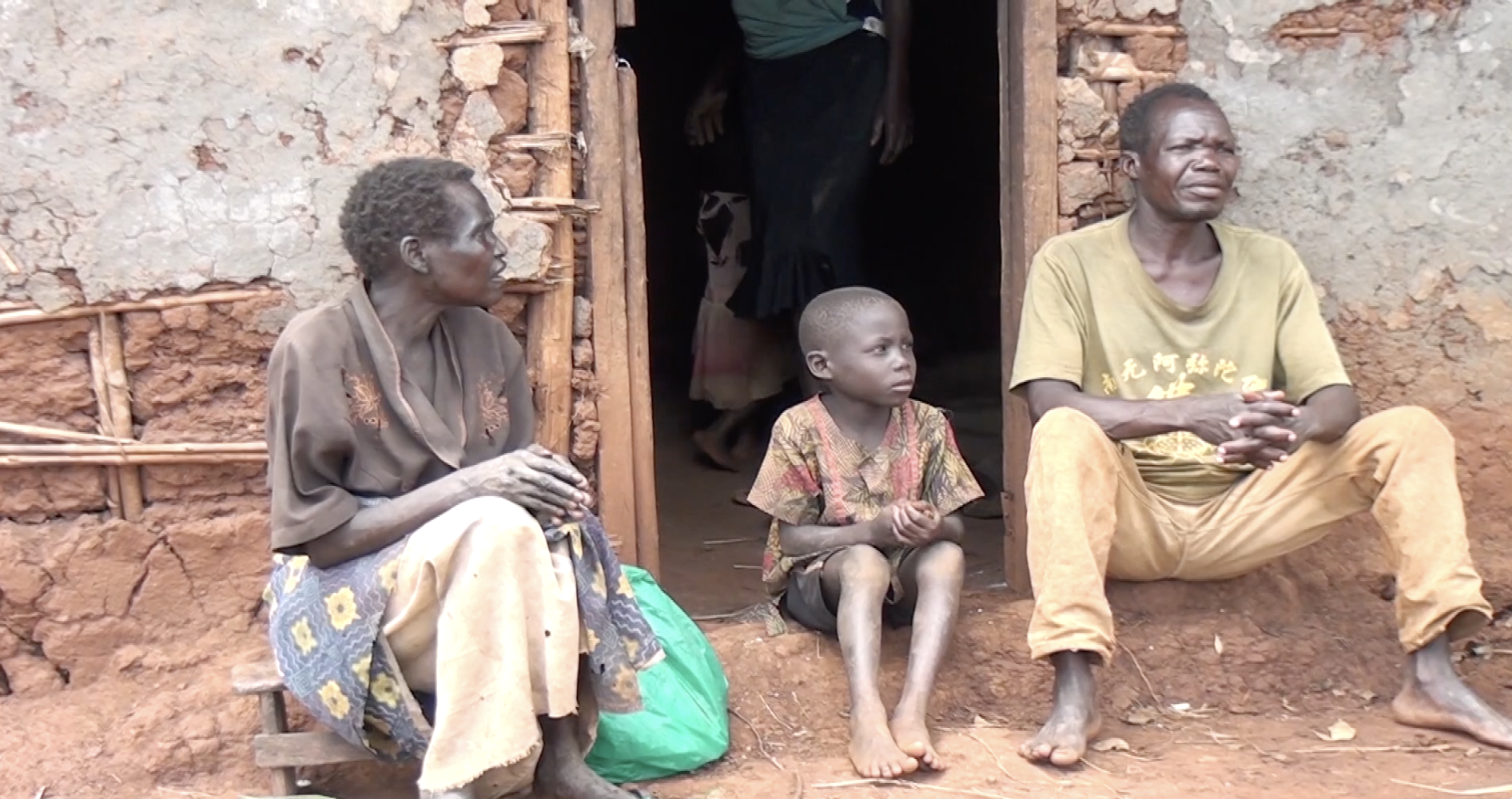
Walk through Zeu Sub-County in Zombo District on any given morning and the landscape will stop you cold. The hills roll green and generous, banana groves crowd the roadsides, and the air carries that rich, loamy scent of soil that farmers elsewhere would mortgage their futures to work. And yet, in this corner of Uganda’s West Nile region, nearly half the population wakes up without access to the basic things most people take for granted: clean water, a functioning health centre, a school worth sending children to, or a house with a solid roof.
That is not an impression. That is a statistic. Zombo District’s multidimensional poverty rate sits at 44.1 percent, which means that for every 100 people living here, 44 are considered poor not just in income terms, but across several dimensions of human wellbeing at once. In a district of approximately 312,000 people, that number represents a staggering weight of unmet need pressing down on communities that, by any agricultural measure, should not be struggling this hard.

The Cruel Geography of Prosperity Without Payoff
Zombo’s primary crops tell their own story. Coffee and bananas form the backbone of the local economy, while beans and cassava keep households fed through the lean months. These are not marginal, subsistence-level crops. Coffee, in particular, is a cash crop with global demand, and Uganda has long positioned itself as one of Africa’s leading producers. Bananas, meanwhile, are a stable, high-yield crop that many districts in the country depend on for both food security and income.
So the land is working. The farmers are working. The question that reporters who visited Zeu Sub-County and Alangi in Zombo District have been asking is why the returns from all that work are not translating into better lives. Fertile soil, after all, is a starting point, not a guarantee. Between the farm and financial security lie a dozen variables that can quietly swallow everything a family produces.
When Agriculture Alone Cannot Break a Cycle
Access to markets is one of the most persistent barriers for rural agricultural communities across sub-Saharan Africa, and Zombo is no exception. Farmers who cannot get their produce to buyers quickly enough, or who lack the storage infrastructure to hold crops until prices improve, are often forced to sell at whatever rate a middleman offers at the farm gate. That rate is almost never the one that makes the arithmetic work in the farmer’s favour.
The road network connecting remote sub-counties to larger trading centres matters enormously here. Poor connectivity does not just mean slower journeys. It means perishable crops spoil before they reach buyers, it means higher transport costs that eat directly into margins, and it means that during wet seasons, some communities are effectively cut off from commerce altogether. A banana grove that produces generously is still a liability if the fruit rots on the roadside waiting for a truck that cannot get through.
The Hidden Costs of Missing Services
Multidimensional poverty captures something that income figures alone miss entirely. A family in Zombo might earn enough from coffee sales to technically clear a monetary poverty line, yet still live without safe drinking water nearby, send children to a school where teachers are absent more than they are present, and face a two-hour walk to the nearest health facility when illness strikes. Each of these gaps carries a cost, often measured in time lost, productivity lost, and futures narrowed before they have a chance to open.
Children who spend hours fetching water are children not studying. Parents navigating medical crises without nearby healthcare often return to find their farms neglected or their savings wiped out by treatment costs. These are not isolated hardships. They compound, year after year, keeping households trapped in circumstances that fertile soil alone cannot lift them out of.
What the Numbers Mean for Real People
A poverty rate of 44.1 percent in a district of 312,000 people means roughly 137,500 individuals are living in what analysts classify as multidimensional deprivation. That is a population larger than many mid-sized cities in East Africa, invisible to most national conversations because the district sits far from Kampala and the policy circles that shape budget allocations.
West Nile as a region has historically received less investment in infrastructure and services than more centrally located parts of Uganda. That legacy matters. Districts that started with weaker foundations, fewer roads, fewer healthcare posts, smaller markets, tend to stay behind even when the natural resources beneath their feet are exceptional. Zombo’s paradox is, in that sense, not entirely unique. It is a local expression of a national and continental pattern.
The Role of Processing and Value Addition
One avenue that agricultural economists consistently point to as a path out of this trap is value addition. Raw coffee sold at farm-gate prices generates far less income than processed coffee sold closer to the end consumer. The same principle applies to cassava, which can be milled into flour, and bananas, which can be processed into juice, chips, or fibre. When farmers or cooperatives can add value before selling, they capture a larger share of the price that a product ultimately commands in the market.
But value addition requires equipment, electricity, training, and reliable access to buyers who want the processed product. These are exactly the kinds of investments that require either private capital or public infrastructure to unlock. Neither tends to flow naturally to districts already marked by high poverty rates, creating a self-reinforcing loop that is difficult to break from within.
Breaking the Pattern Will Take More Than Good Soil
There is no single lever that lifts a community like Zombo’s out of a 44 percent multidimensional poverty rate. The paths forward are multiple and interlinked: better rural roads, stronger agricultural extension services that actually reach farmers, investment in local processing capacity, reliable healthcare and schools that reduce the hidden costs of poverty, and consistent access to financial services that allow smallholder farmers to plan across seasons rather than lurching from harvest to harvest.
What is clear is that the soil is not the problem. Zombo’s farmers are not failing because the land is unkind. The land is genuinely fertile, the crops are real, and the labour is there. The missing links sit in infrastructure, market access, services, and policy attention. Recognising that distinction is important, because it shifts the conversation from blaming geography or farmers to asking harder questions about where investment has been absent and what structural gaps have been allowed to persist for too long.
As Uganda continues to build its agricultural economy and position its farming communities for growth, districts like Zombo represent both a warning and an opportunity. The land is ready. The question is whether the systems around it will ever catch up.
If you live in or near a district where fertile land coexists with deep poverty, what do you think is the single most important change that would make the biggest difference? Share your thoughts below.