










Two stories are dominating the tech conversation this week, and they could not be further apart in subject matter yet could not be more connected in what they reveal about where human ambition is headed. On one side, hundreds of thousands of gaming fans descended on Cologne, Germany, for Gamescom, the planet’s single largest gaming convention. On the other, a California-based company is working quietly but urgently to build the structure that could one day replace the International Space Station. Journalist Laura Cress covered the action on the gaming floor, while Lily Jamali went behind the scenes at that California aerospace firm for a look that is, frankly, hard to shake.
Both stories feature prominently in the latest edition of BBC’s Tech Now, and together they paint a vivid picture of the two poles of modern technological culture: entertainment that commands billions and exploration that demands everything.
Gamescom 2026: The World’s Biggest Gaming Convention Delivers Again
Every August, Cologne transforms. The city’s vast Koelnmesse exhibition centre fills with the sound of trailers blaring, crowds cheering, and controllers clicking, and the scale of it all is genuinely staggering. Gamescom is not simply a trade show. It is a cultural event, a pilgrimage for the gaming faithful, and an annual barometer for where the industry’s creative energy is flowing.
This year’s edition drew record attendance figures, with exhibitors from across the globe rolling out new titles, hardware announcements, and interactive experiences that had queues snaking through the halls for hours. Laura Cress captured the energy from the floor, bringing viewers along for a front-row seat at an event that increasingly rivals any film festival or music expo in terms of cultural weight.
What makes Gamescom distinct from something like E3, which faded dramatically in relevance before its eventual cancellation, is its sheer openness. It welcomes both industry professionals and the general public, which creates a buzzing, democratic atmosphere unlike any closed-door press junket. You get veterans of the industry rubbing shoulders with teenagers experiencing their first major gaming event. The result is electric.
Why the Gaming Industry’s Scale Deserves More Respect
It is worth pausing on just how enormous this industry has become. Global gaming revenue comfortably surpasses that of the film and music industries combined, and yet the sector still occasionally struggles to be taken seriously in mainstream cultural discourse. Gamescom’s continued growth is a pointed rebuttal to anyone still inclined to dismiss gaming as a niche hobby. The convention’s exhibitor list reads like a who’s who of global entertainment, from major console makers to indie studios punching well above their weight.
The games showcased at this year’s event span genres that reflect the breadth of modern gaming culture: open-world narrative adventures, competitive esports titles, and deeply immersive virtual reality experiences that blur the line between play and presence. If you were not there in person, Cress’s reporting offers the next best thing.
Racing to Replace the International Space Station
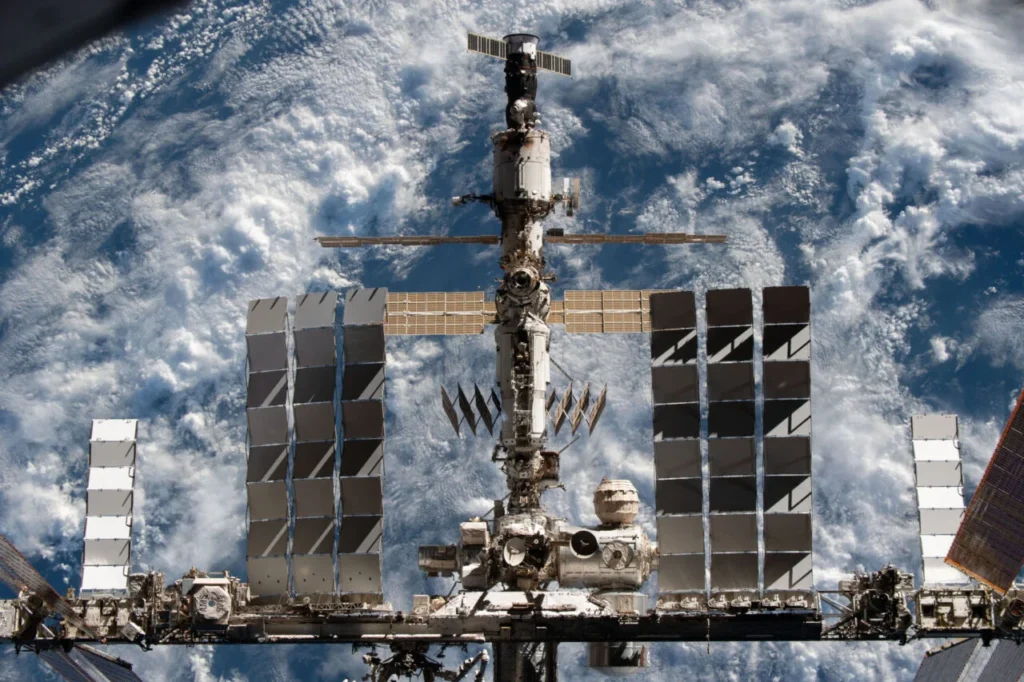
Shift your gaze from the gaming halls of Cologne to a facility somewhere in California, and the mood changes completely. Lily Jamali’s behind-the-scenes report pulls back the curtain on a company working to build a commercial replacement for the International Space Station before NASA’s orbiting laboratory is retired, which is expected to happen before the end of this decade.
The ISS has been continuously inhabited since November 2000, making it one of the most extraordinary human engineering achievements in history. But it is aging. Components that were designed for a 15-year lifespan have been running for over two decades, and the cost of maintaining the station has led space agencies to signal that a transition to commercial alternatives is inevitable.
That transition is exactly what a growing cluster of private aerospace companies are racing to make happen. The California firm Jamali visited is one of several betting that the future of low Earth orbit is commercial, modular, and profitable. Their plans are ambitious: a new station that could host scientific research, manufacturing in microgravity, and potentially even tourism, all under private ownership rather than intergovernmental management.
What Losing the ISS Would Actually Mean
The retirement of the ISS is not simply an administrative handover. It carries genuine geopolitical and scientific weight. The station has served as a rare example of international cooperation, with NASA, Roscosmos, ESA, JAXA, and the Canadian Space Agency all operating equipment aboard it simultaneously. That collaboration is already fraying under the pressure of broader geopolitical tensions, and a commercially operated replacement would operate under a fundamentally different set of priorities.
For scientists, the concern is continuity. Experiments conducted in microgravity, particularly those related to protein crystallisation, fluid dynamics, and long-duration human health, depend on uninterrupted access to an orbital environment. Any gap between the ISS’s retirement and a viable commercial replacement could set certain research programmes back by years.
For the private companies involved, however, the opportunity is historic. If they can build a station that is cheaper to operate, more modular, and open to a wider range of commercial clients, the economics of space could shift dramatically. NASA itself has signalled it intends to be a customer rather than an owner in this new era, purchasing research time aboard commercial stations rather than bearing the full operational burden itself.
Two Worlds, One Trajectory
It is tempting to view Gamescom and a California space startup as entirely unrelated stories that happened to land in the same news cycle. But they share a common thread: both are products of industries where private investment, creative ambition, and technological capability are accelerating in ways that governments and traditional institutions are still scrambling to keep pace with.
The gaming industry built itself largely outside the structures of conventional entertainment, and now it dwarfs them. The commercial space sector is following a comparable arc, moving from a domain once reserved exclusively for nation-states into one where a company in California can credibly plan to build the next space station.
What both stories ultimately ask is the same question, framed differently: what happens when technology outgrows the institutions built to govern it?
Whether you are watching a Gamescom trailer drop or reading about modular orbital platforms, the pace of change is the real headline. And the only reasonable response, it seems, is to pay very close attention.
So here is the question worth sitting with: as private companies take over everything from our entertainment to our orbit, are we ready to have a serious public conversation about who gets to set the rules?